Izzo Vivi PID vs Rocket Espresso Porta Via
Two answers to the same question — the split below is the whole argument.
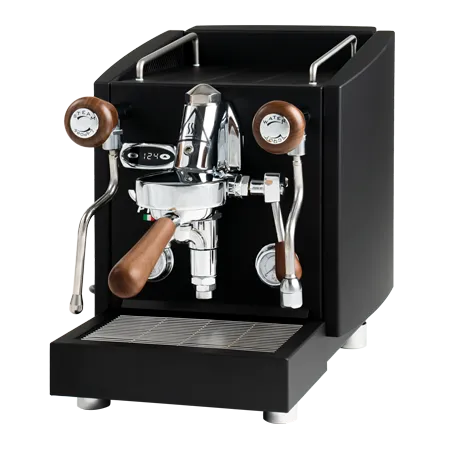
Izzo
Strong consensusUS$1,600–2,000
The Vivi PID delivers a genuine prosumer HX experience — commercial-grade E61, insulated copper boiler, and dual gauges — in one of the smallest chassis in the class. The trade-off you must…
Full record & live prices →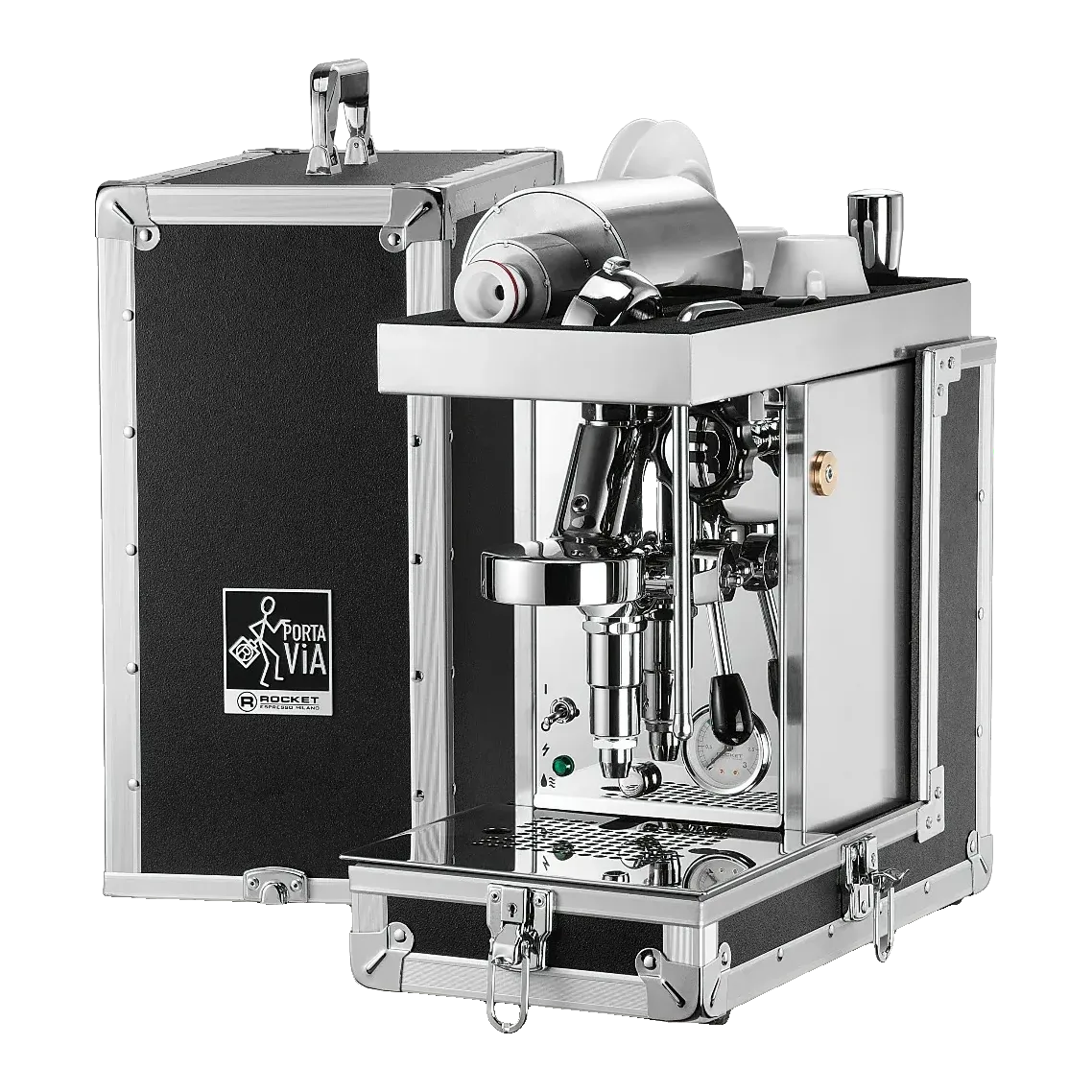
Rocket Espresso
US$1,900 · CA$2,330–2,995
The Porta Via is a genuine prosumer heat exchanger machine that happens to live in a steel-clad road case; shot quality matches any comparable Rocket HX at home. What you must accept is that…
Full record & live prices →The split
Where they actually differ
On 6 of 11 measures these two tie. The 5 rows below are the entire argument.
Vivi PID
Porta Via
Ready when you are
Porta Via leads, decisively
~20 min· ~10 min
Parts & repair
Vivi PID leads, decisively
Value per dollar
Vivi PID leads, decisively
Milk & steam
Vivi PID leads, clearly
Forgiving to learn on
Vivi PID leads, clearly
weakerstronger
The counter’s vote
Both are bought partly for their looks, by the community’s own record — this beat has no winner; your counter votes.
Vivi PID: Stainless steel aesthetics demonstrably drive interest — "dazzling marvel", "kitchen approval" revealed; compact footprint + joystick control cited as purchase drivers in the record.
Porta Via: Functional brutalism: steel road case bought partly for its counter presence and travel narrative, divisive only in older forums (2017); current consensus treats it as deliberate, not luxury.
Only the Vivi PID: a hot-water tap.
Only the Vivi PID: the standard 58mm ecosystem.
Where they tie: shot ceiling · back-to-back drinks · reliability record · built to last · push-button convenience — don’t let a spec sheet invent a difference.
On the counter
The size difference, to scale
So — which one?
Take the Vivi PID if —
- You plan to fix, not replace
- Every dollar has to earn its place
- Milk drinks are the daily order
- You want the more forgiving of the two
Take the Porta Via if —
- Patience is not your virtue at 6 a.m.
Both columns reading true? Take the one your gut already picked — then stop reading reviews. Fresh beans will move the cup more than this choice will.
Known weak points
Vivi PID
vibe pump noise reported consistently; no documented failure catastrophes on record
For the row-by-row readers
The whole sheet, side by side
Matching rows fade back — the ink is where they differ.
Vivi PID
Porta Via
Type
Heat exchanger (HX)
Heat exchanger (HX)
Heat-up time
~20 min
~10 min
Steam power
3.5/5
2.5/5
Brew + steam at once
Yes
Yes
Guest recovery
3/5
2.5/5
Shot quality ceiling
4/5
4/5
PID temperature control
Yes
Yes
Milk system
Manual steam wand
Manual steam wand
Removable brew group
No
No
Hot-water tap
Yes
—
Workflow demand
3.5/5
3.5/5
Maintenance
3/5
3/5
Noise
3.5/5
3/5
Build longevity
4.5/5
4/5
Dimensions
29 × 41 × 35 cm
20 × 40.5 × 53.5 cm
Cup clearance
—
0 cm
One owner each
“Pros: aesthetically very pleasing, joysticks are great, compact footprint, more than enough steam power for my needs Cons: vibe pump far noisier than I expected”
“It doesn't just make good espresso for a portable espresso machine; it makes good espresso — period.”
Wrong match-up? Change one side → — any two on file compare.
Still torn?
This page weighs them against each other. The finder weighs them against your mornings.
Two minutes of questions — milk, noise, budget, space — scored across everything on file. It’s honest when the answer is neither of these.
Take the two-minute finder →