9Barista · ManualEspresso Machine Mk.2
A stovetop espresso machine engineered in Cambridge that uses a patented twin-boiler thermodynamic system — no electronics, no pump — to deliver genuine 9-bar espresso at ~93°C from any hob. Compact, travel-ready, and built from ECOBrass alloy for serious longevity.
The short version
The 9Barista Mk.2 is a genuinely clever piece of engineering that produces repeatable, SCA-grade espresso without a plug socket — an honest achievement, not a marketing claim.
What you must accept is that it makes one espresso at a time, takes 3–6 minutes per shot, steams nothing, and demands a quality burr grinder to justify its price.
Why people buy it
- Patented twin-boiler system delivers stable 9-bar pressure and ~93°C brew temperature with zero electronics — consistency that rivals many electric machines
- No electricity required: works on gas, induction (with adaptor), electric halogen, ceramic, and camping hobs — genuinely portable
Why they don’t
- One shot at a time with a 3–6 minute reset cycle — hosting multiple guests is not realistic
The full tally
- Patented twin-boiler system delivers stable 9-bar pressure and ~93°C brew temperature with zero electronics — consistency that rivals many electric machines
- No electricity required: works on gas, induction (with adaptor), electric halogen, ceramic, and camping hobs — genuinely portable
- ECOBrass alloy construction with 150+ individual factory inspections and a 5-year warranty; spare parts sold direct and designed to be user-replaceable
- Tiny footprint and 1.7–1.8 kg weight make it the most compact kit for producing real espresso, no kettle required
- One shot at a time with a 3–6 minute reset cycle — hosting multiple guests is not realistic
- No steam wand of any kind; milk drinks require a separate frother purchased apart
- At ~$699 USD / £449+ GBP, it is priced like a proper espresso machine despite having no programmability, no display, and no ability to dial pressure profiles
What the community knows
Years of owner threads, distilled — a niche favourite.
Punches above its price for minimalists and travelers who want real espresso without electricity, grinder, or kettles — but the fragile pressure valve, single-shot workflow, and absent after-market community mean it stays confined to a narrow use case rather than becoming a…
Value
price-to-performance the community respects
Reliability
shows up every morning, year after year
Built to last
years before you outgrow or replace it
All 9 community measures
price-to-performance the community respects
shows up every morning, year after year
parts and repairs — you are never stranded
mods, guides, and community know-how around it
kind to first-timers
years before you outgrow or replace it
how far the cup can go, per dollar
speed and simplicity, day to day
Worth knowing before you buy — Most owners wish they'd paired it with a hand grinder and travel burr set to realize the full portability promise.
Known weak points — Pressure-relief valve failures documented; replacement parts availability sparse; pressure seal degradation over heavy use.
The measurements
Scored 0–5 on the same rubric as everything on file — the words matter more than the numbers.
The measurements
0–5, one rubric- Shot ceiling
- serious4
- Steam power
- token0
- Built to last
- heirloom5
- Easy daily
- demanding1
Position in the market
Every dot is a rival, measured the same way. The gold one is this.
- Upper half for shot ceiling
- a higher ceiling than 149 of the 237 machines we’ve measured
- A value pick at this level
- 94% of machines this capable cost more
- Top quarter for build
- sturdier than 88% of the field, by the community’s own record
Every dot is a machine measured on the same rubric. See the whole market
Living with it
The part spec sheets skip: counter space, upkeep, and what owners learn later.
The honest note — Owners rarely outgrow the 9Barista on espresso quality alone; the ceiling is real but high. The more common reason to move on is the desire for milk drinks or the ability to pull back-to-back shots — at which point a single-boiler or HX machine (e.g., Rancilio Silvia, ECM Classika) becomes the next step.
The full spec sheet
- Type
- Manual
- Heat-up time
- ~4 min
- Steam power
- 0/5
- Brew + steam at once
- No
- Guest recovery
- 1/5
- Shot quality ceiling
- 4/5
- PID temperature control
- No
- Milk system
- None
- Removable brew group
- No
- Cup clearance
- 6 cm
- Workflow demand
- 4/5
- Maintenance
- 2/5
- Noise
- 1/5
- Build longevity
- 5/5
- Dimensions
- 10 × 10 × 18 cm
Before it arrives
What completes this machine — the faded pieces can wait.
Gooseneck kettle · not optional — Manual and lever machines bring no water of their own — a temperature-stable gooseneck is how you actually pull a shot.
- Gooseneck kettle — Manual and lever machines bring no water of their own — a temperature-stable gooseneck is how you actually pull a shot.
- Standalone milk steamer — No steam wand on board — a standalone steamer (Bellman, Subminimal NanoFoamer) is how you get a real flat white.
- Handheld milk frother — The cheapest path to foam for a no-steam machine — fine for casual milk drinks, not latte art.
- Espresso cups & glassware — Proper demitasse and latte glasses keep the drink hot and look the part.
Feed it right
Week one is dial-in — and stale beans will lose it.
Coffee more than a few weeks past roast won’t extract predictably, and a new machine gets blamed for it. A machine in this class will show you the difference between roast dates — it deserves beans that change week to week.
Pick your coffee — any of these dials in beautifully here:
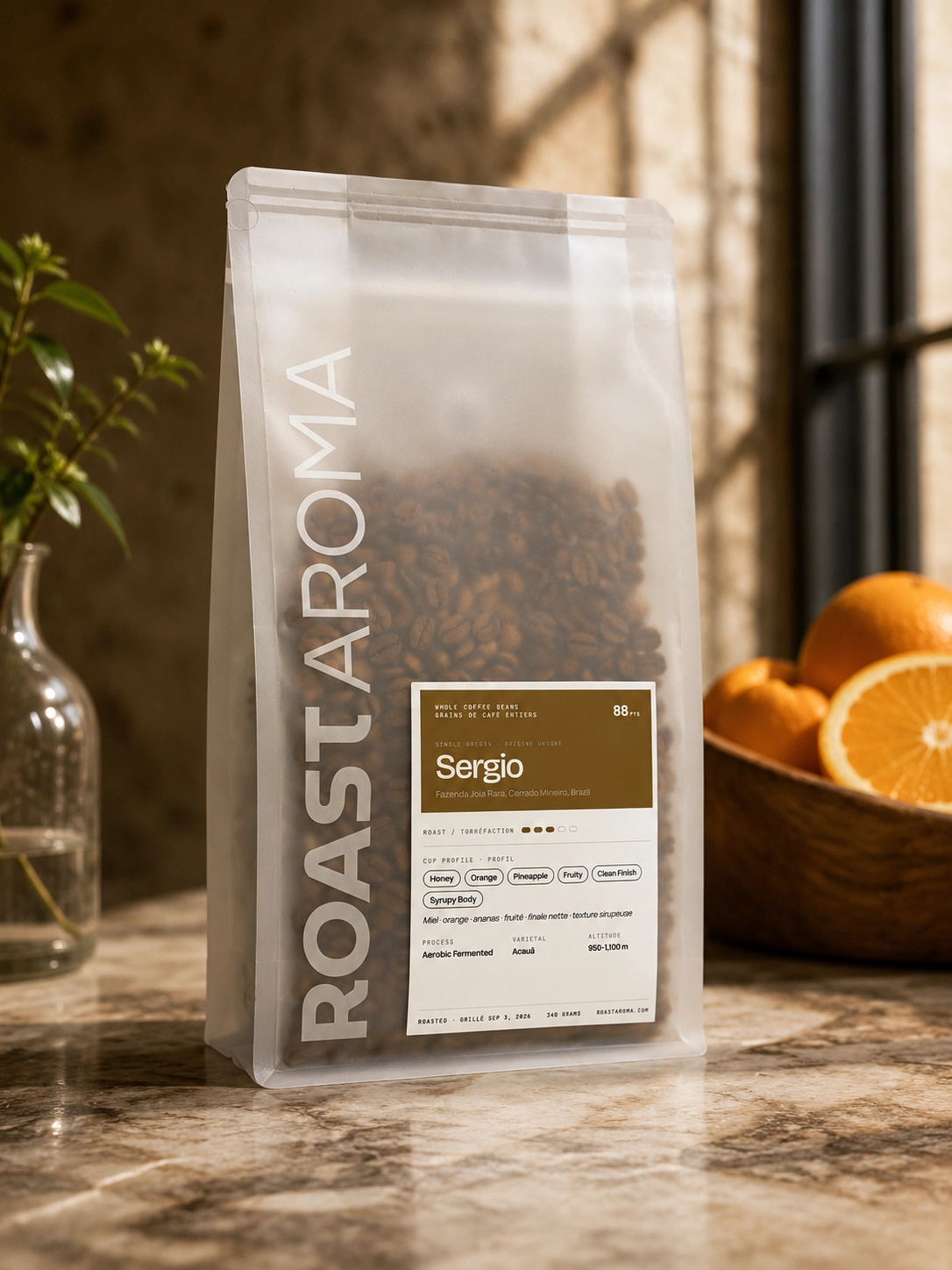 Sergio - Brazillian Fazenda Joia Rara Aerobic FermentedSCA 88Medium-light · Cerrado Mineiro · Aerobic FermentedHoney · OrangeEnough brightness to show what this gear can separate.CA$29.18 · roasted to order
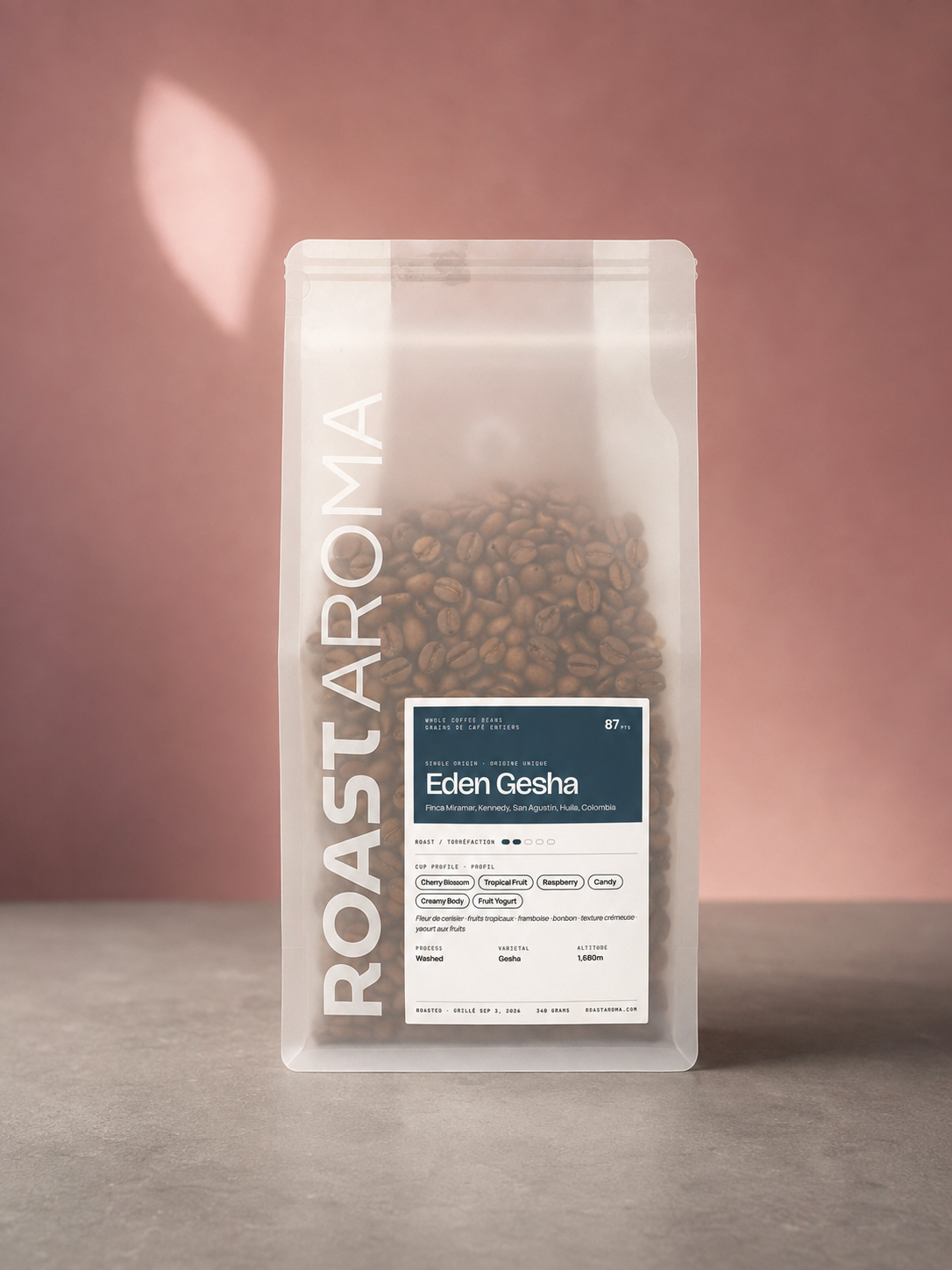 Eden Gesha - Colombian MiramarSCA 87Medium-light · Kennedy, San Agustin, Huila · WashedCherry blossom · Tropical fruitEnough brightness to show what this gear can separate.CA$26.24 · roasted to order
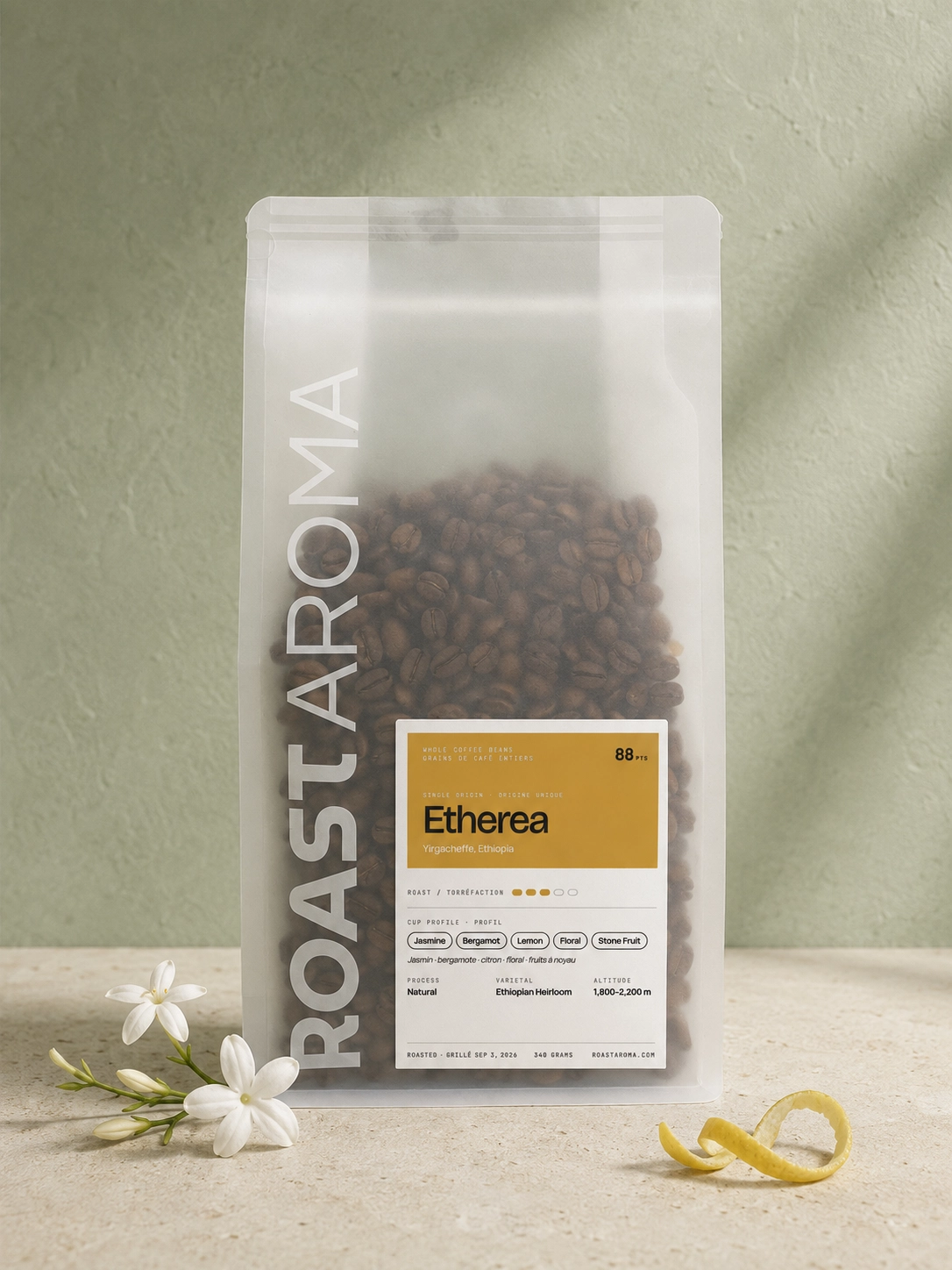 Etherea - Ethiopian YirgacheffeSCA 88Medium roast · NaturalJasmine · BergamotEnough brightness to show what this gear can separate.CA$24.16 · roasted to order
A capable grinder matters as much as the machine. Start with whole beans and a printed roast date.
Prefer regular deliveries? RoastPlan is RoastAroma’s coffee subscription. Choose your coffees and their available options, then set deliveries every 1–6 weeks.
One-time RoastAroma orders are roasted to order in Ajax, Ontario and ship Canada-wide. We’re the roastery behind this database — measuring the machines is how we make sure the coffee gets a fair shot.
On film
How it runs on camera, from around the community.
Common questions
Does the 9Barista Mk.2 need electricity?
No. It is a fully mechanical stovetop device. It works on gas, induction (with the included heat transfer plate), electric halogen, electric ring, traditional Aga/Rayburn stoves, and camping gas stoves. No plug, no battery.
What is the difference between the Mk.2 Standard and Mk.2 Pro?
The Standard includes a wooden handle and a standard basket. The Pro adds an anodised aluminium handle, an IMS precision basket, a laser-drilled cap, and a naked portafilter — useful for experienced users who want to refine shot quality further. Both share the same twin-boiler brewing system and 5-year warranty.
Can I make milk drinks with the 9Barista?
Not directly. The machine has no steam wand or frother of any kind. For lattes or cappuccinos you will need a separate hand frother or standalone electric milk frother.
How long does each shot take?
From cold, 3 to 6 minutes depending on your stove. The machine requires a similar recovery time between shots, so consecutive drinks are slow. Maximum time on the stove is 8 minutes.
What grinder does the 9Barista need?
The manufacturer explicitly recommends a burr grinder designed for espresso. Given the fixed 9-bar pressure, grind consistency is the main variable you can control. A quality hand grinder (e.g., 1Zpresso K-Ultra) or entry-to-midrange electric espresso grinder is the minimum; anything coarser or less consistent will produce uneven shots.
Worth comparing
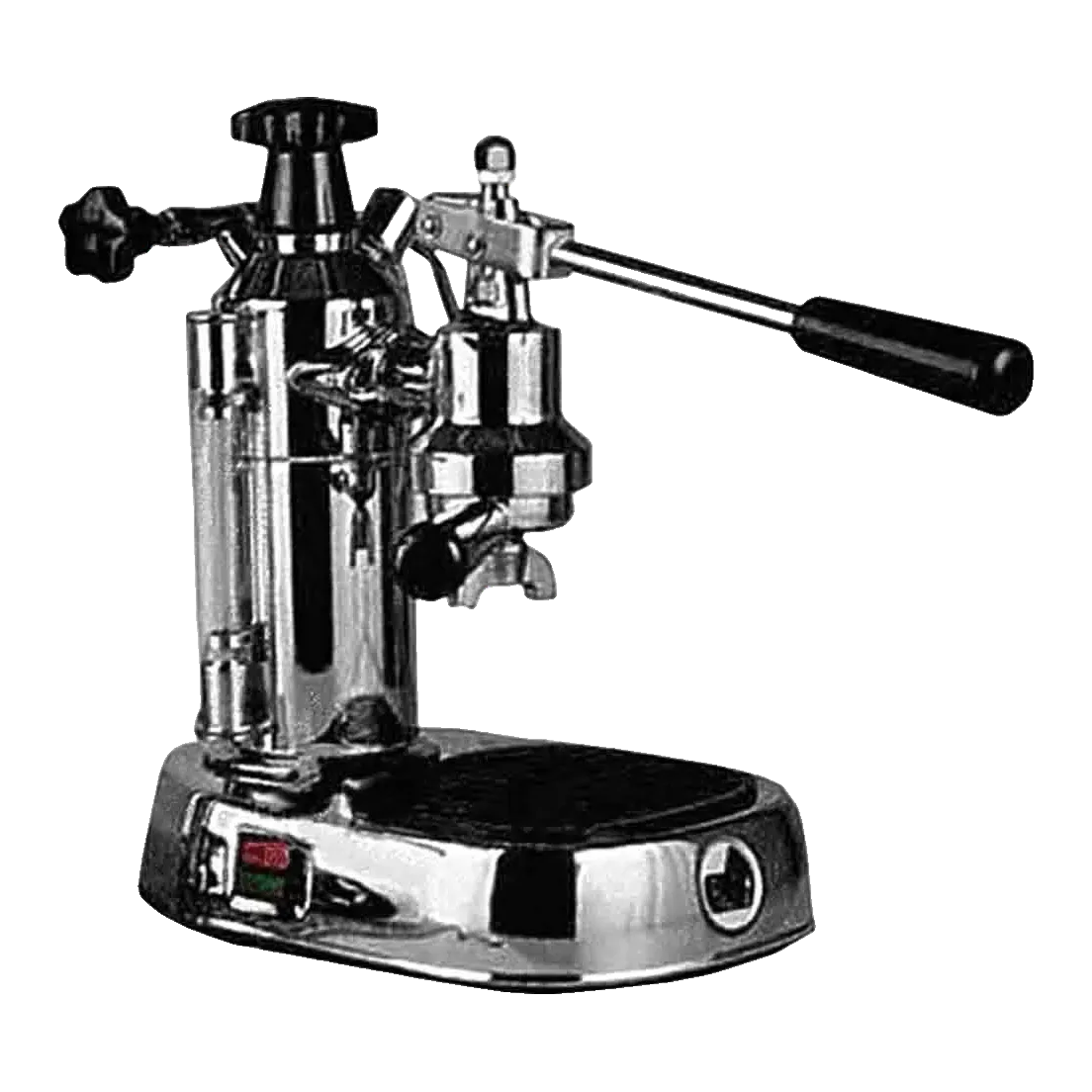
La Pavoni
Europiccola (EPC-8 / Millennium)
The original home direct-lever machine, in continuous production since 1961, built around a 0.8 L brass boiler and a piston group your arm pressurizes. Rewarding ritual and a genuine shot-quality ceiling for those willing to master temperature management and technique.
CA$950–1,000 · US$700–800
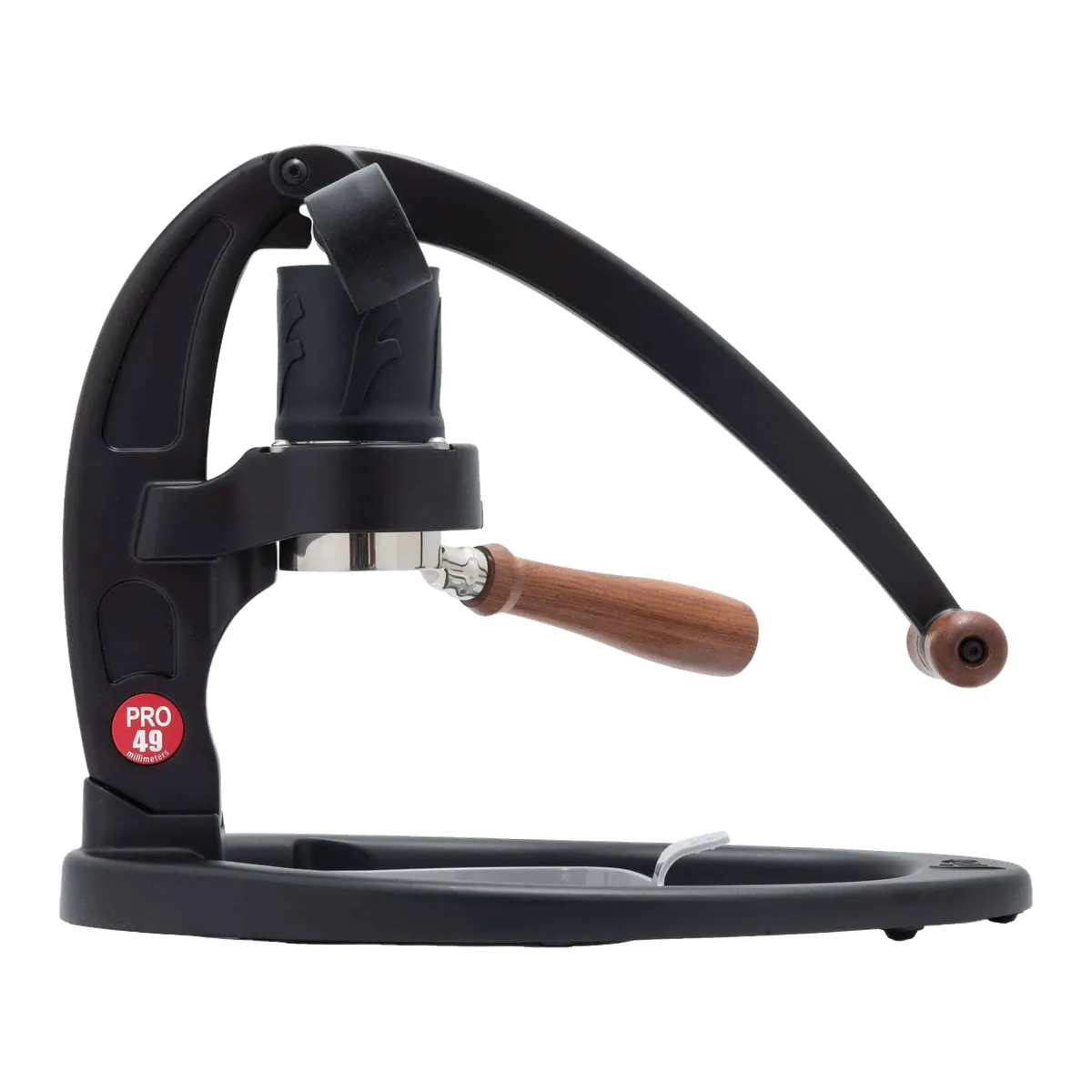
Flair Espresso
Flair 49 PRO
A fully manual, pumpless lever machine built around a 49mm portafilter and an all-stainless steel brew path — no electronics, no plastic in the water contact, and complete silence during extraction. The price of entry is a genuine hot-water preheating ritual before every session.
US$699–780
Weighing it against something we didn’t list? Compare it with anything on file →
Still weighing it? The finder narrows all 429 down to three that fit your life.
Run the two-minute finder →