Cafelat · ManualRobot Barista
A fully manual, pump-free lever espresso maker that requires nothing but hot water from a kettle and your own applied pressure — the Barista model adds a built-in pressure gauge for dialing in profiles.
The short version
The Robot is about as far from a push-button machine as you can get: no boiler, no pump, no electricity, just you and a puck of coffee.
The ceiling for shot quality is genuinely high, but every variable — temperature, pressure, pre-infusion duration — lives entirely in your hands.
Why people buy it
- Shot quality ceiling rivals machines costing several times more, with full manual control over temperature, pressure ramp, and pre-infusion duration
- Zero electricity required — all you need is boiling water from a kettle, making it genuinely portable and usable anywhere
Why they don’t
- No integrated milk steaming — a separate frother or steam wand is required for any milk drink, which adds cost and steps
The full tally
- Shot quality ceiling rivals machines costing several times more, with full manual control over temperature, pressure ramp, and pre-infusion duration
- Zero electricity required — all you need is boiling water from a kettle, making it genuinely portable and usable anywhere
- Die-cast aluminium body, all-stainless brew components, and food-grade silicone seals add up to a machine that is essentially indestructible and trivial to service
- Tiny footprint and sub-3 kg weight; fits a small kitchen counter and travels easily
- No integrated milk steaming — a separate frother or steam wand is required for any milk drink, which adds cost and steps
- Temperature management depends entirely on the user pre-heating the group and dialling water temperature by feel or thermometer; there is no thermostat
- Single-shot workflow only: back-to-back rounds for guests means re-heating water between each pull, making it a poor fit for entertaining
What the community knows
Years of owner threads, distilled — strongly recommended.
The cult manual lever — no power, no fuss, genuinely excellent shots for the money; forums adore it.
Built to last
years before you outgrow or replace it
Value
price-to-performance the community respects
Reliability
shows up every morning, year after year
All 9 community measures
price-to-performance the community respects
shows up every morning, year after year
parts and repairs — you are never stranded
mods, guides, and community know-how around it
kind to first-timers
years before you outgrow or replace it
how far the cup can go, per dollar
speed and simplicity, day to day
Worth knowing before you buy — The Robot reframes manual espresso — not a stepping stone to electric, but the destination for owners who choose craft over convenience and save $400+ in the process.
The measurements
Scored 0–5 on the same rubric as everything on file — the words matter more than the numbers.
The measurements
0–5, one rubric- Shot ceiling
- endgame-adjacent4.5
- Steam power
- token0
- Built to last
- heirloom5
- Easy daily
- demanding0
Position in the market
Every dot is a rival, measured the same way. The gold one is this.
- Top quarter for shot ceiling
- a higher ceiling than 205 of the 237 machines we’ve measured
- A value pick at this level
- 97% of machines this capable cost more
- Top quarter for build
- sturdier than 88% of the field, by the community’s own record
Every dot is a machine measured on the same rubric. See the whole market
Living with it
The part spec sheets skip: counter space, upkeep, and what owners learn later.
The honest note — Owners who outgrow the Robot are almost always chasing convenience rather than shot quality — the machine's ceiling is high enough that most move to an HX or dual-boiler semi-automatic (e.g., Profitec Pro 500, Lelit Bianca) not because the Robot makes worse coffee, but because they want integrated steam and a faster morning workflow.
The full spec sheet
- Type
- Manual
- Heat-up time
- 0 seconds
- Steam power
- 0/5
- Brew + steam at once
- No
- Guest recovery
- 1/5
- Shot quality ceiling
- 4.5/5
- PID temperature control
- No
- Milk system
- None
- Removable brew group
- No
- Flow control
- Yes
- Cup clearance
- 8 cm
- Workflow demand
- 5/5
- Maintenance
- 1/5
- Noise
- 1/5
- Build longevity
- 5/5
- Dimensions
- 24 × 24 × 31 cm
Before it arrives
What completes this machine — the faded pieces can wait.
Gooseneck kettle · not optional — Manual and lever machines bring no water of their own — a temperature-stable gooseneck is how you actually pull a shot.
- Gooseneck kettle — Manual and lever machines bring no water of their own — a temperature-stable gooseneck is how you actually pull a shot.
- Coffee scale with timer — Espresso is a ratio. A 0.1g scale with a built-in timer is the single biggest consistency upgrade for any manual machine.
- Standalone milk steamer — No steam wand on board — a standalone steamer (Bellman, Subminimal NanoFoamer) is how you get a real flat white.
- Knock box — Somewhere to bang the spent puck that is not your kitchen bin.
- Calibrated tamper — The bundled tamper is usually an afterthought; a fitted, calibrated one makes prep repeatable.
- WDT distribution tool — Breaks up clumps before tamping — a cheap fix for channeling on any portafilter machine.
- Handheld milk frother — The cheapest path to foam for a no-steam machine — fine for casual milk drinks, not latte art.
- Espresso cups & glassware — Proper demitasse and latte glasses keep the drink hot and look the part.
Feed it right
Week one is dial-in — and stale beans will lose it.
Coffee more than a few weeks past roast won’t extract predictably, and a new machine gets blamed for it. A machine in this class will show you the difference between roast dates — it deserves beans that change week to week.
Pick your coffee — any of these dials in beautifully here:
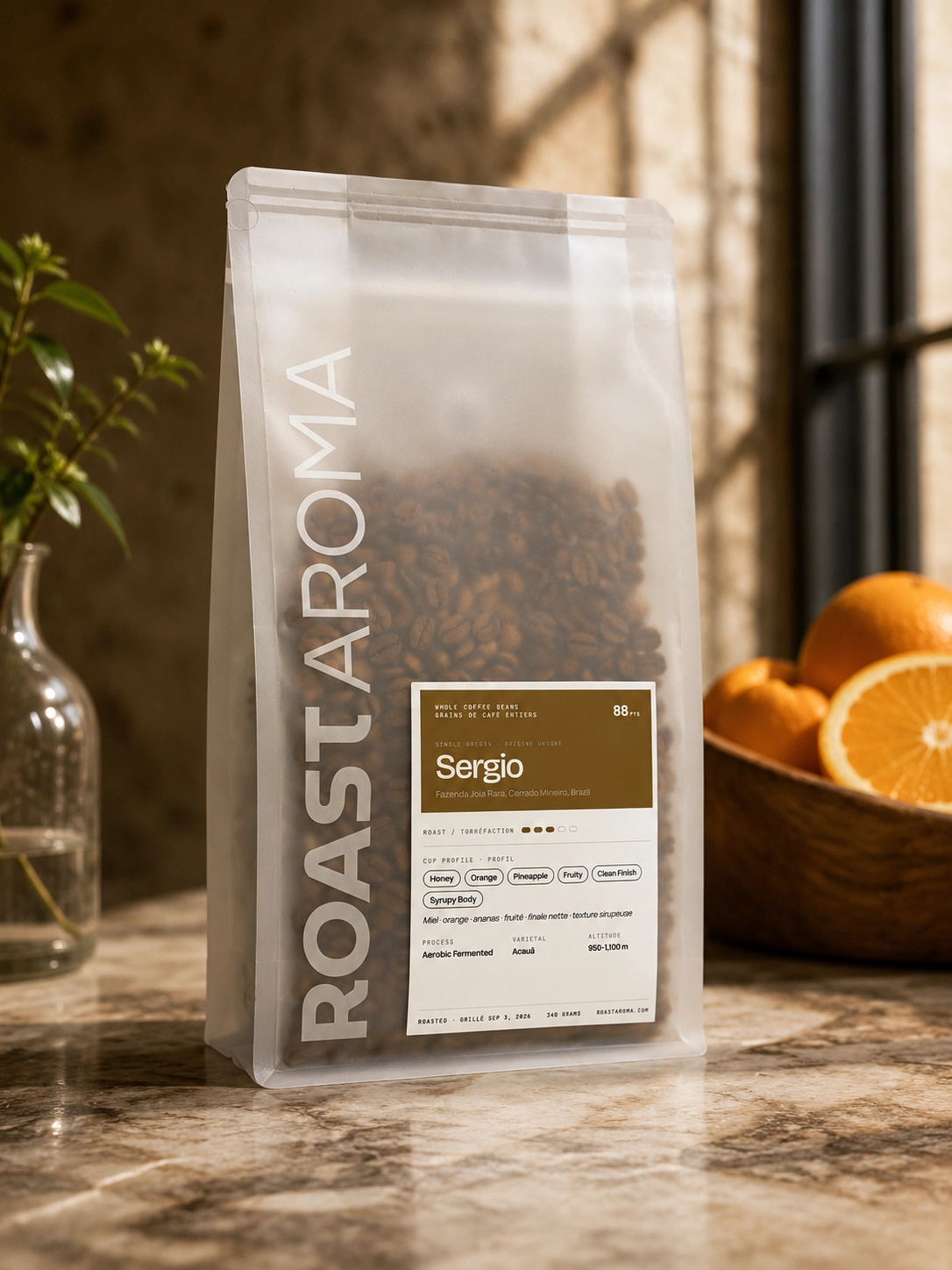 Sergio - Brazillian Fazenda Joia Rara Aerobic FermentedSCA 88Medium-light · Cerrado Mineiro · Aerobic FermentedHoney · OrangeEnough brightness to show what this gear can separate.CA$29.18 · roasted to order
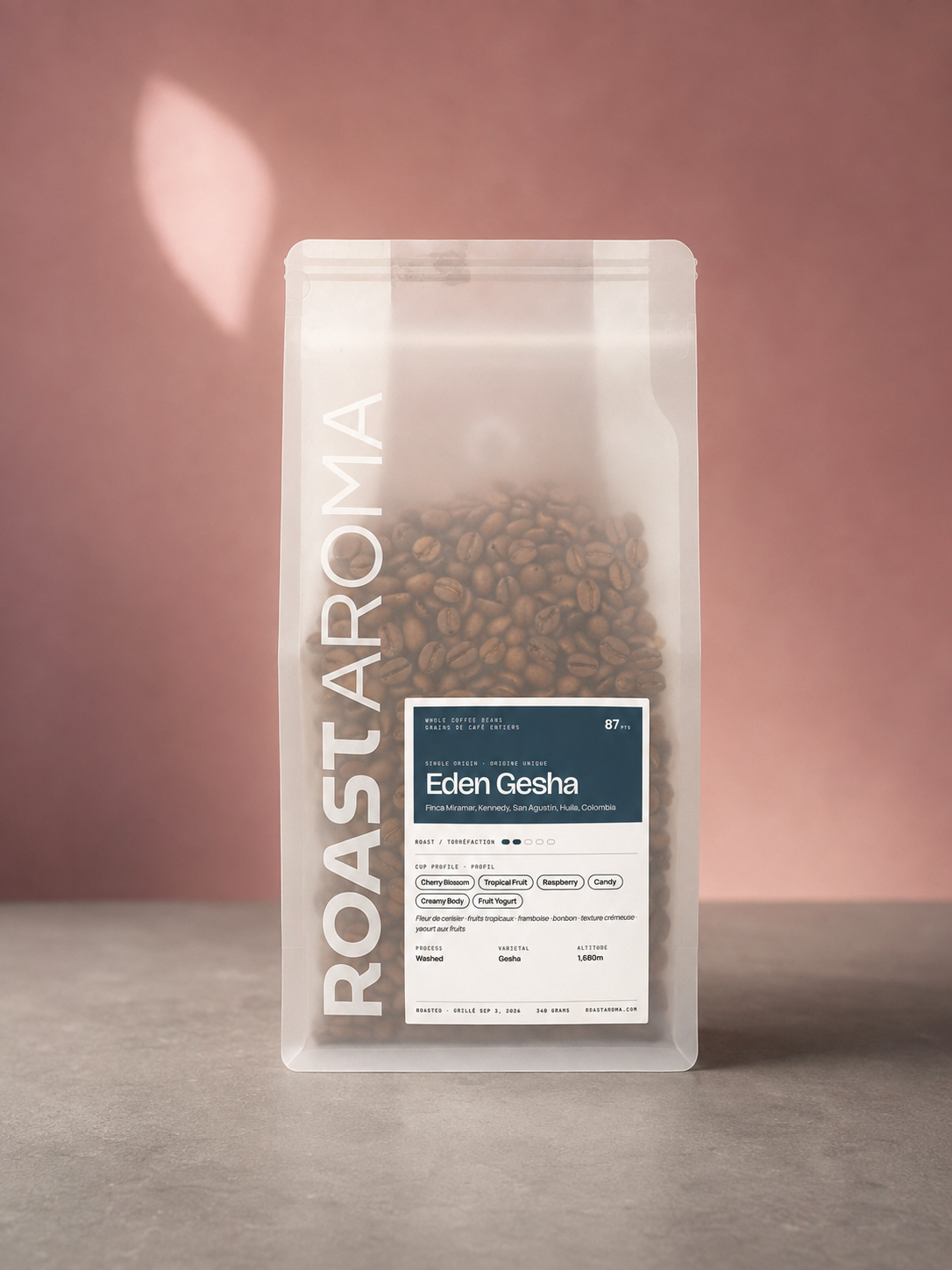 Eden Gesha - Colombian MiramarSCA 87Medium-light · Kennedy, San Agustin, Huila · WashedCherry blossom · Tropical fruitEnough brightness to show what this gear can separate.CA$26.24 · roasted to order
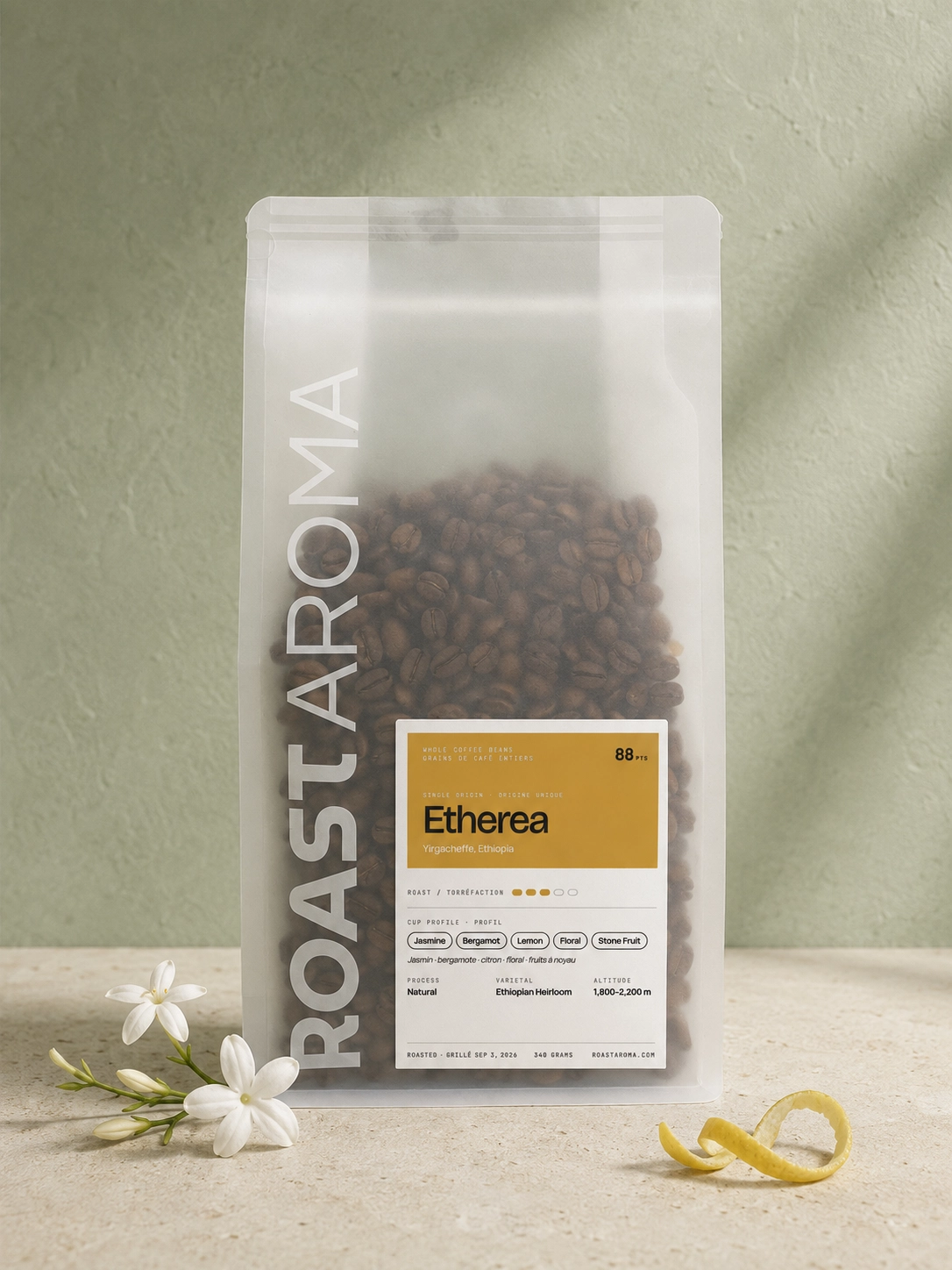 Etherea - Ethiopian YirgacheffeSCA 88Medium roast · NaturalJasmine · BergamotEnough brightness to show what this gear can separate.CA$24.16 · roasted to order
A capable grinder matters as much as the machine. Start with whole beans and a printed roast date.
Prefer regular deliveries? RoastPlan is RoastAroma’s coffee subscription. Choose your coffees and their available options, then set deliveries every 1–6 weeks.
One-time RoastAroma orders are roasted to order in Ajax, Ontario and ship Canada-wide. We’re the roastery behind this database — measuring the machines is how we make sure the coffee gets a fair shot.
On film
How it runs on camera, from around the community.
Common questions
Does the Cafelat Robot need electricity?
No. The Robot has no boiler, heater, or pump. You supply hot water from a kettle and generate pressure manually by pushing the lever arms down. It will work anywhere you can boil water.
What is the difference between the Regular and Barista models?
The Barista model adds a built-in analogue pressure gauge and ships with a professional 58mm portafilter basket. The Regular model omits the gauge. Both share the same body dimensions and brew mechanics.
Can I make milk drinks with the Robot?
Not directly. The Robot produces espresso shots only. You would need a separate milk frother, steam wand, or electric steamer to texture milk for lattes and cappuccinos.
How do I control pressure and pre-infusion?
Entirely manually. You control the rate and force of lever depression to ramp pressure gradually for pre-infusion, then increase to full extraction pressure. The Barista model's gauge lets you monitor and reproduce pressure curves.
What grinder do I need?
Because the Robot exposes every extraction variable, grinder consistency matters significantly. A midrange burr grinder is the practical minimum; a single-dose or premium grinder is where the machine's quality ceiling becomes apparent. Entry-level grinders will limit shot quality noticeably.
Worth comparing
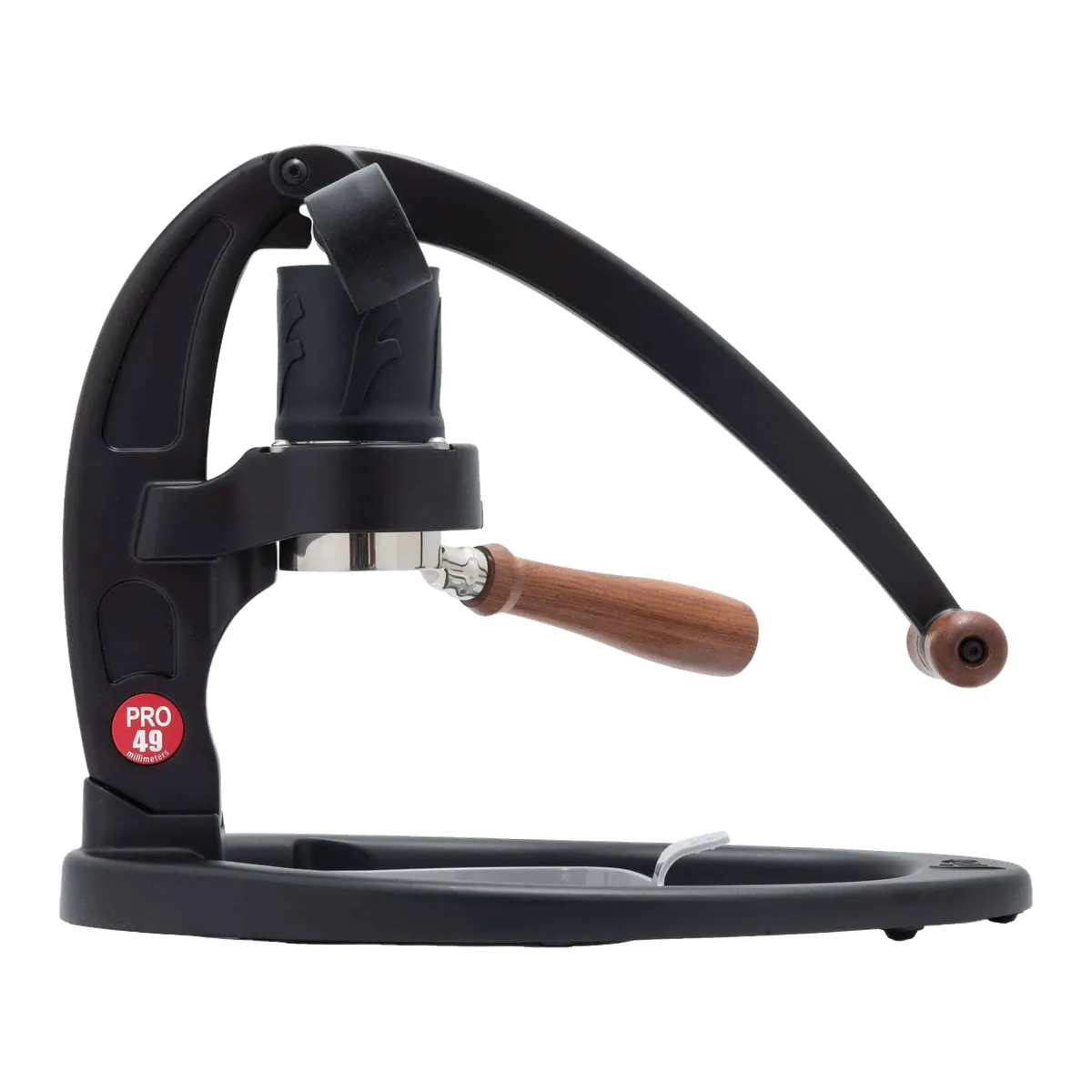
Flair Espresso
Flair 49 PRO
A fully manual, pumpless lever machine built around a 49mm portafilter and an all-stainless steel brew path — no electronics, no plastic in the water contact, and complete silence during extraction. The price of entry is a genuine hot-water preheating ritual before every session.
US$699–780
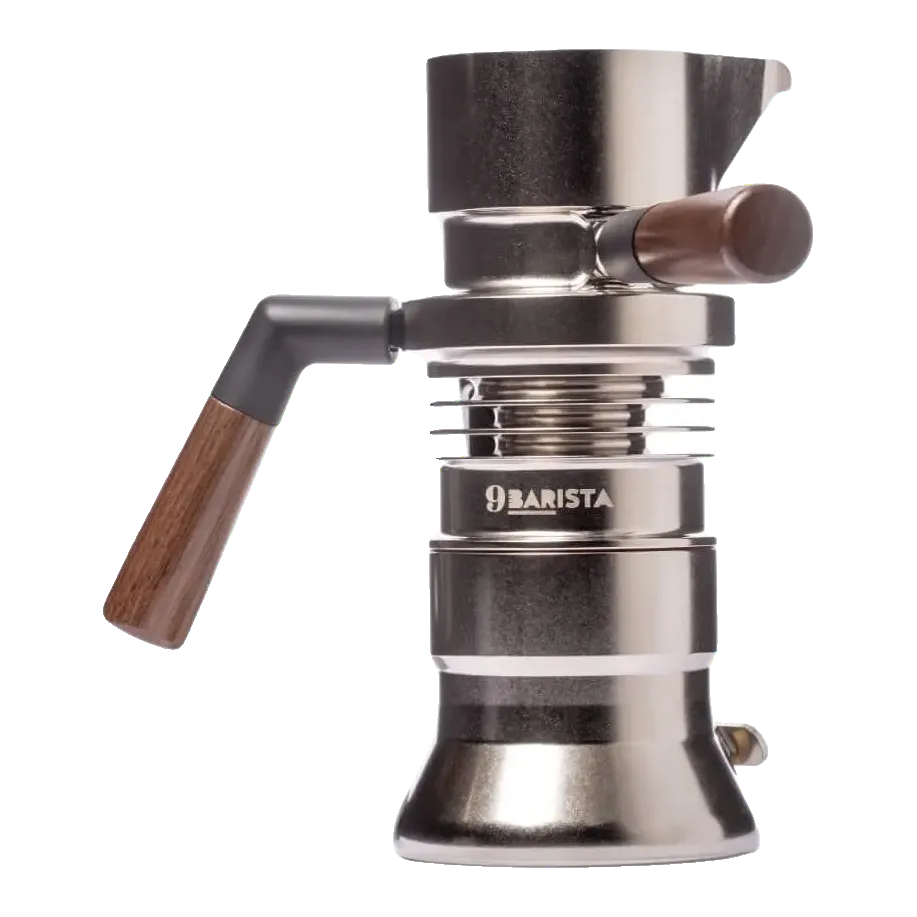
9Barista
Espresso Machine Mk.2
A stovetop espresso machine engineered in Cambridge that uses a patented twin-boiler thermodynamic system — no electronics, no pump — to deliver genuine 9-bar espresso at ~93°C from any hob. Compact, travel-ready, and built from ECOBrass alloy for serious longevity.
US$699
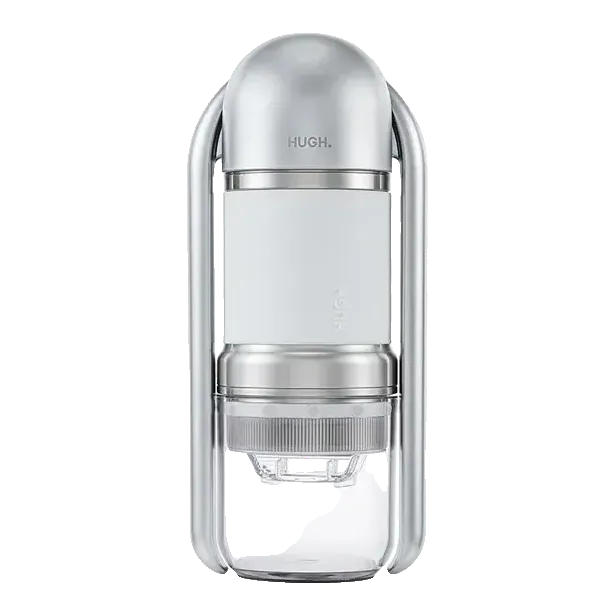
HUGH Inc.
Hugh Leverpresso Pro
A fully manual, pumpless lever espresso maker in stainless steel, smaller than a water bottle, with a built-in pressure gauge and an IMS 51 mm competition basket. No electricity, no steam, no milk — pure extraction control in a backpack.
US$430
Weighing it against something we didn’t list? Compare it with anything on file →
Still weighing it? The finder narrows all 429 down to three that fit your life.
Run the two-minute finder →