Slayer · Dual boilerEspresso Single Group
A hand-built, plumb-in dual-boiler machine from Seattle that brings Slayer's patented needle-valve flow-profiling to a single-group footprint suitable for serious home kitchens and low-volume commercial settings. Everything about it — build, weight, price — signals commercial, not prosumer.
The short version
The Slayer Single Group is a commercially rated, hand-assembled dual-boiler machine that makes genuinely exceptional espresso through its patented needle-valve pre-brew system and saturated group.
What you must accept: it ships freight, requires plumbing, weighs 110 lb, demands a premium grinder, and carries a price that dwarfs every other single-group on the home market.
Why people buy it
- Patented three-stage needle-valve paddle gives hands-on flow-rate control unavailable on any other single-group machine at this tier
- 3.3 L steam boiler with commercial wand steams a 20 oz pitcher in seconds — recovery across back-to-back milk drinks is essentially limitless
Why they don’t
- Plumb-in only as shipped; adding an external reservoir workaround adds cost and complexity
The full tally
- Patented three-stage needle-valve paddle gives hands-on flow-rate control unavailable on any other single-group machine at this tier
- 3.3 L steam boiler with commercial wand steams a 20 oz pitcher in seconds — recovery across back-to-back milk drinks is essentially limitless
- Commercial-grade V3 group rated to 1 million cycles; internal layout is serviceability-first by design
- Massive customisation programme (wood species, metal finishes, panel colours, gold plate) makes each machine genuinely unique
- Plumb-in only as shipped; adding an external reservoir workaround adds cost and complexity
- 110 lb / 50 kg means installation requires freight delivery and at least two people — not a countertop swap
- No volumetric dosing; fully manual extraction demands consistent grinder and barista discipline every single shot
What the community knows
Years of owner threads, distilled — strongly recommended.
Slayer earns deep community respect for heirloom-grade build, flow-control architecture, and genuinely responsive support—but the $19k CAD price tag and steep technical learning curve (group profiling, pressure management, dialing in) make it a deliberate specialist's commit…
Built to last
years before you outgrow or replace it
Reliability
shows up every morning, year after year
Parts & serviceability
parts and repairs — you are never stranded
All 9 community measures
price-to-performance the community respects
shows up every morning, year after year
parts and repairs — you are never stranded
mods, guides, and community know-how around it
kind to first-timers
years before you outgrow or replace it
how far the cup can go, per dollar
speed and simplicity, day to day
Worth knowing before you buy — Most owners would say: "This is the machine you buy when you know espresso already and want to stop chasing upgrades—invest in the grinder FIRST, then this."
“In 9-years the 'newness' hasn't worn off and I still look forward to using it each and every day. No regrets.”
“Going on 6-years since buying my Slayer 1G new. Use it every single day. Would buy it again and it makes outstanding espresso as long as I do my part.”
The measurements
Scored 0–5 on the same rubric as everything on file — the words matter more than the numbers.
The measurements
0–5, one rubric- Shot ceiling
- endgame-adjacent5
- Steam power
- workhorse5
- Built to last
- heirloom5
- Easy daily
- demanding1
Position in the market
Every dot is a rival, measured the same way. The gold one is this.
- Top 10% for shot ceiling
- a higher ceiling than 219 of the 237 machines we’ve measured
- You pay for this one
- 0% of machines this capable cost more
- Top quarter for build
- sturdier than 88% of the field, by the community’s own record
Every dot is a machine measured on the same rubric. See the whole market
Living with it
The part spec sheets skip: counter space, upkeep, and what owners learn later.
The honest note — Owners who push further into profiling typically do not outgrow this machine — they upgrade grinders first (to 98 mm flat-burr platforms). Some migrate to the La Marzocco Leva X or Kees van der Westen Speedster for spring-lever or more nuanced pressure profiling, or step up to the multi-group Slayer V3 for commercial volume.
The full spec sheet
- Type
- Dual boiler
- Steam power
- 5/5
- Brew + steam at once
- Yes
- Guest recovery
- 5/5
- Shot quality ceiling
- 5/5
- PID temperature control
- Yes
- Milk system
- Manual steam wand
- Removable brew group
- No
- Flow control
- Yes
- Hot-water tap
- Yes
- Workflow demand
- 4/5
- Maintenance
- 3/5
- Noise
- 3/5
- Build longevity
- 5/5
- Dimensions
- 47 × 58 × 33 cm
Before it arrives
What completes this machine — the faded pieces can wait.
Water filter / softener — Plumbed-in machines need inline filtration to keep scale out of the boiler — it is cheaper than a repair.
- Water filter / softener — Plumbed-in machines need inline filtration to keep scale out of the boiler — it is cheaper than a repair.
- Descaler & backflush kit — Electric boilers scale up and grouts gunk up — a descaler plus backflush routine is what keeps the machine alive for a decade.
- Coffee scale with timer — Espresso is a ratio. A 0.1g scale with a built-in timer is the single biggest consistency upgrade for any manual machine.
- Knock box — Somewhere to bang the spent puck that is not your kitchen bin.
- Calibrated tamper — The bundled tamper is usually an afterthought; a fitted, calibrated one makes prep repeatable.
- WDT distribution tool — Breaks up clumps before tamping — a cheap fix for channeling on any portafilter machine.
- Espresso cups & glassware — Proper demitasse and latte glasses keep the drink hot and look the part.
Feed it right
Week one is dial-in — and stale beans will lose it.
Coffee more than a few weeks past roast won’t extract predictably, and a new machine gets blamed for it. A machine in this class will show you the difference between roast dates — it deserves beans that change week to week.
Pick your coffee — any of these dials in beautifully here:
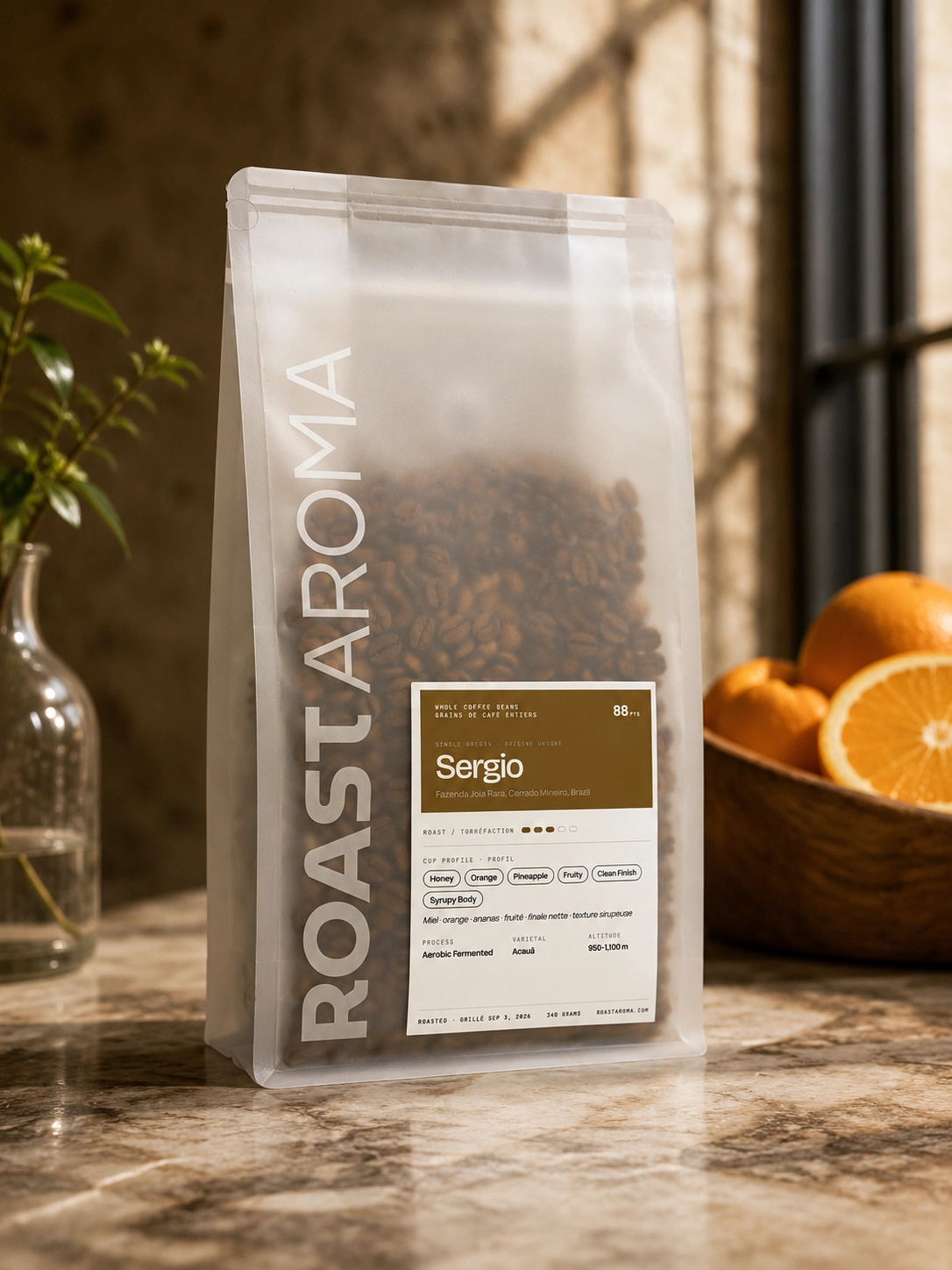 Sergio - Brazillian Fazenda Joia Rara Aerobic FermentedSCA 88Medium-light · Cerrado Mineiro · Aerobic FermentedHoney · OrangeEnough brightness to show what this gear can separate.CA$29.18 · roasted to order
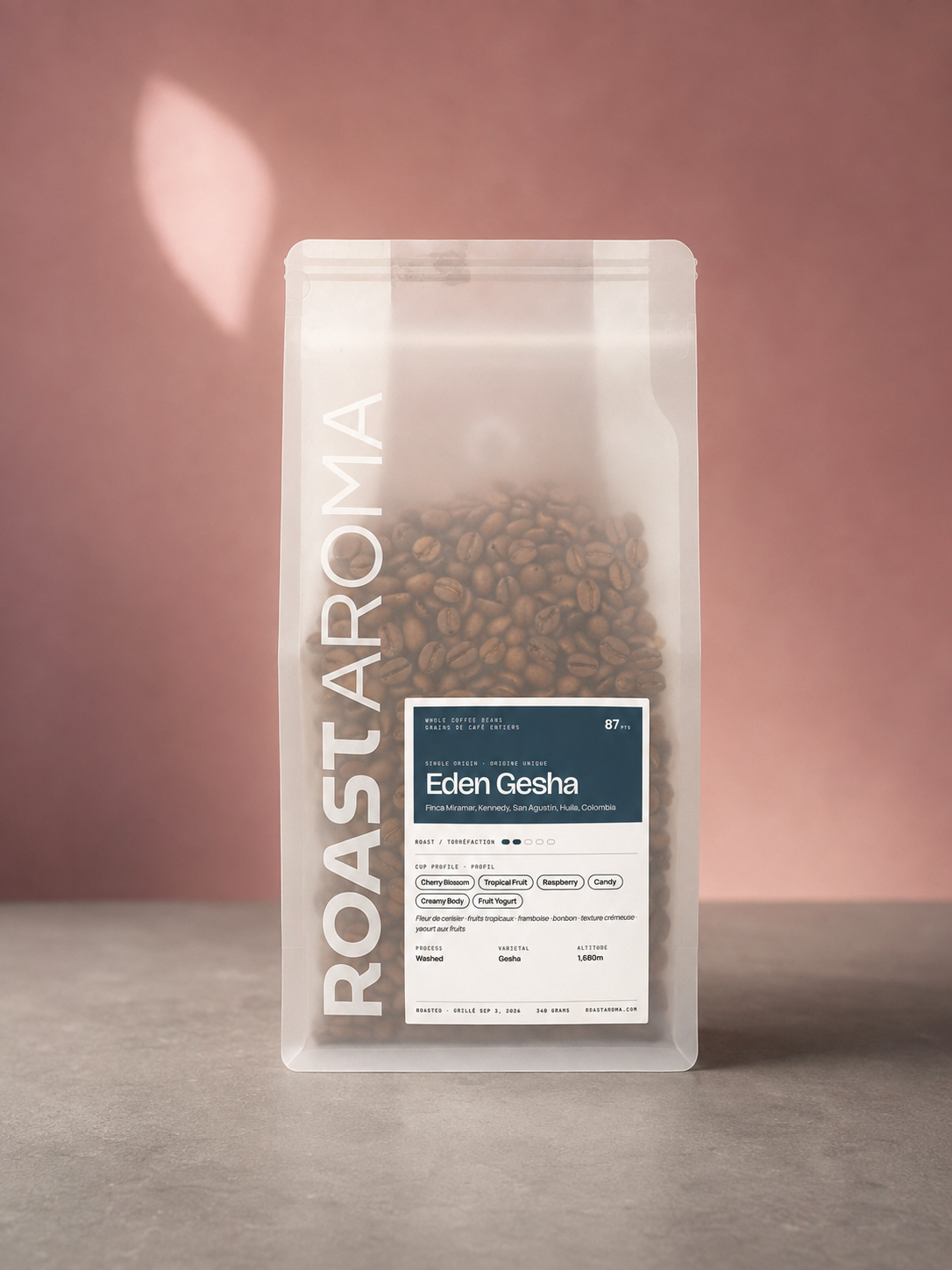 Eden Gesha - Colombian MiramarSCA 87Medium-light · Kennedy, San Agustin, Huila · WashedCherry blossom · Tropical fruitEnough brightness to show what this gear can separate.CA$26.24 · roasted to order
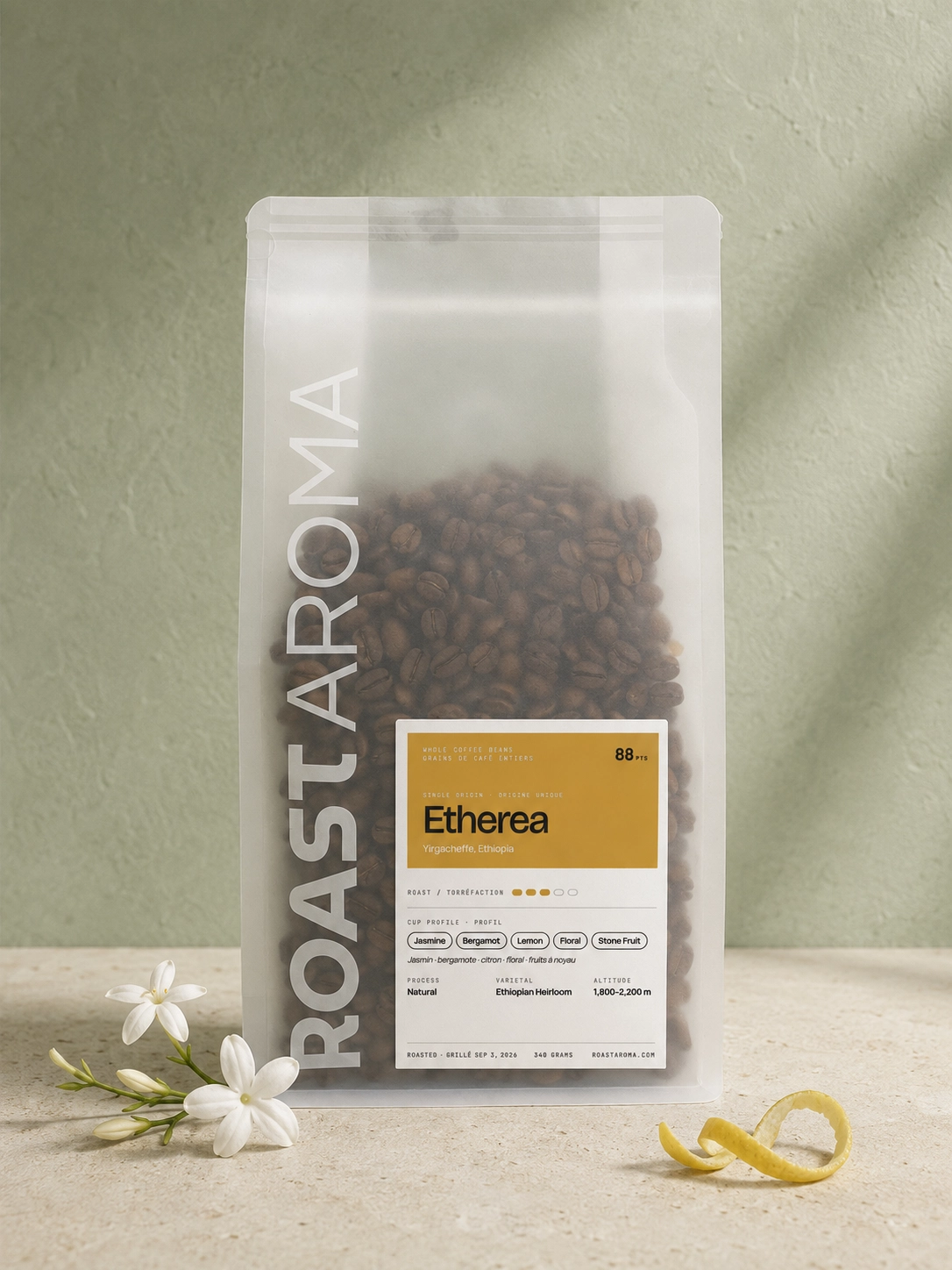 Etherea - Ethiopian YirgacheffeSCA 88Medium roast · NaturalJasmine · BergamotEnough brightness to show what this gear can separate.CA$24.16 · roasted to order
A capable grinder matters as much as the machine. Start with whole beans and a printed roast date.
Prefer regular deliveries? RoastPlan is RoastAroma’s coffee subscription. Choose your coffees and their available options, then set deliveries every 1–6 weeks.
One-time RoastAroma orders are roasted to order in Ajax, Ontario and ship Canada-wide. We’re the roastery behind this database — measuring the machines is how we make sure the coffee gets a fair shot.
On film
How it runs on camera, from around the community.
Common questions
Does the Slayer Single Group require a plumbed water connection?
Yes, it ships as a plumb-in machine. A direct water line and drain are required. Slayer has acknowledged an external reservoir upgrade path, but the standard machine has no built-in tank.
What does the needle valve actually do?
The needle valve restricts water flow during pre-brew (pre-infusion), allowing the barista to saturate the puck at very low pressure before opening to full brew pressure. Adjusting the valve changes the pre-brew flow rate, which in turn controls how much the puck swells and how the shot develops — this is what Slayer calls 'flavor profiling.'
Is this machine suitable for a household where not everyone makes espresso?
Not really. There are no volumetric or one-touch modes; every shot requires manual paddle operation and active attention. Forum owners note that partners who did not want to learn the workflow found it unusable, leading some to sell and buy a semi-automatic or super-automatic instead.
What grinder does the Slayer Single Group need?
The needle-valve pre-brew system enables (and rewards) grinding considerably finer than a standard espresso grinder allows. A premium single-dose flat-burr grinder — Lagom P64, Kafatek Monolith, or equivalent — is strongly advised. A quality conical single-dose grinder is a functional minimum for darker roasts.
How loud is it?
The rotary pump (current V3/V4 models) is quieter than a vibratory pump but still audible. Earlier gear-pump versions were described by Home Barista reviewers as sounding like 'a muffled dentist's drill.' Current rotary-pump machines are a meaningful improvement.
What warranty does the Slayer Single Group carry?
Slayer provides a 15-month parts and labor warranty from the date of shipment from Seattle. Warranty coverage excludes damage from inadequate water treatment — a strict filtered-water requirement is enforced.
Worth comparing
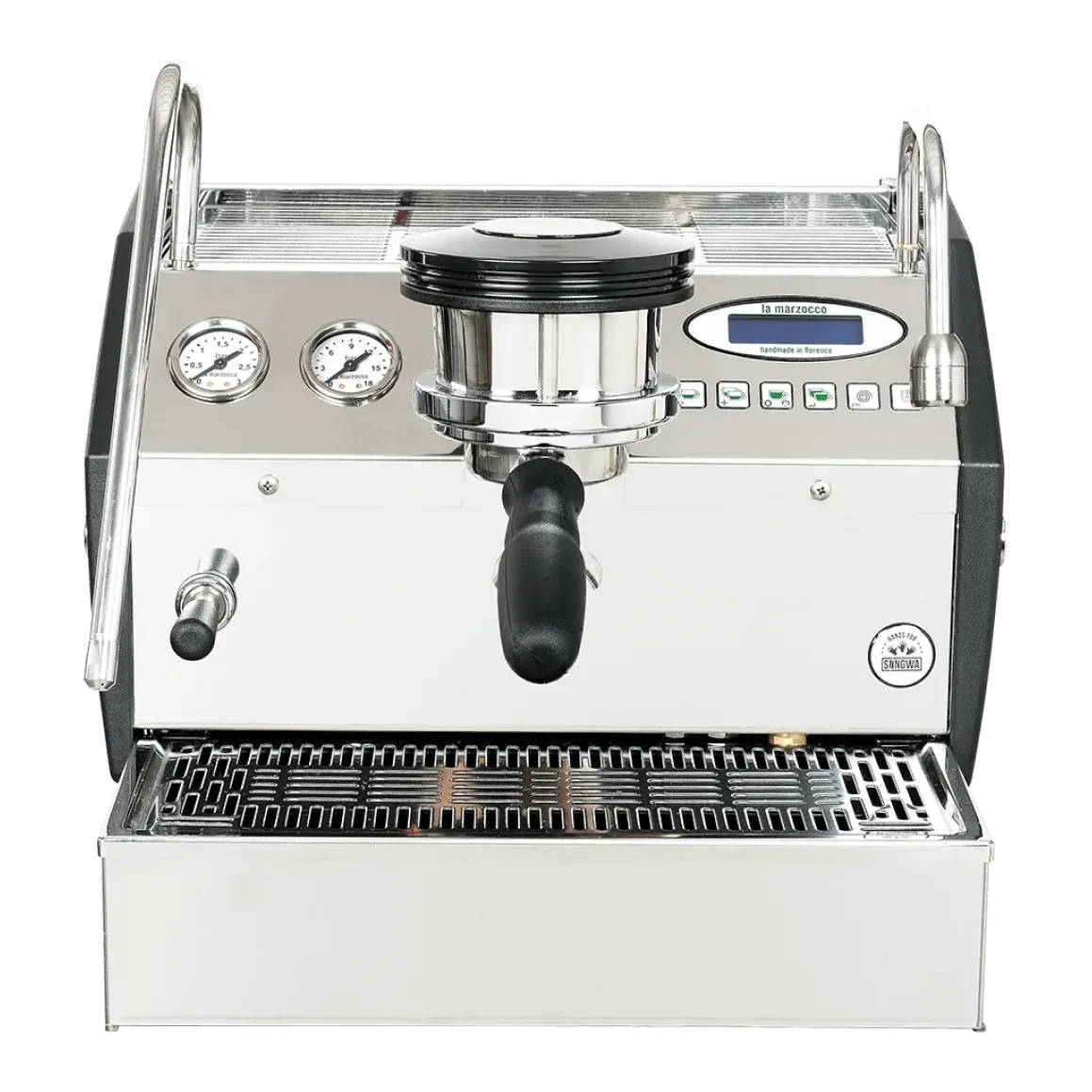
La Marzocco
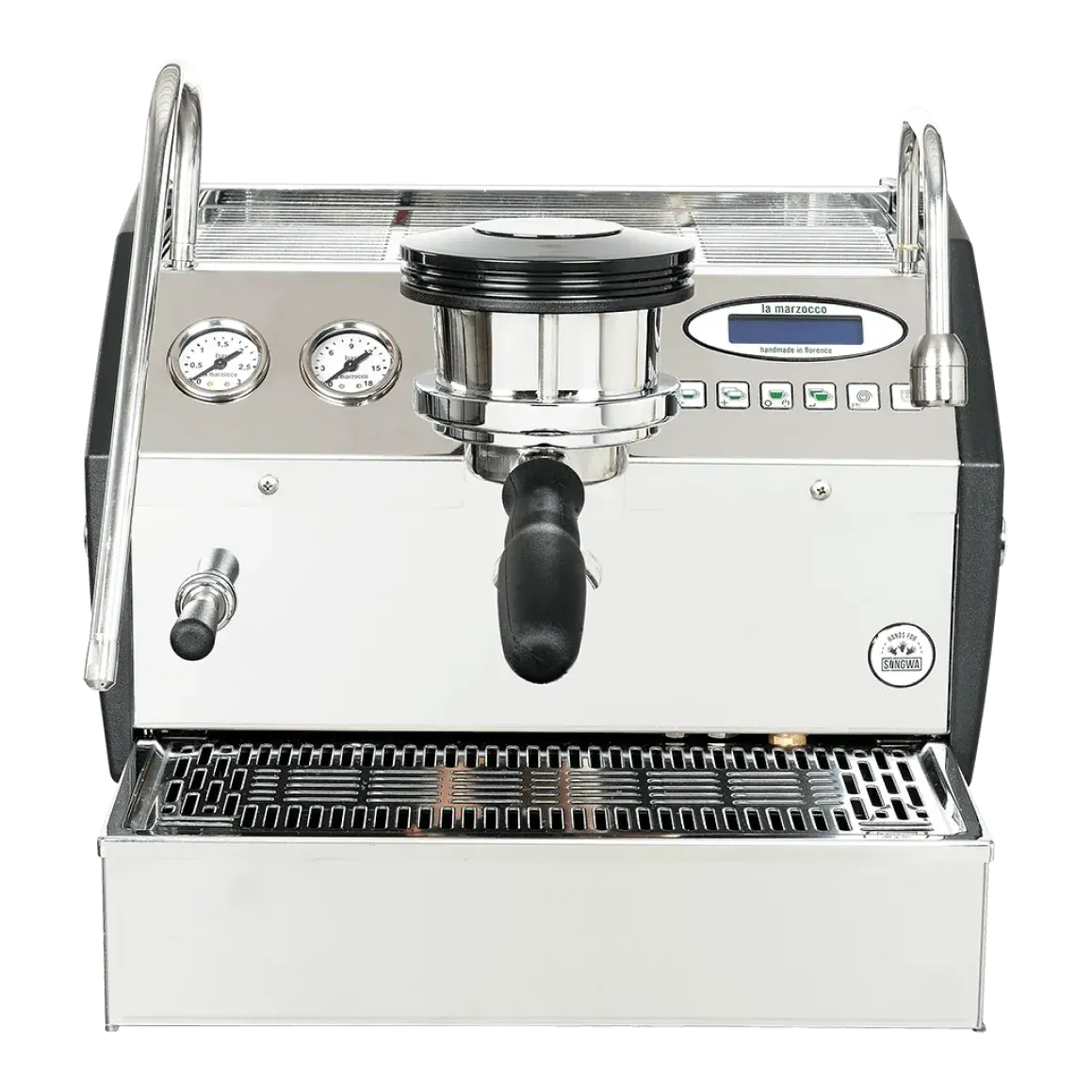
GS3 AV
A Florence-built, dual-boiler prosumer machine carrying the saturated group and commercial electronics of the Strada into a single-group home footprint. The AV version trades the MP's paddle-driven flow control for push-button volumetric repeatability and a programmable pre-infusion sequence.
US$8,400–9,740
La Marzocco
GS3 MP
La Marzocco's flagship home machine pairs a hand-built dual-boiler platform with a mechanical paddle that gives direct, real-time control over brew pressure from 0 to 9 bar — the closest thing to a commercial Strada that runs on a standard 120V outlet.
US$8,800
Slayer
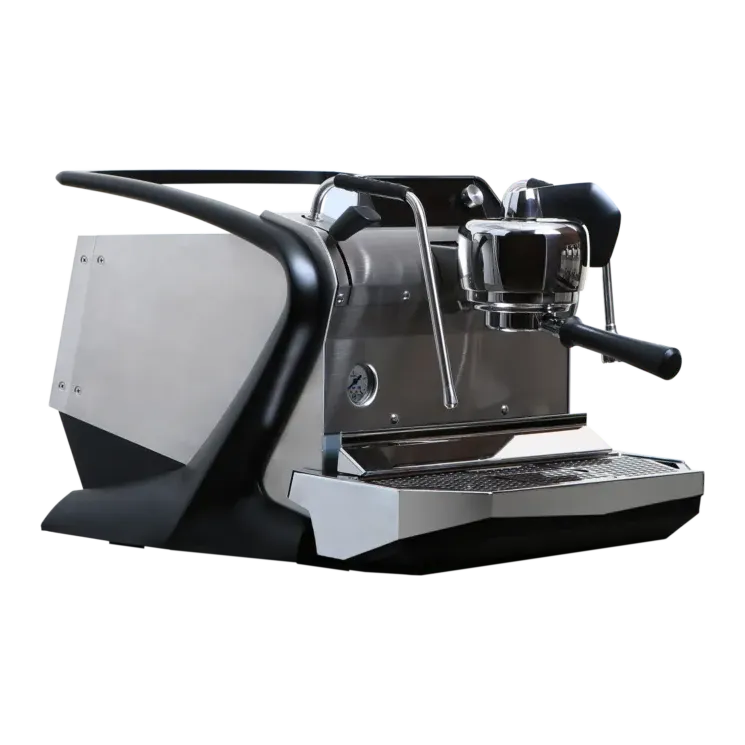
Steam Single
Seattle-built dual-boiler prosumer machine that distills the commercial Steam LP into a reservoir-equipped single-group format, with programmable pre-infusion, record-and-playback volumetric dosing, and a rotary pump — the most accessible Slayer yet.
US$9,843 · CA$19,040–19,185
Weighing it against something we didn’t list? Compare it with anything on file →
Still weighing it? The finder narrows all 429 down to three that fit your life.
Run the two-minute finder →