Wacaco · ManualPicopresso
A palm-sized, hand-pump manual espresso maker with a genuine 52 mm bottomless portafilter and 18 g commercial-sized basket — no electricity, no boiler, just technique and hot water.
The short version
The Picopresso is the most capable portable hand-pump espresso device on the market for the money, capable of producing shots that can embarrass entry-level electric machines.
The trade-off is real: there is no heating element, no steam, no milk capability, and consistent results demand an espresso-capable grinder, a scale, and genuine attention to technique.
Why people buy it
- Genuine unpressurized 52 mm basket produces real espresso-quality shots with crema — a rarity at any portable price point.
- Completely pump-free and silent — zero electronics means no charging, no failures, and silent operation even in shared spaces.
Why they don’t
- No internal heating: you must externally boil water and pre-heat the device, adding 5–10 minutes to every session — a real friction point at a hotel or campsite without a kettle.
The full tally
- Genuine unpressurized 52 mm basket produces real espresso-quality shots with crema — a rarity at any portable price point.
- Completely pump-free and silent — zero electronics means no charging, no failures, and silent operation even in shared spaces.
- All accessories (tamper, WDT tool, dosing funnel, brush, scoop) nest inside the unit and into the included EVA carry case; nothing rattles loose in a pack.
- Stainless steel and aluminum construction throughout the brew path is a meaningful durability step up from the plastic-basket Nanopresso.
- No internal heating: you must externally boil water and pre-heat the device, adding 5–10 minutes to every session — a real friction point at a hotel or campsite without a kettle.
- Shot consistency is highly grind-dependent; store-bought pre-ground coffee is too coarse, making a quality hand or travel grinder a near-mandatory companion purchase.
- Single-shot workflow only and no steam wand, so it cannot support milk drinks at all — unsuitable for anyone whose default order is a latte or cappuccino.
What the community knows
Years of owner threads, distilled — a niche favourite.
Shot quality-to-dollar ratio is remarkable and genuinely punches above weight; community's reserve stems from steep technique demands, no long-term reliability track record, zero upgrade ecosystem, and a dead-end form factor once novelty fades or durability questions bite.
Value
price-to-performance the community respects
Ceiling per dollar
how far the cup can go, per dollar
Design pull
All 9 community measures
price-to-performance the community respects
shows up every morning, year after year
parts and repairs — you are never stranded
mods, guides, and community know-how around it
kind to first-timers
years before you outgrow or replace it
how far the cup can go, per dollar
speed and simplicity, day to day
Worth knowing before you buy — Most owners eventually wish they'd paired it with a better grinder; the machine's ceiling is locked by grind consistency, not pump pressure.
Known weak points — Group head cracking under repeated thermal stress reported anecdotally; spring fatigue in pump mechanism; seal degradation over extended use — sparse documentation, not yet community-consensus failures but recurring thread undertones.
“"I originally got this for the office so I could have drinkable coffee there, but it's been so good and easy to use that the old Delonghi Dedica has been left to collect dust at home."”
“"The shots from the Picopresso taste (I must say) surprisingly great. They're remarkably smooth and rich with a good amount of texture."”
“"James Hoffmann said it, and I have to agree with him - this thing has no business being as good as it is."”
The measurements
Scored 0–5 on the same rubric as everything on file — the words matter more than the numbers.
The measurements
0–5, one rubric- Shot ceiling
- serious3.5
- Steam power
- token0
- Built to last
- fair3
- Easy daily
- demanding0
Position in the market
Every dot is a rival, measured the same way. The gold one is this.
- Mid-pack for shot ceiling
- a higher ceiling than 109 of the 237 machines we’ve measured
- A value pick at this level
- 100% of machines this capable cost more
- Lower half for build
- sturdier than 28% of the field, by the community’s own record
Every dot is a machine measured on the same rubric. See the whole market
Living with it
The part spec sheets skip: counter space, upkeep, and what owners learn later.
The honest note — Users who grow into the Picopresso typically outgrow its workflow constraints before its shot quality ceiling. The natural next step is a compact electric lever such as the Flair 58 or Cafelat Robot for desktop use, or a travel-capable but electric option like the Wacaco Pixapresso. Those seeking a home machine typically move to a single-boiler such as the Gaggia Classic or Breville Bambino Plus, paired with a proper electric grinder.
The full spec sheet
- Type
- Manual
- Heat-up time
- 0 seconds
- Steam power
- 0/5
- Brew + steam at once
- No
- Guest recovery
- 0/5
- Shot quality ceiling
- 3.5/5
- PID temperature control
- No
- Milk system
- None
- Removable brew group
- No
- Flow control
- Yes
- Cup clearance
- 0 cm
- Workflow demand
- 5/5
- Maintenance
- 1/5
- Noise
- 0/5
- Build longevity
- 3/5
- Dimensions
- 7.8 × 7.1 × 10.6 cm
Before it arrives
What completes this machine — the faded pieces can wait.
Gooseneck kettle · not optional — Manual and lever machines bring no water of their own — a temperature-stable gooseneck is how you actually pull a shot.
- Gooseneck kettle — Manual and lever machines bring no water of their own — a temperature-stable gooseneck is how you actually pull a shot.
- Coffee scale with timer — Espresso is a ratio. A 0.1g scale with a built-in timer is the single biggest consistency upgrade for any manual machine.
- Standalone milk steamer — No steam wand on board — a standalone steamer (Bellman, Subminimal NanoFoamer) is how you get a real flat white.
- WDT distribution tool — Breaks up clumps before tamping — a cheap fix for channeling on any portafilter machine.
- Handheld milk frother — The cheapest path to foam for a no-steam machine — fine for casual milk drinks, not latte art.
- Espresso cups & glassware — Proper demitasse and latte glasses keep the drink hot and look the part.
Feed it right
Week one is dial-in — and stale beans will lose it.
Coffee more than a few weeks past roast won’t extract predictably, and a new machine gets blamed for it. A machine in this class will show you the difference between roast dates — it deserves beans that change week to week.
Pick your coffee — any of these dials in beautifully here:
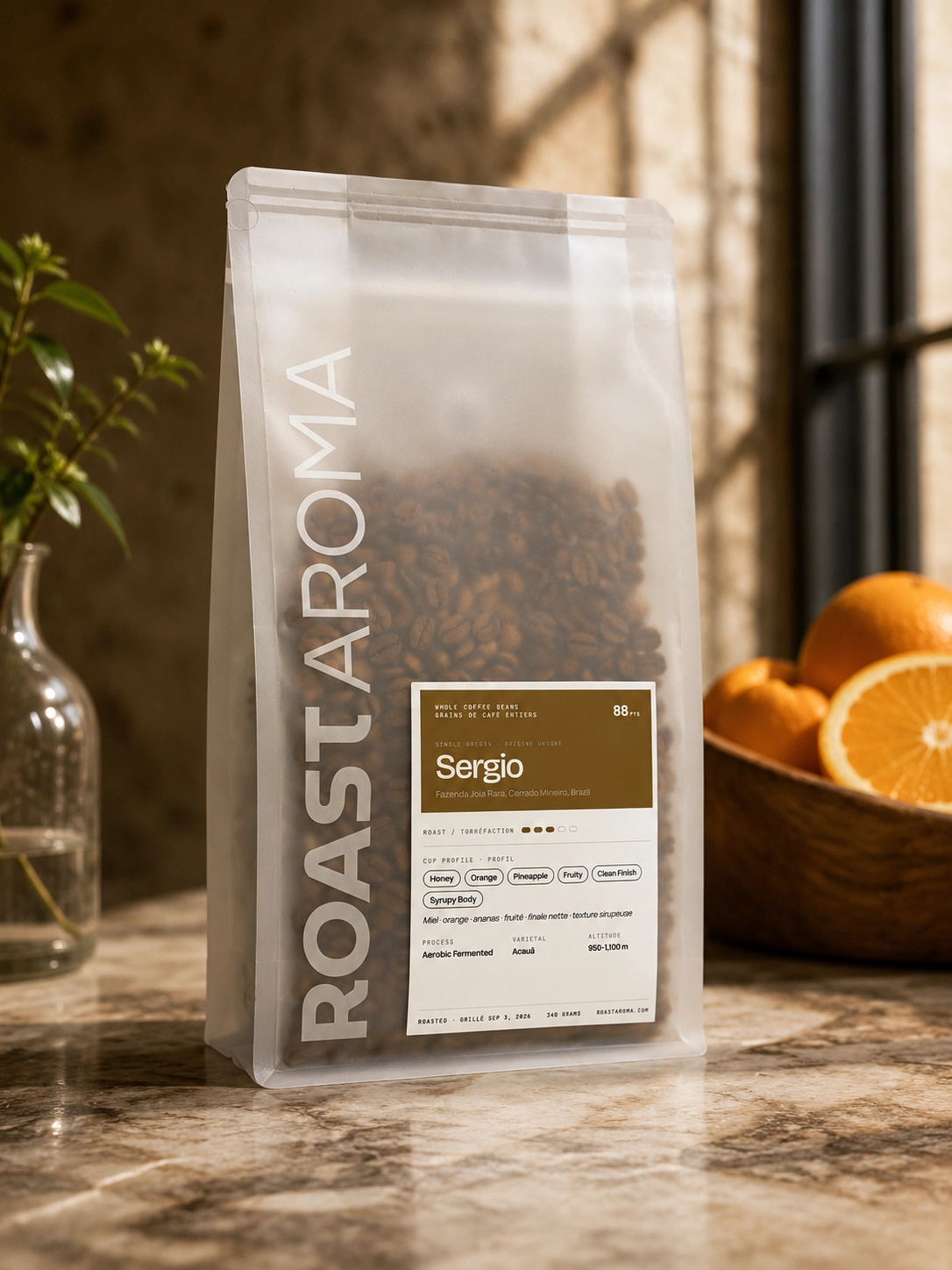 Sergio - Brazillian Fazenda Joia Rara Aerobic FermentedSCA 88Medium-light · Cerrado Mineiro · Aerobic FermentedHoney · OrangeEnough brightness to show what this gear can separate.CA$29.18 · roasted to order
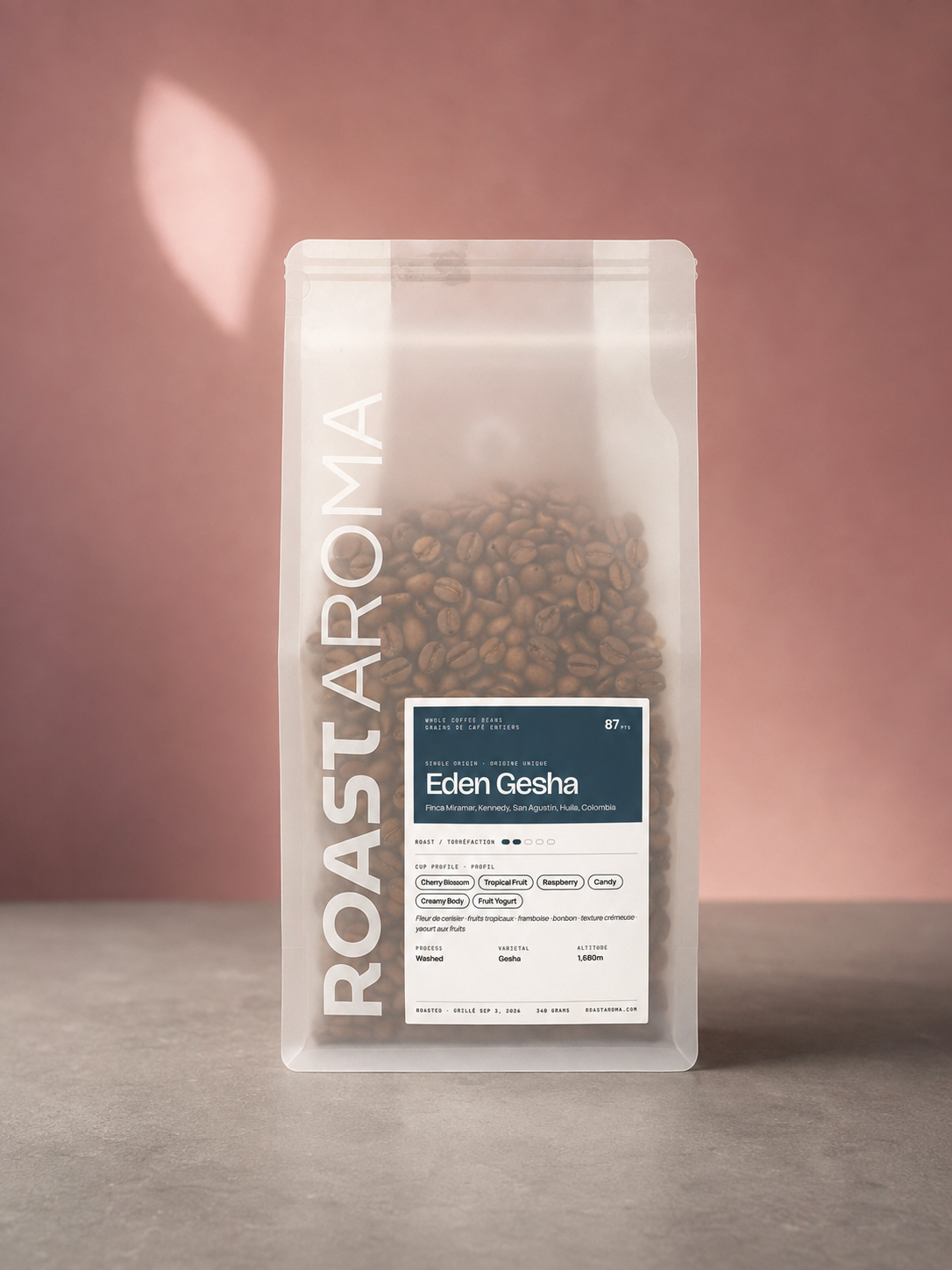 Eden Gesha - Colombian MiramarSCA 87Medium-light · Kennedy, San Agustin, Huila · WashedCherry blossom · Tropical fruitEnough brightness to show what this gear can separate.CA$26.24 · roasted to order
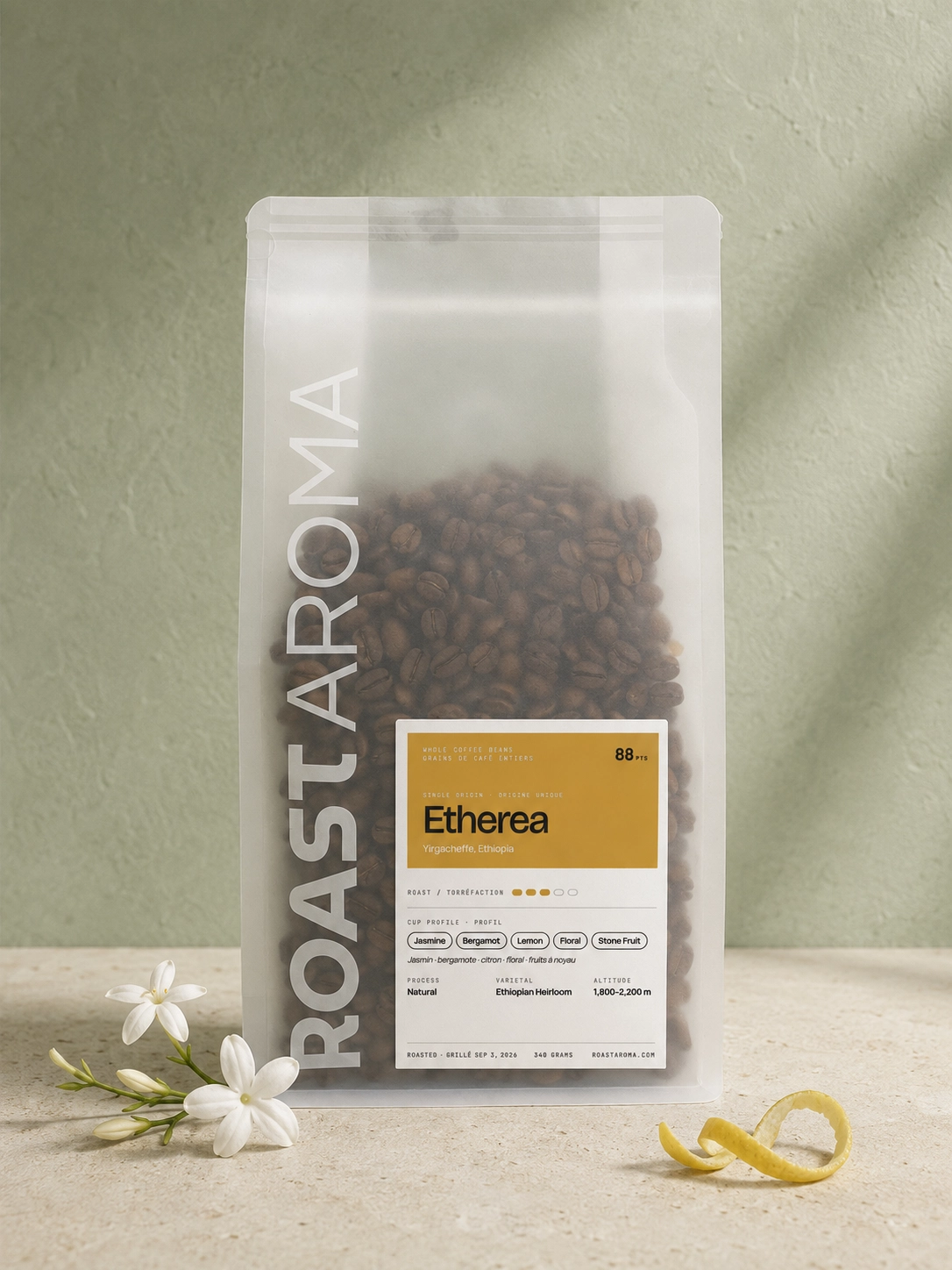 Etherea - Ethiopian YirgacheffeSCA 88Medium roast · NaturalJasmine · BergamotEnough brightness to show what this gear can separate.CA$24.16 · roasted to order
A capable grinder matters as much as the machine. Start with whole beans and a printed roast date.
Prefer regular deliveries? RoastPlan is RoastAroma’s coffee subscription. Choose your coffees and their available options, then set deliveries every 1–6 weeks.
One-time RoastAroma orders are roasted to order in Ajax, Ontario and ship Canada-wide. We’re the roastery behind this database — measuring the machines is how we make sure the coffee gets a fair shot.
On film
How it runs on camera, from around the community.
Common questions
Does the Picopresso heat its own water?
No. The Picopresso has no heating element. You must supply externally boiled water and pre-heat the device by pumping hot water through it before loading coffee. This is essential for extraction temperature and shot quality.
What grind size and dose does it need?
It requires an ultra-fine espresso grind — finer than most store-bought pre-ground coffee. The basket is rated for 18 g but can accept up to 20–22 g. A burr grinder capable of espresso fineness is effectively required; blade grinders will not work consistently.
What pressure does the Picopresso reach?
Wacaco rates it at a maximum of 18 bar, though the target extraction pressure at the puck during a shot is the standard 9–12 bar. The 18-bar figure refers to the peak pump capability, not the average brew pressure.
Is a pressure gauge available?
Yes. Wacaco sells an optional pressure gauge accessory that attaches to the device and gives real-time feedback on pumping pressure — useful for dialing in technique.
Can it make milk drinks?
No. The Picopresso has no steam wand, no frother, and no hot water output. It produces espresso only. For milk drinks you would need a separate milk frothing device.
How do you clean it?
Rinse the basket and shower head with warm running water and wipe with a damp cloth. Disassembly is straightforward; let all parts dry separately. There is no automated cleaning cycle and no descaling required.
Worth comparing
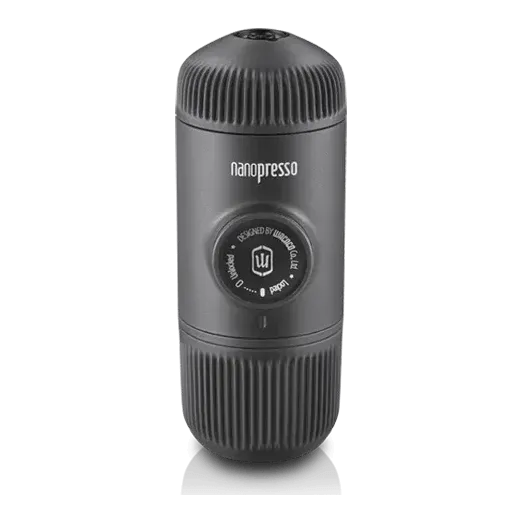
Wacaco
Nanopresso
A palm-sized, hand-pump espresso maker capable of 18 bar pressure with zero electricity needed — the most accessible entry point in portable espresso, with an accessory ecosystem that adds Nespresso pod compatibility and double-shot capacity.
US$69–75 · CA$85–95
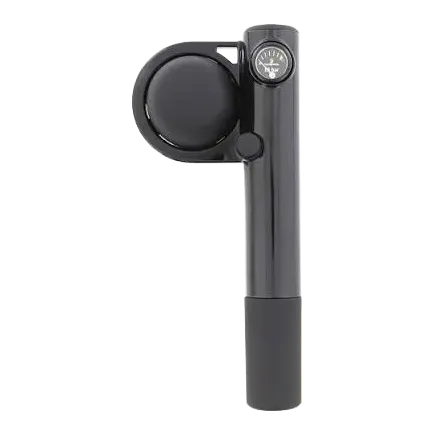
Handpresso
Pump
A hand-pump portable espresso maker that requires no electricity, generating 16 bar of pressure via a bicycle-style pump to pull a single shot anywhere hot water is available.
CA$129–149 · US$110–120
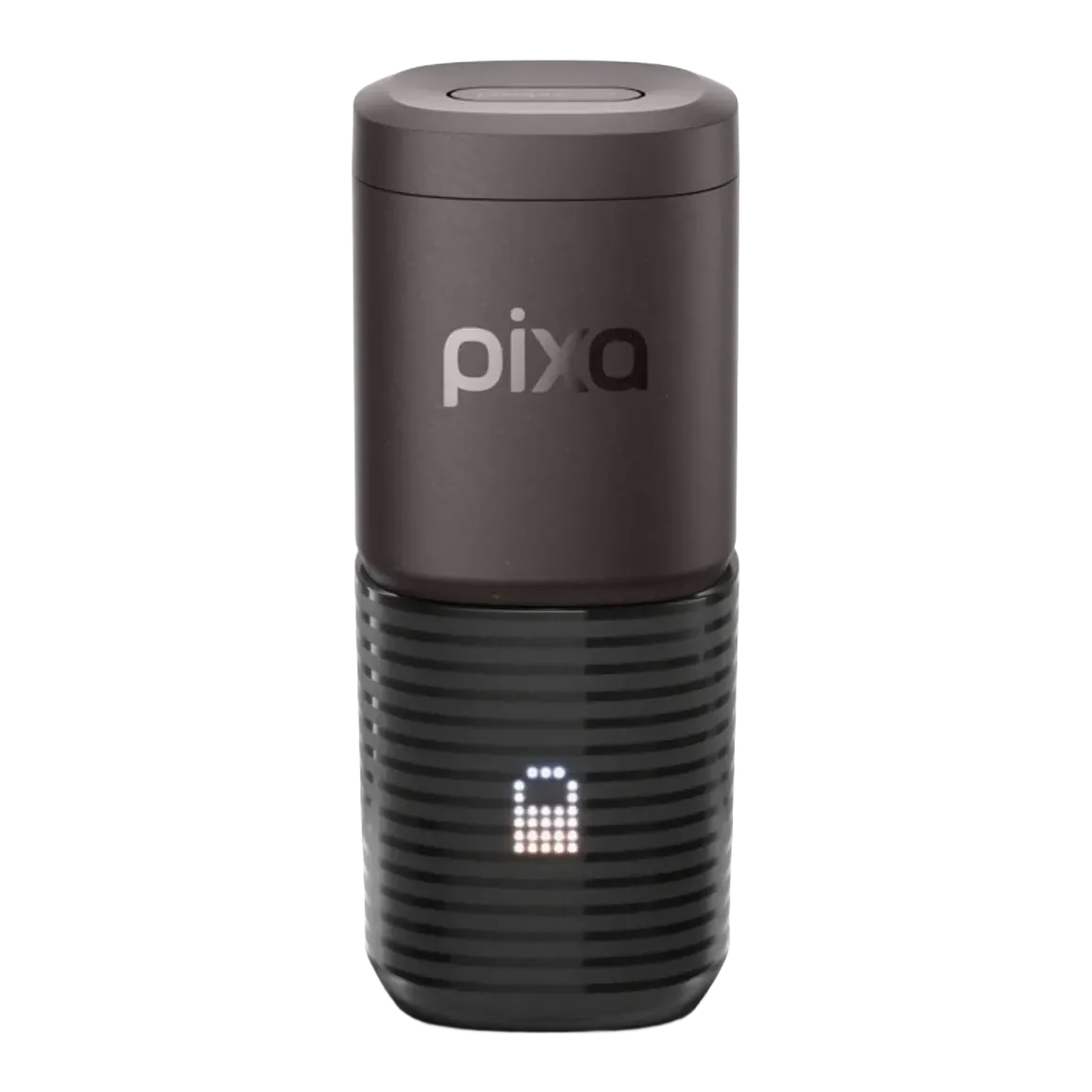
Wacaco
Pixapresso
Wacaco's first fully electric, battery-powered portable espresso maker: it heats cold water to brew temperature, supports both ground coffee and Nespresso Original capsules, and fits in a carry-on — at the cost of modest battery capacity and plastic-heavy construction.
US$159 · CA$215–220
Weighing it against something we didn’t list? Compare it with anything on file →
Still weighing it? The finder narrows all 429 down to three that fit your life.
Run the two-minute finder →