VBM (Vibiemme) · Heat exchangerVBM Domobar Super HX
A heavy-duty Italian HX machine built around the Faema E61 group, a large copper boiler, and commercial-grade internals — available with vibratory or rotary pump in manual, semi-automatic, or electronic dosing flavors.
The short version
The Domobar Super HX is a proven, overbuilt heat-exchanger machine that rewards patience: the 45-minute warm-up and HX cooling flush are non-negotiable rituals, but the payoff is copious steam, a stable group, and a machine that owners reliably run for a decade or more. The depth (20 inches) and weight (70 lb) are real constraints — measure your counter before you commit.
Why people buy it
- Arguably the heaviest and most durable E61 group in its class — 70 lb all-metal construction with commercial UL listing and a track record of decade-plus service lives
- Large 1.8 L copper boiler produces abundant, powerful steam and maintains stable group temperatures through the thermosyphon restrictor
Why they don’t
- 45-minute minimum warm-up and a mandatory HX cooling flush before every session — not a machine for grab-and-go mornings
The full tally
- Arguably the heaviest and most durable E61 group in its class — 70 lb all-metal construction with commercial UL listing and a track record of decade-plus service lives
- Large 1.8 L copper boiler produces abundant, powerful steam and maintains stable group temperatures through the thermosyphon restrictor
- Available in a wide matrix of configurations: manual lever, semi-auto, electronic dosing, vibratory or rotary pump, tank or plumbed-in, stainless or black housing
- Dual full-size analogue gauges (boiler pressure + brew pressure) give real-time feedback during extraction
- 45-minute minimum warm-up and a mandatory HX cooling flush before every session — not a machine for grab-and-go mornings
- 20-inch depth and 70-lb weight demand serious counter space and a committed installation; it does not move easily
- No PID on the base HX model means temperature management depends entirely on operator technique and cooling flush discipline
What the community knows
Years of owner threads, distilled — well regarded.
Proven multi-decade durability and E61 simplicity anchor it, but the newer Analogic variant with rotary pump and simpler interface is now the community's quieter default—the classic HX remains solid but displaced by a demonstrably better iteration.
Reliability
shows up every morning, year after year
Built to last
years before you outgrow or replace it
Parts & serviceability
parts and repairs — you are never stranded
All 9 community measures
price-to-performance the community respects
shows up every morning, year after year
parts and repairs — you are never stranded
mods, guides, and community know-how around it
kind to first-timers
years before you outgrow or replace it
how far the cup can go, per dollar
speed and simplicity, day to day
Worth knowing before you buy — Most owners eventually wish they'd waited for or upgraded to the Analogic version to escape the vibratory pump noise and gain the cleaner pressurestat interface.
Known weak points — Steam valve/wand seal failures on isolated units; older units prone to pressurestat deadband widening; copper boiler requires water softening to prevent limescale damage (not covered under warranty)
“I have been the happy owner of a 2006-vintage Vibiemme Domobar Super heat exchange espresso machine... It's been a great machine — only repair needed was to replace the switch on the 'scale' that turns boiler off when water reservoir becomes low.”
The measurements
Scored 0–5 on the same rubric as everything on file — the words matter more than the numbers.
The measurements
0–5, one rubric- Shot ceiling
- serious4
- Steam power
- confident4
- Built to last
- heirloom5
- Easy daily
- demanding1
Position in the market
Every dot is a rival, measured the same way. The gold one is this.
- Upper half for shot ceiling
- a higher ceiling than 149 of the 237 machines we’ve measured
- Fairly priced for its level
- 58% of machines this capable cost more
- Top quarter for build
- sturdier than 88% of the field, by the community’s own record
Every dot is a machine measured on the same rubric. See the whole market
Living with it
The part spec sheets skip: counter space, upkeep, and what owners learn later.
The honest note — Owners rarely outgrow this machine itself — they typically upgrade to a dual-boiler (Vibiemme Domobar Super Electronic Digital, ECM Synchronika, Rocket R58) when they want independent PID temperature control for both boilers or pressure profiling. A rotary-pump upgrade is available within the Domobar Super line without changing machines.
The full spec sheet
- Type
- Heat exchanger (HX)
- Heat-up time
- ~20 min
- Steam power
- 4/5
- Brew + steam at once
- Yes
- Guest recovery
- 3/5
- Shot quality ceiling
- 4/5
- PID temperature control
- No
- Milk system
- Manual steam wand
- Removable brew group
- No
- Hot-water tap
- Yes
- Cup clearance
- 11 cm
- Workflow demand
- 4/5
- Maintenance
- 3/5
- Noise
- 3/5
- Build longevity
- 5/5
- Dimensions
- 26.9 × 50.8 × 41.9 cm
Before it arrives
What completes this machine — the faded pieces can wait.
Water filter / softener — Plumbed-in machines need inline filtration to keep scale out of the boiler — it is cheaper than a repair.
- Water filter / softener — Plumbed-in machines need inline filtration to keep scale out of the boiler — it is cheaper than a repair.
- Descaler & backflush kit — Electric boilers scale up and grouts gunk up — a descaler plus backflush routine is what keeps the machine alive for a decade.
- Coffee scale with timer — Espresso is a ratio. A 0.1g scale with a built-in timer is the single biggest consistency upgrade for any manual machine.
- Knock box — Somewhere to bang the spent puck that is not your kitchen bin.
- Calibrated tamper — The bundled tamper is usually an afterthought; a fitted, calibrated one makes prep repeatable.
- WDT distribution tool — Breaks up clumps before tamping — a cheap fix for channeling on any portafilter machine.
- Espresso cups & glassware — Proper demitasse and latte glasses keep the drink hot and look the part.
Feed it right
Week one is dial-in — and stale beans will lose it.
Coffee more than a few weeks past roast won’t extract predictably, and a new machine gets blamed for it. A machine in this class will show you the difference between roast dates — it deserves beans that change week to week.
Pick your coffee — any of these dials in beautifully here:
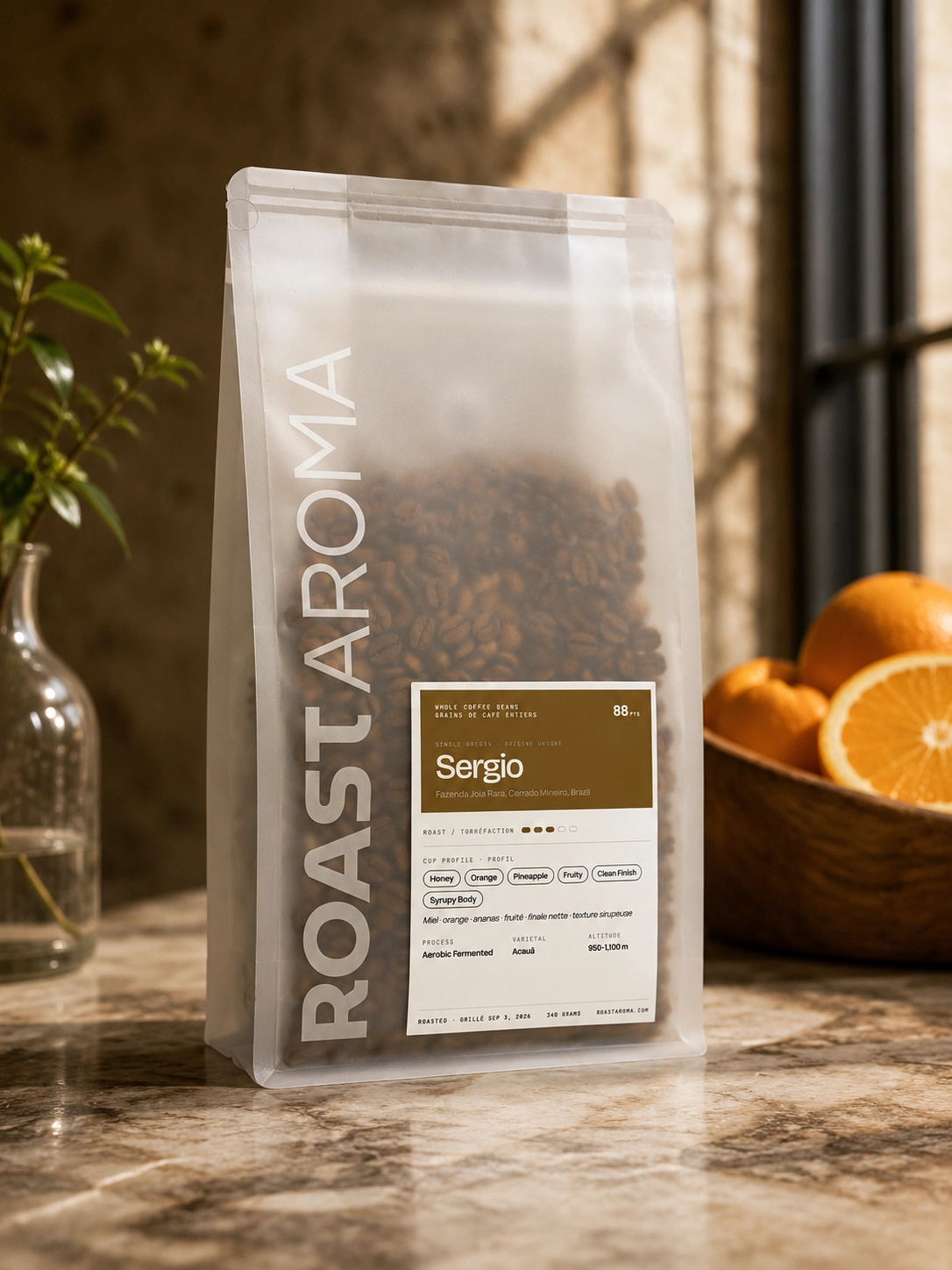 Sergio - Brazillian Fazenda Joia Rara Aerobic FermentedSCA 88Medium-light · Cerrado Mineiro · Aerobic FermentedHoney · OrangeEnough brightness to show what this gear can separate.CA$29.18 · roasted to order
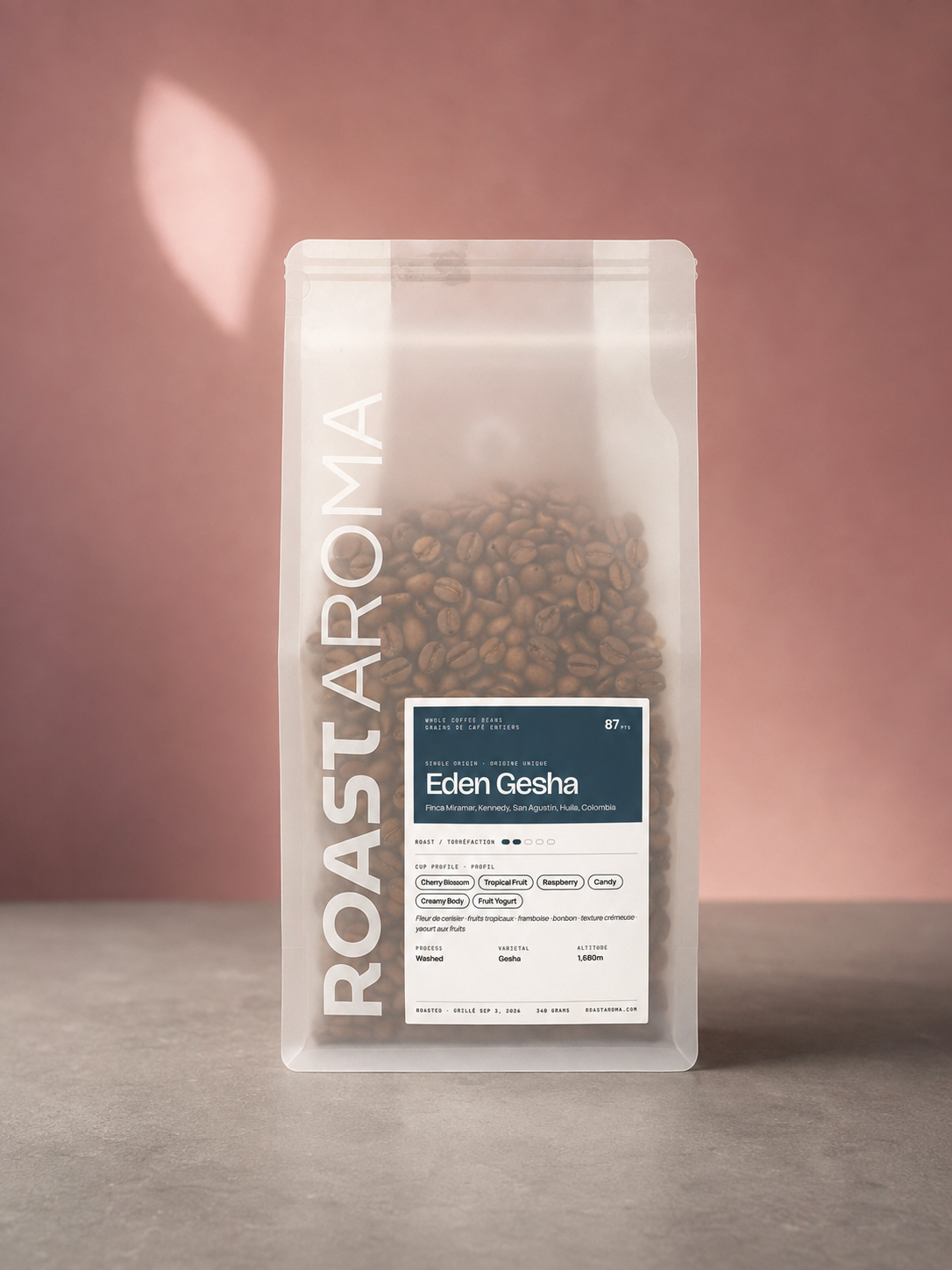 Eden Gesha - Colombian MiramarSCA 87Medium-light · Kennedy, San Agustin, Huila · WashedCherry blossom · Tropical fruitEnough brightness to show what this gear can separate.CA$26.24 · roasted to order
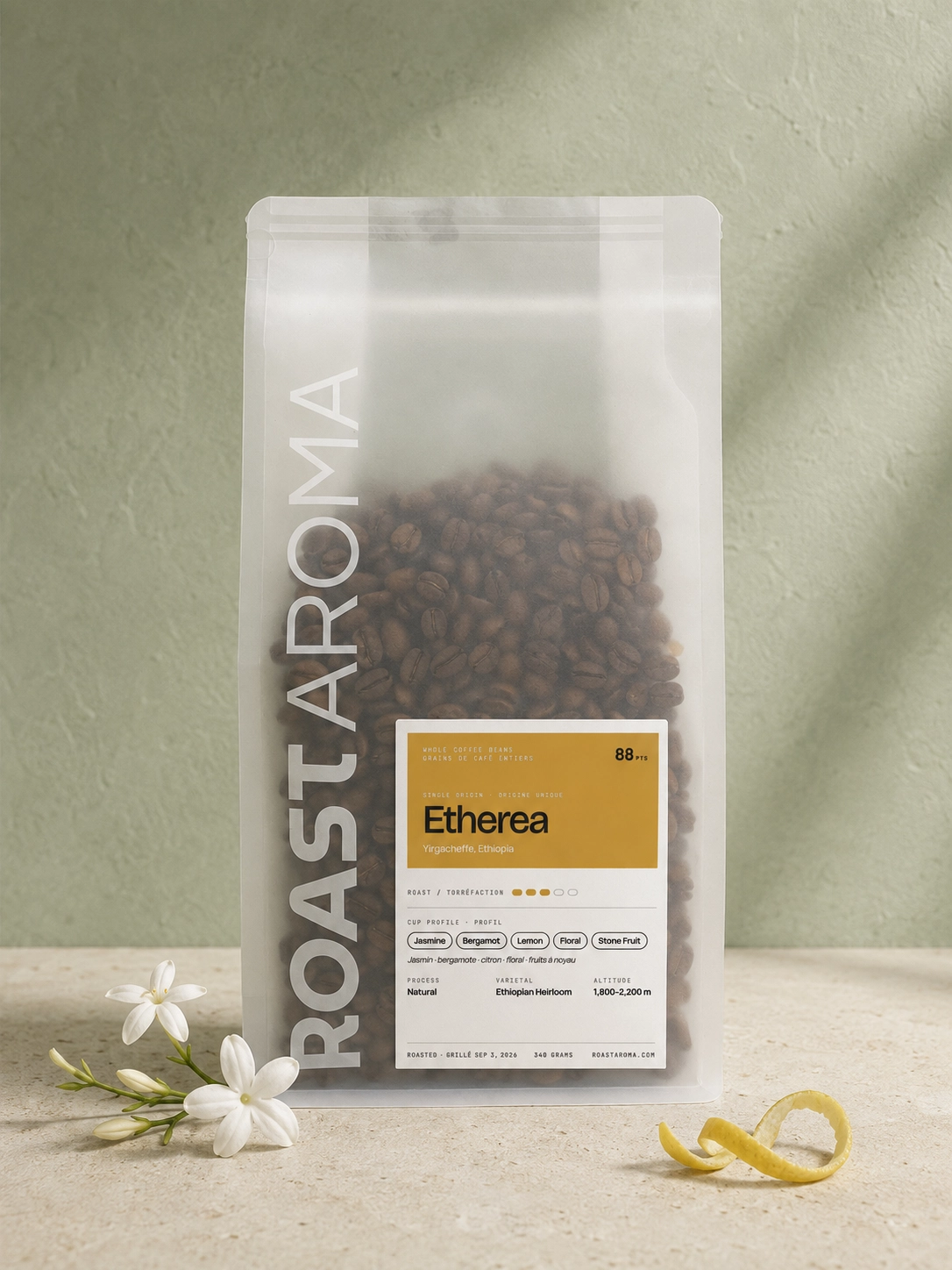 Etherea - Ethiopian YirgacheffeSCA 88Medium roast · NaturalJasmine · BergamotEnough brightness to show what this gear can separate.CA$24.16 · roasted to order
A capable grinder matters as much as the machine. Start with whole beans and a printed roast date.
Prefer regular deliveries? RoastPlan is RoastAroma’s coffee subscription. Choose your coffees and their available options, then set deliveries every 1–6 weeks.
One-time RoastAroma orders are roasted to order in Ajax, Ontario and ship Canada-wide. We’re the roastery behind this database — measuring the machines is how we make sure the coffee gets a fair shot.
On film
How it runs on camera, from around the community.
Common questions
Does the Domobar Super HX have PID temperature control?
The base HX models do not include PID. Temperature management relies on boiler pressure adjustment via the pressurestat and the operator performing a cooling flush before pulling shots. The dual-boiler Electronic Digital variant adds independent PID control for both boilers.
How long does the Domobar Super HX take to be ready to brew?
Plan for 45 minutes to an hour for the boiler to fully stabilise. After that initial heat-up, a short cooling flush is required before each shot to bring HX water to the correct brew temperature.
Can it be plumbed directly to a water line?
Yes. Certain variants (the switchable tank/direct-connect models) can be plumbed to a water line or operated from the internal reservoir. A manual lever underneath the machine selects the water source.
What portafilter size does the Domobar Super use?
Standard 58mm. The machine ships with one single-spout and one double-spout portafilter, plus a blank basket for backflushing. The plastic tamper in the box should be discarded in favour of a proper 58mm tamper.
Vibratory or rotary pump — which should I choose?
The rotary pump variant is notably quieter and provides smoother pressure ramp-up at the start of extraction. It also enables direct plumb-in without an additional pump. The vibratory pump version is less expensive and perfectly capable; noise is the main practical difference.
Worth comparing
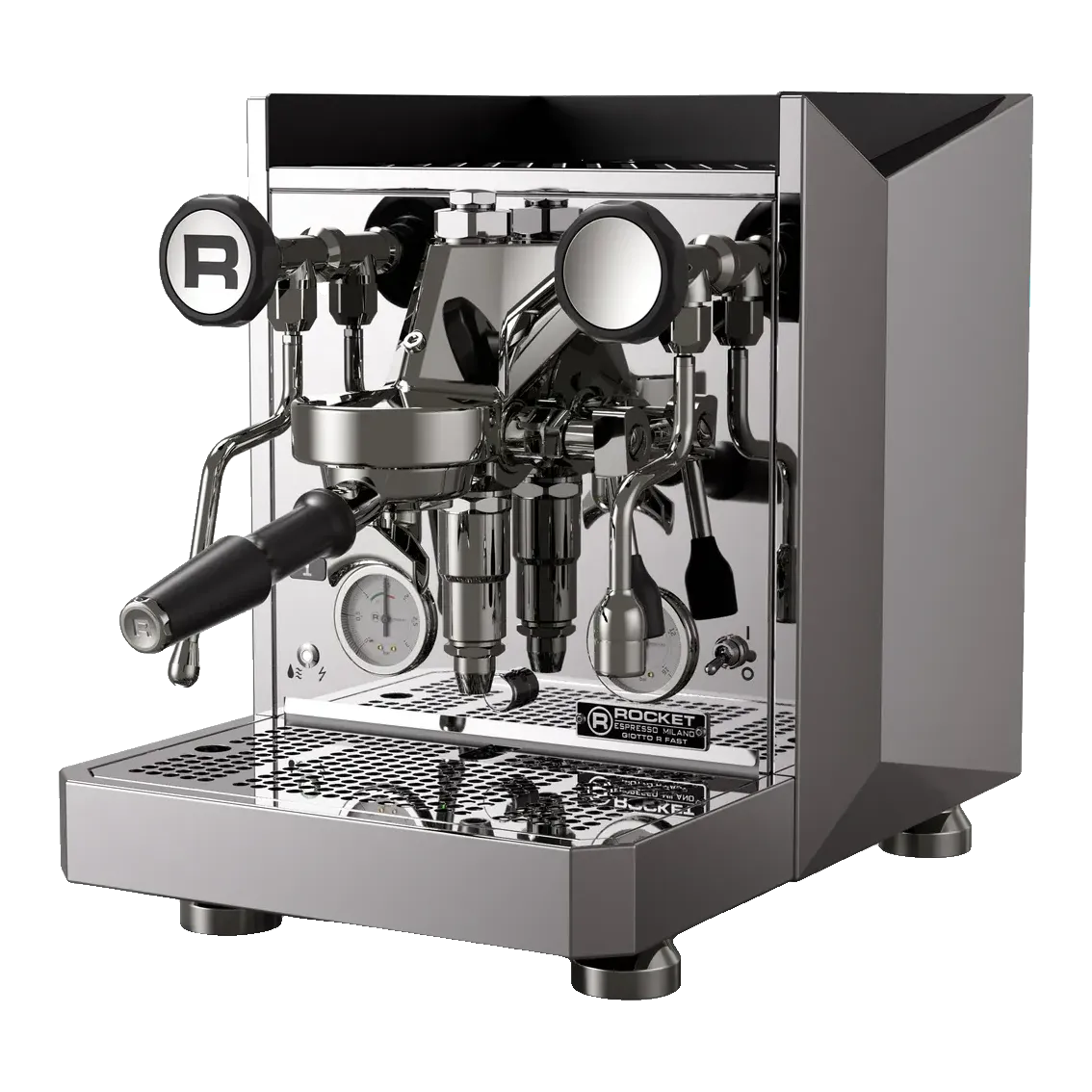
Rocket Espresso
Giotto FAST (2025)
Rocket's 2025 redesign of its iconic Giotto, now with an actively heated E61 group that cuts warm-up to around 12 minutes — without abandoning the insulated 1.8L copper HX boiler and rotary or vibratory pump options that made the line.
US$2,400–3,100 · CA$4,595–4,995
Izzo
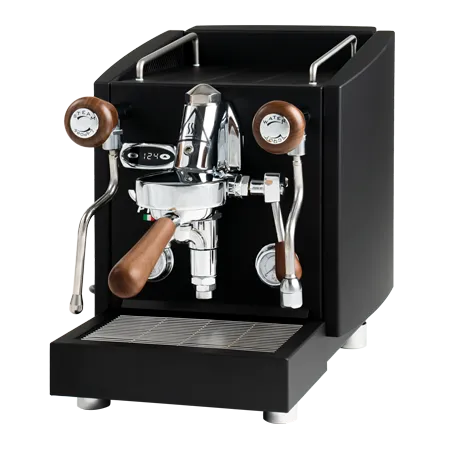
Vivi PID
A compact, hand-assembled Italian HX machine built around an E61 group, 1.8L insulated copper boiler, and PID shot-timer display — more machine than its footprint suggests.
US$1,600–2,000
Profitec
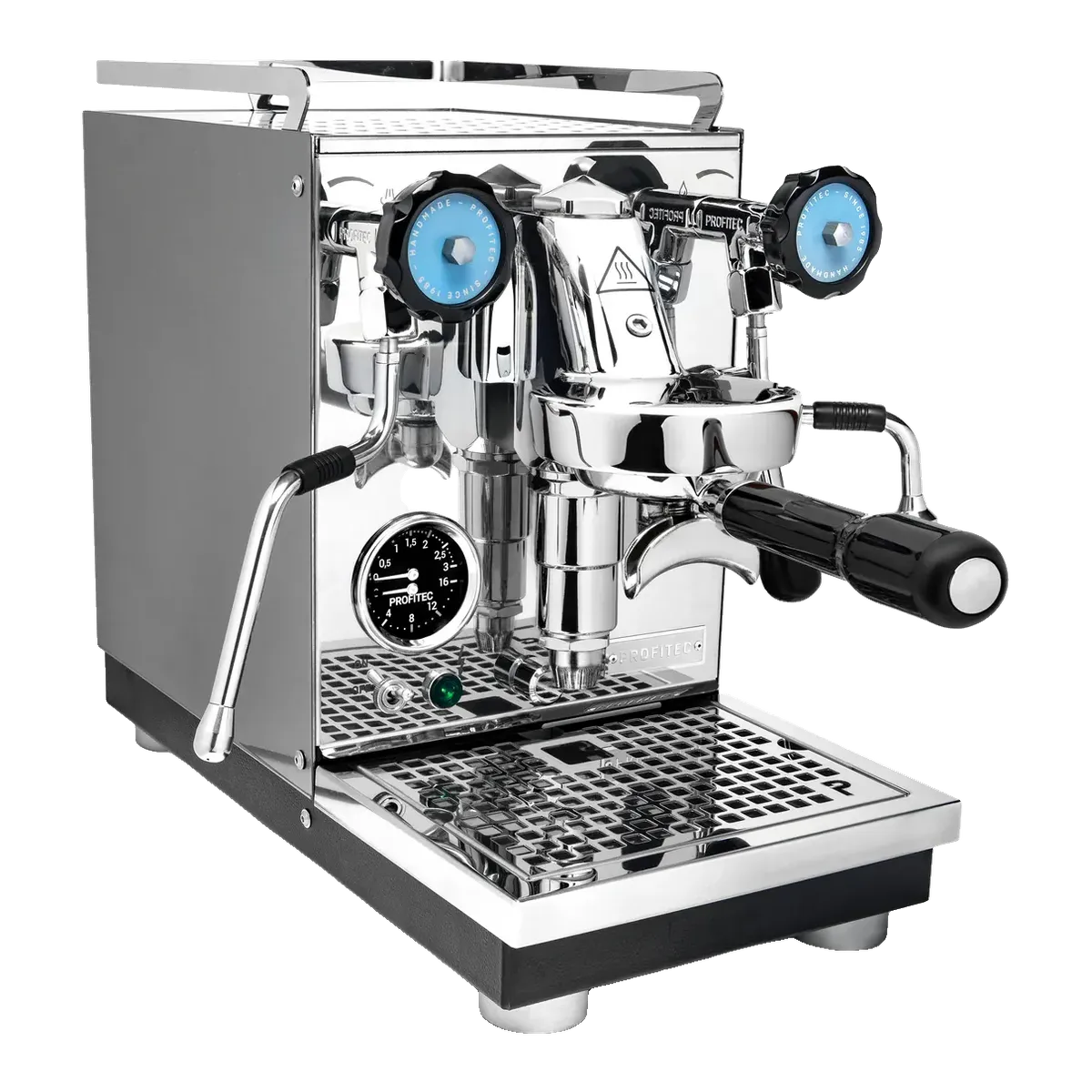
Pro 400
The most compact machine in Profitec's lineup packs a full E61 group, 1.6-liter stainless HX boiler, three preset boiler temperatures, and switchable pre-infusion into a 9-inch-wide chassis — genuine prosumer hardware at a price well below dual-boiler territory.
US$1,599–1,699 · CA$2,210–2,700
Weighing it against something we didn’t list? Compare it with anything on file →
Still weighing it? The finder narrows all 429 down to three that fit your life.
Run the two-minute finder →