Sanremo · Flat burrX-One
Sanremo's flagship commercial grinder uses a patented weigh-before-grinding system and 98 mm vertical flat DLC burrs to replace three separate grinders in one compact bar footprint — with near-zero retention and no purging required between doses.
The short version
The X-One is a serious commercial workstation grinder that trades price and complexity for genuinely novel dosing technology: beans are weighed before they touch the burrs, the chamber clears after every shot, and two hoppers plus a bypass drawer cover almost any café programme. The one thing a buyer must accept is a significant capital outlay — street prices run upward of $6,900 USD — and a reliance on complex electronics and a motor inverter that make long-term serviceability a real question for buyers outside a Sanremo dealer network.
Why people buy it
- Patented weigh-before-grind system eliminates post-grind dosing error and removes the need to purge between size changes
- Empty-chamber design means near-zero retention; each dose starts completely fresh with no stale carry-over
Why they don’t
- Street price of ~$6,900 USD places it firmly in the commercial tier — hard to justify for home use or small operators
The full tally
- Patented weigh-before-grind system eliminates post-grind dosing error and removes the need to purge between size changes
- Empty-chamber design means near-zero retention; each dose starts completely fresh with no stale carry-over
- Dual 1.2 kg hoppers plus a third bypass drawer effectively replace three separate grinders on one footprint
- 98 mm DLC-coated vertical flat burrs handle everything from espresso to French press without swapping hardware
- Street price of ~$6,900 USD places it firmly in the commercial tier — hard to justify for home use or small operators
- Complex electronics, touchscreen, motor inverter, and auger-feed mechanics add failure points that general technicians may not be able to service
- At 580 mm tall and 22 kg it is large and heavy; genuinely compact only compared to owning three separate grinders
What the community knows
Years of owner threads, distilled — the community is split.
Premium engineering and weigh-by-bean workflow genuinely shine, but electronic complexity, unproven parts longevity, and home-use-specific friction (dual hopper design, tall footprint, resale uncertainty) create real hesitation even among prosumers at this price point.
Ceiling per dollar
how far the cup can go, per dollar
Convenience
speed and simplicity, day to day
Value
price-to-performance the community respects
All 9 community measures
price-to-performance the community respects
shows up every morning, year after year
parts and repairs — you are never stranded
mods, guides, and community know-how around it
kind to first-timers
years before you outgrow or replace it
how far the cup can go, per dollar
speed and simplicity, day to day
Worth knowing before you buy — Most serious buyers at this price ask: spend the same on a proven mechanical grinder plus invest heavily into espresso machine and accessories instead.
Known weak points — Electronic solenoid/touchscreen complexity concerns cited but not yet documented as widespread failures; dual-hopper mechanical wear unknown; parts availability unproven long-term.
“It's still a hopper (dual) machine with a limited ability to easily switch between more than 2-bean types, 23-inches tall! Has complex electronics, mechanicals and touch screens – all that I would want to run from.”
“The large 98mm burrs produce incredible coffees at all grind sizes and brew methods, and the innovative weigh-by-bean technology ensures a low retention workflow, seamless swapping between recipes, and easy cleaning.”
“Seems like every possible box is checked and it is truly an endgame grinder. Of course they are going for $6900.”
The measurements
Scored 0–5 on the same rubric as everything on file — the words matter more than the numbers.
The measurements
0–5, one rubric- Espresso
- reference5
- Versatility
- flexible4
- Built to last
- durable4
Position in the market
Every dot is a rival, measured the same way. The gold one is this.
- Top 10% for espresso suitability
- a higher ceiling than 141 of the 154 grinders we’ve measured
- You pay for this one
- 0% of grinders this capable cost more
- Lower half for build
- sturdier than 37% of the field, by the community’s own record
Every dot is a grinder measured on the same rubric. See the whole market
Living with it
The part spec sheets skip: counter space, upkeep, and what owners learn later.
The honest note — Operators who outgrow a single-hopper on-demand grinder (Mahlkonig EK43S, Mythos 2, or similar) typically step up to the X-One when they need to consolidate regular, decaf, and single-origin grinding into one workflow with commercial-grade grind-by-weight accuracy. Downgrade rarely makes sense; owners who leave the X-One tend to be exiting commercial service or switching to a gravimetric machine system (e.g., Mahlkonig E65 GBW) where dealer support is broader.
The full spec sheet
- Class
- Premium
- Burrs
- flat
- Drive
- Electric
- Clarity lean
- Clarity & sparkle
- Espresso suitability
- 5/5
- Brew versatility
- 4/5
- Retention
- ~0 g
- Single dosing
- Yes
- Hopper
- 1200 g
- Workflow demand
- 2/5
- Maintenance
- 2/5
- Noise
- 3/5
- Build longevity
- 4/5
- Dimensions
- 23 × 51 × 58 cm
Before it arrives
What completes this grinder — the faded pieces can wait.
Coffee scale with timer — Espresso is a ratio. A 0.1g scale with a built-in timer is the single biggest consistency upgrade for any manual machine.
- Coffee scale with timer — Espresso is a ratio. A 0.1g scale with a built-in timer is the single biggest consistency upgrade for any manual machine.
- Dosing cup — Pairs with single-dose grinding — grind into the cup, swirl, and transfer to the portafilter cleanly.
- Grinder cleaning kit — Brushes and grinder tablets keep retention and stale grounds in check.
Feed it right
Week one is dial-in — and stale beans will lose it.
Coffee more than a few weeks past roast won’t extract predictably, and a new grinder gets blamed for it. These burrs lean bright — washed single-origins with real acidity are where they earn their price.
Pick your coffee — any of these dials in beautifully here:
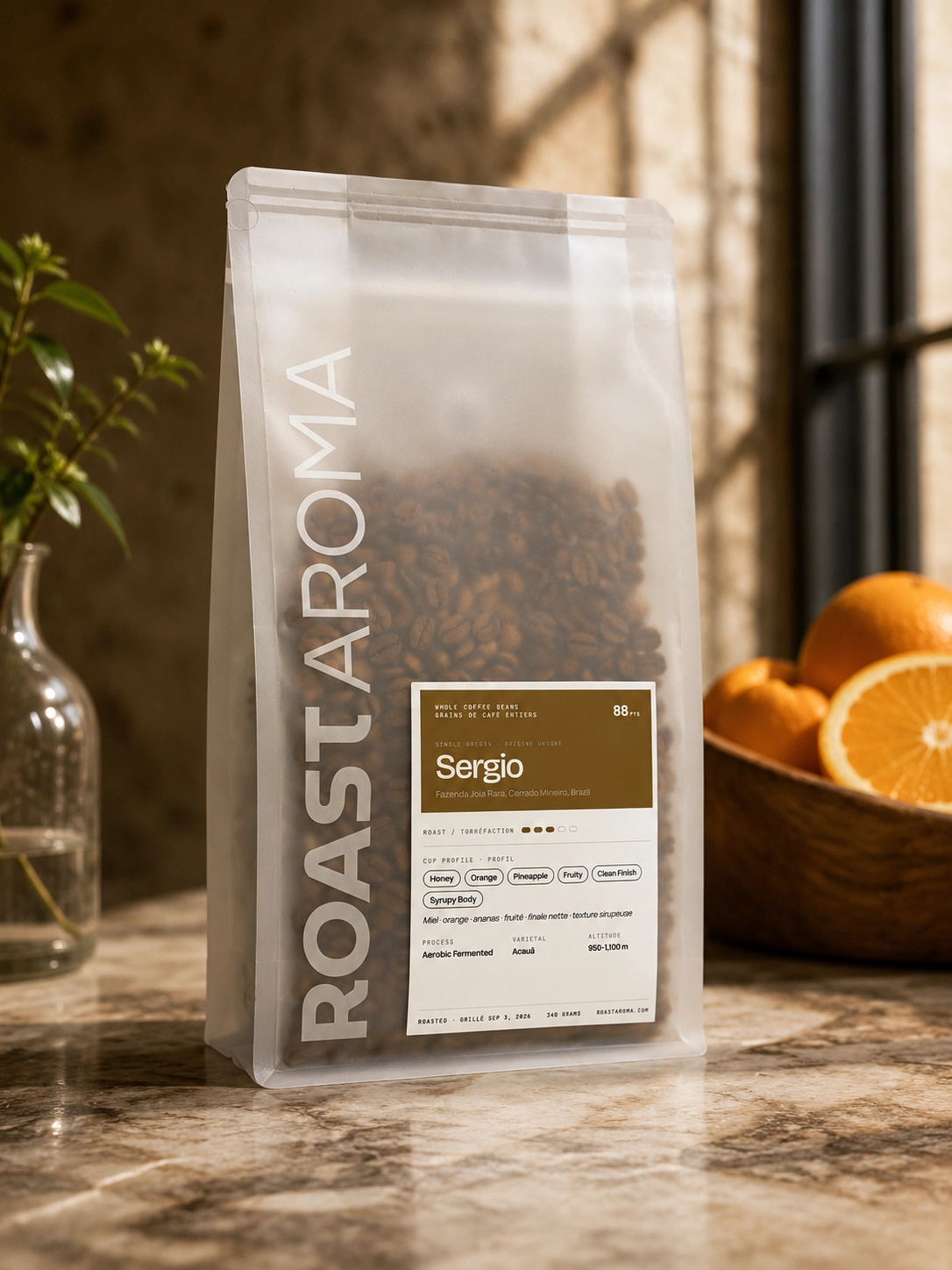 Sergio - Brazillian Fazenda Joia Rara Aerobic FermentedSCA 88Medium-light · Cerrado Mineiro · Aerobic FermentedHoney · OrangeEnough brightness to show what this gear can separate.CA$29.18 · roasted to order
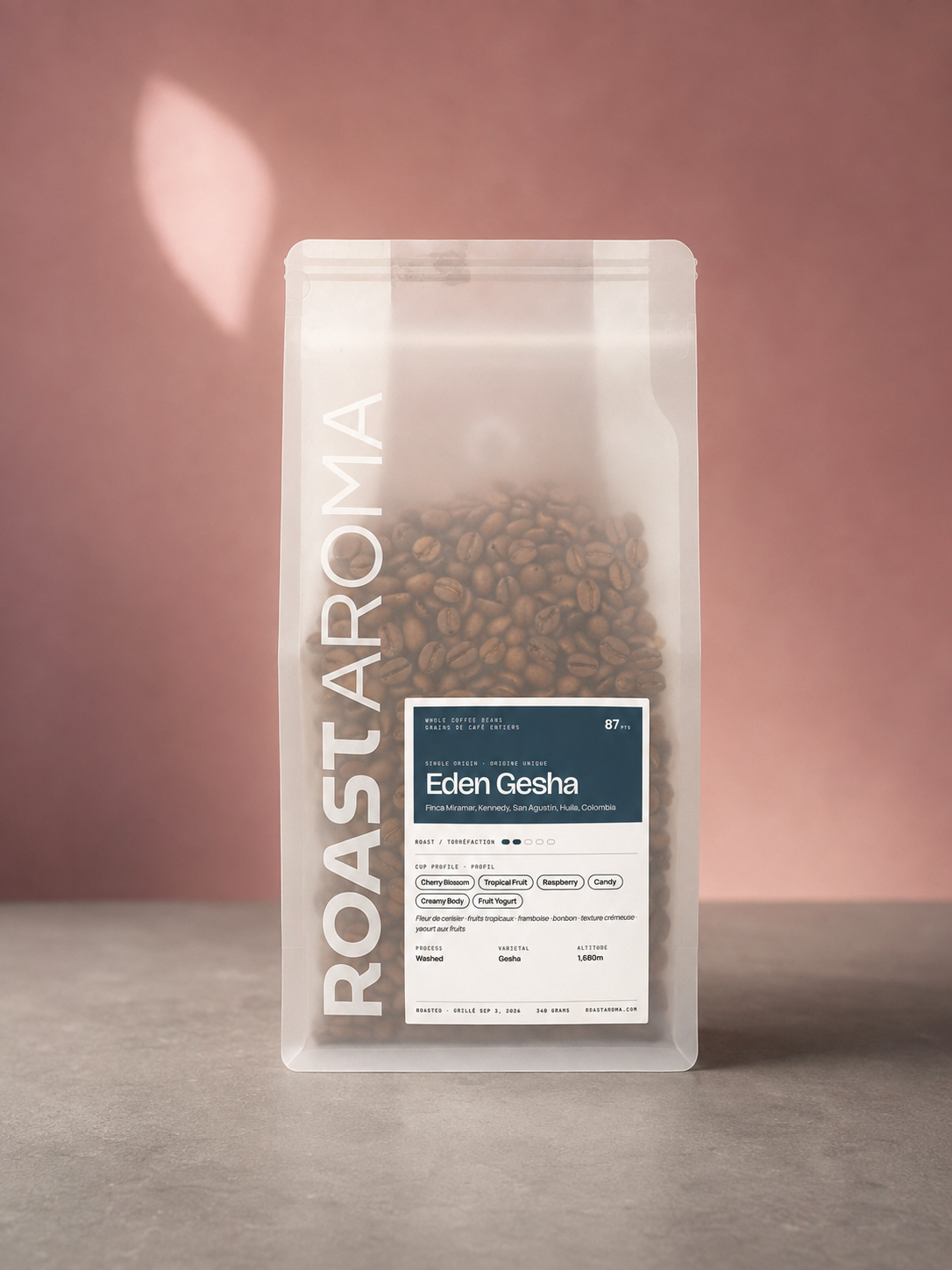 Eden Gesha - Colombian MiramarSCA 87Medium-light · Kennedy, San Agustin, Huila · WashedCherry blossom · Tropical fruitEnough brightness to show what this gear can separate.CA$26.24 · roasted to order
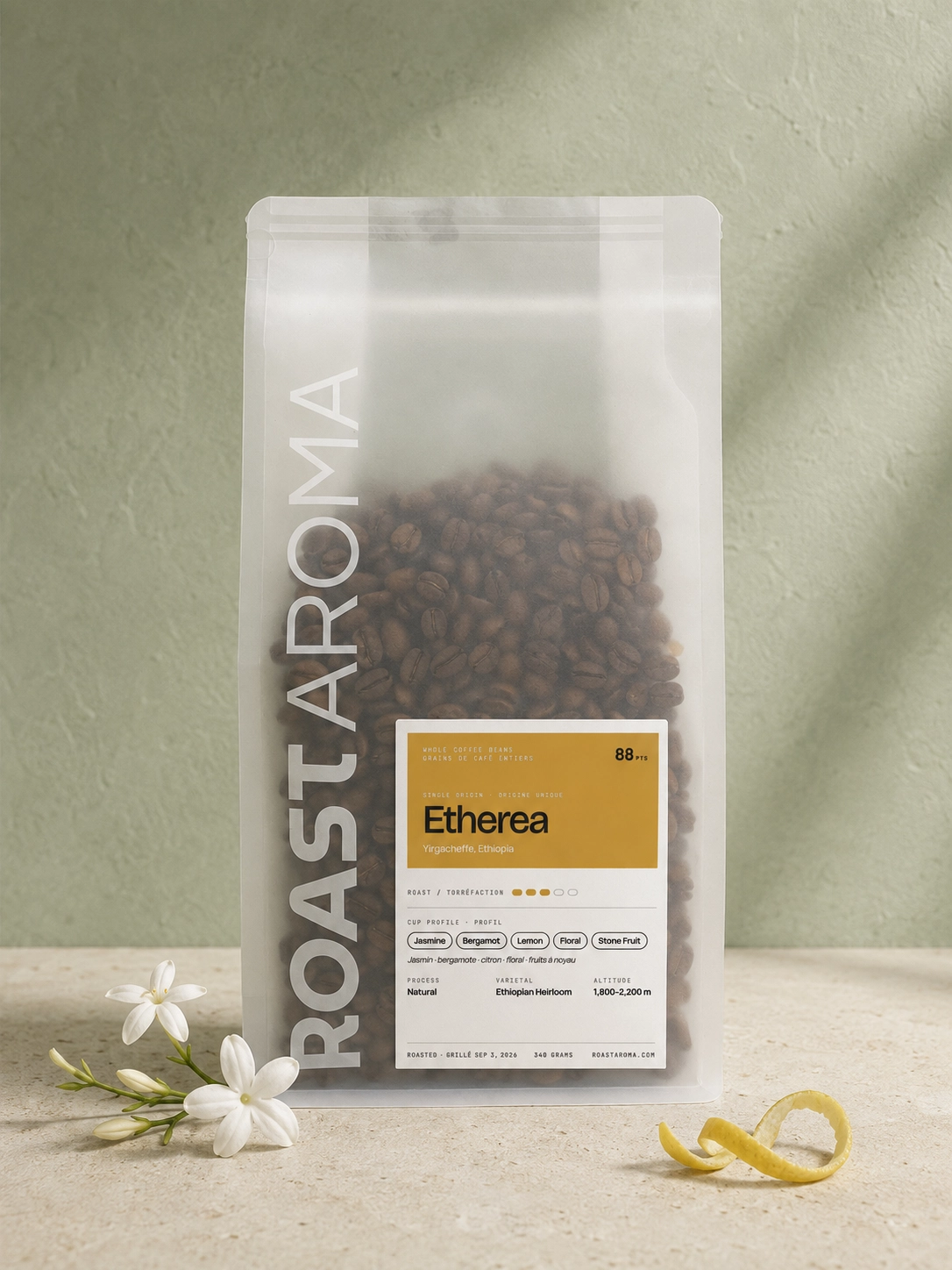 Etherea - Ethiopian YirgacheffeSCA 88Medium roast · NaturalJasmine · BergamotEnough brightness to show what this gear can separate.CA$24.16 · roasted to order
Whole bean coffee, with the roast date on each bag.
Prefer regular deliveries? RoastPlan is RoastAroma’s coffee subscription. Choose your coffees and their available options, then set deliveries every 1–6 weeks.
One-time RoastAroma orders are roasted to order in Ajax, Ontario and ship Canada-wide. We’re the roastery behind this database — measuring the machines is how we make sure the coffee gets a fair shot.
On film
How it runs on camera, from around the community.
Common questions
What makes the X-One different from a standard grind-by-weight grinder?
Standard GBW grinders weigh the dose after grinding into a portafilter. The X-One weighs the beans before they enter the burrs, then grinds exactly that amount into a cleared chamber — so the dose precision is upstream of any grinding loss, and no purging is needed between shots or size changes.
Can the X-One handle filter coffee as well as espresso?
Yes. The 98 mm DLC flat burrs and wide RPM range (800–1500) are engineered for both espresso and filter methods. Baristas can save separate recipes per brew method and switch between them on the touchscreen without changing hardware.
Is the X-One suitable for home use?
Technically possible — it runs on 110 V / 60 Hz via its inverter — but at roughly $6,900–$7,500 USD, 22 kg, and 580 mm tall it is designed for commercial bars producing high daily volume. Most home users would find it over-specified and difficult to service independently.
How many recipes can the X-One store?
The touchscreen supports up to 12 custom recipes, each storing grind size (burr distance), RPM, and target dose weight. Recipes can also be uploaded and exported via USB.
What are the X-One's hopper capacities?
Each of the two main hoppers holds 1,200 g of beans. A third bypass drawer accepts loose beans for single-dose or specialty use — espressoparts.com states the hoppers dose 5–30 g per cycle.
Worth comparing
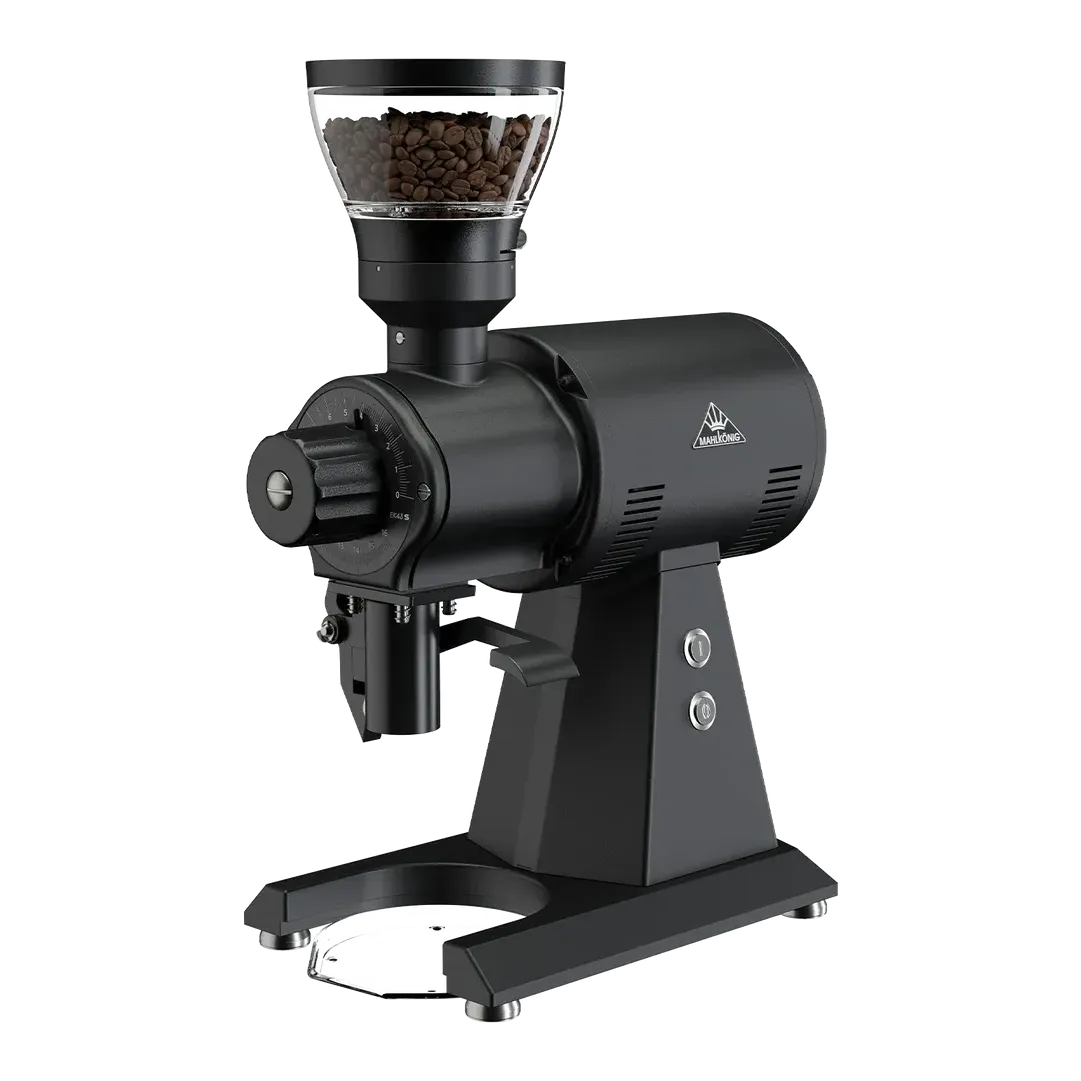
Mahlkönig
EK43S
The shop-counter version of coffee's most influential bulk grinder: same 98mm flat burrs and 1300W motor as the full EK43, just shorter so it fits under a cabinet. Built for cafes grinding retail bags and pour-over by the pound, and adopted by plenty of home fanatics who don't mind the footprint.
CA$3,390–5,350 · US$3,899–5,350
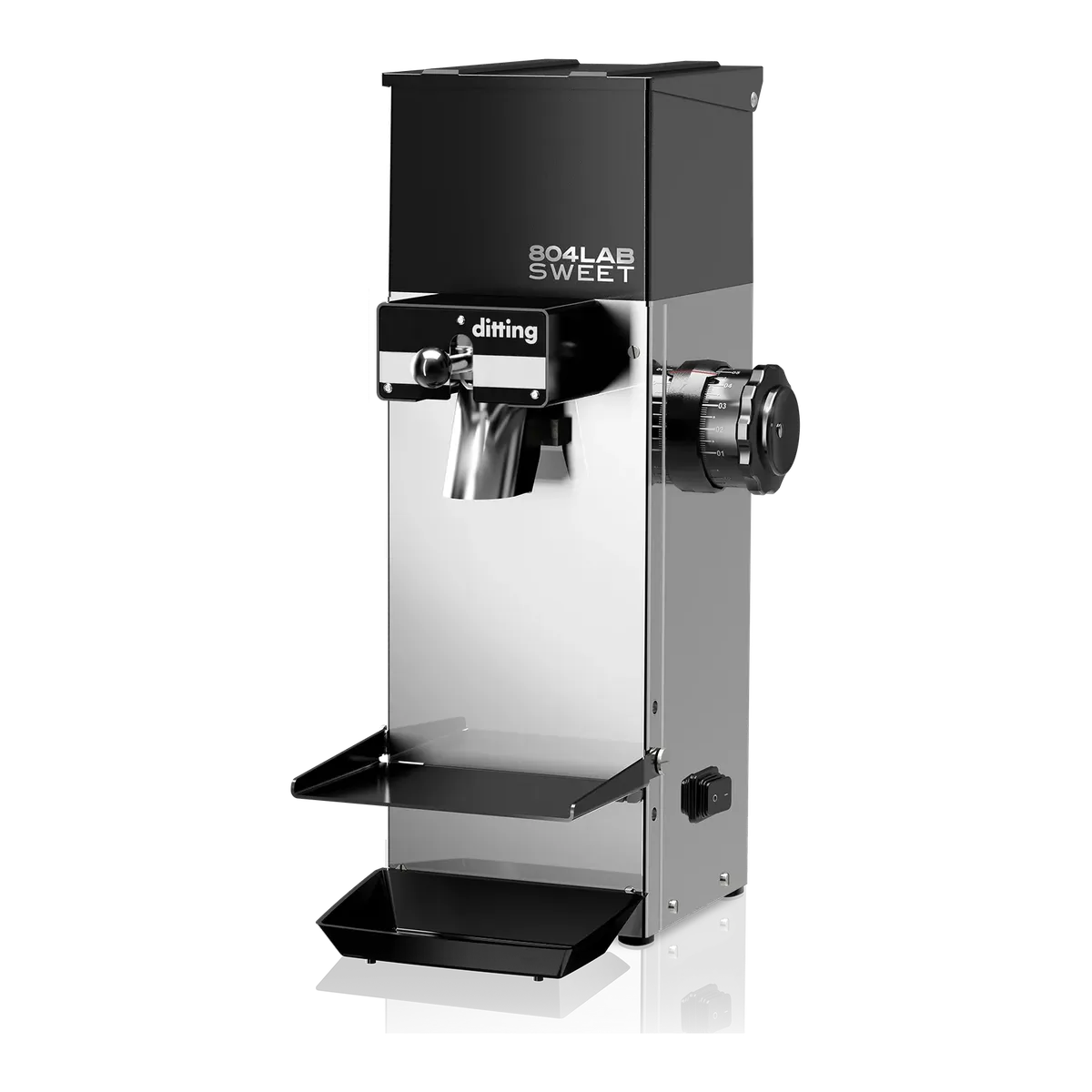
Ditting
804 Lab Sweet
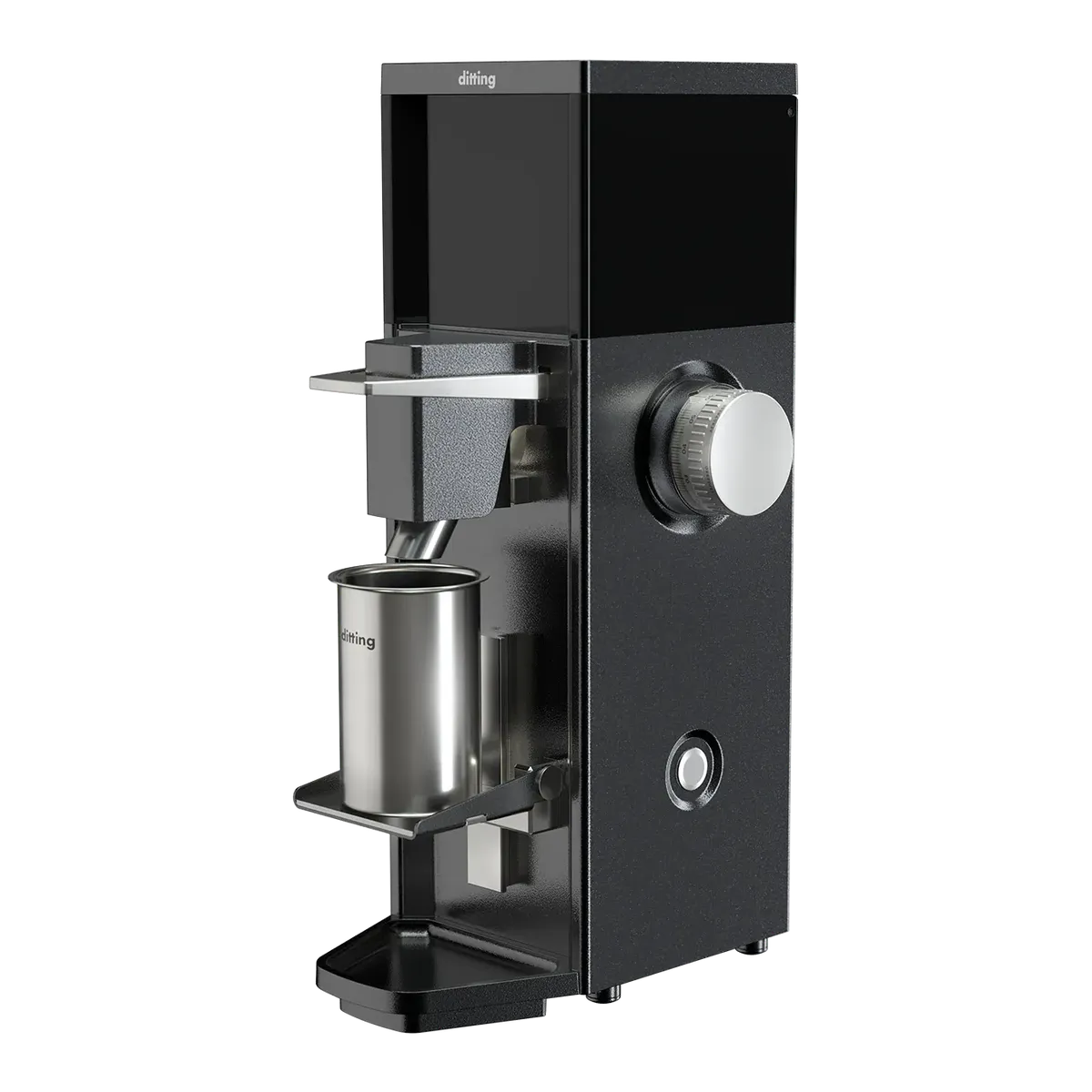
A Swiss single-dose lab/shop grinder built around 80mm cast-steel burrs tuned for roundness over sharpness — the burr set that put the word sweet into grinder marketing. Discontinued and replaced by the 807 Lab Sweet, but still floating around used and in cupping labs.
CA$3,800–4,300 · US$2,895–3,200
Weighing it against something we didn’t list? Compare it with anything on file →
Still weighing it? The finder narrows all 429 down to three that fit your life.
Run the two-minute finder →