Rocket Espresso · LeverEpica
A vintage-styled dual-boiler machine with a lever-actuated pump-pressure profiling system, fully saturated group, and commercial-grade 316L stainless boilers — Rocket's highest-expression domestic model for hands-on extraction control without a traditional piston mechanism.
The short version
The Epica delivers genuine dual-boiler stability and real-time pressure profiling through a lever that modulates an electronically controlled rotary pump — a hybrid approach that rewards attentive operators but will feel unfamiliar to devotees of true spring or piston levers. At its price point, you are paying for the saturated group, surgical boiler quality, and a visual statement; accept that the lever is a control interface, not a mechanical brewing mechanism.
Why people buy it
- Fully saturated group borrowed from commercial machine architecture delivers exceptional brew-temperature stability versus E61 or thermoblock designs
- Lever-controlled electronic pump enables genuine pre- and post-infusion pressure ramping without any additional flow-control kit
Why they don’t
- The lever does not actuate a piston or spring — it is a pump-control paddle; experienced lever-machine users expecting direct mechanical feedback will find it a fundamentally different experience
The full tally
- Fully saturated group borrowed from commercial machine architecture delivers exceptional brew-temperature stability versus E61 or thermoblock designs
- Lever-controlled electronic pump enables genuine pre- and post-infusion pressure ramping without any additional flow-control kit
- Dual AISI 316L stainless steel boilers with independent PID control per boiler to 0.1°C increments; steam boiler is independently switchable for energy saving
- Plumbable or pour-over reservoir operation, all-stainless bodywork, and wood accent accoutrements make this a long-service, rebuildable machine
- The lever does not actuate a piston or spring — it is a pump-control paddle; experienced lever-machine users expecting direct mechanical feedback will find it a fundamentally different experience
- 42.4 kg and 420 × 505 × 645 mm is genuinely large and heavy; counter space and cabinetry clearance must be planned in advance
- No saved pressure profiles — every shot profile must be executed manually in real time with no recipe memory
What the community knows
Years of owner threads, distilled — the community is split.
Premium engineering and striking retro design drive appeal, but the pump-modulated lever confuses positioning: not a true lever machine for purists, yet expensive for pressure-profiling prosumers; minimal long-term owner reports and sparse community footprint limit confidence…
Design pull
Value
price-to-performance the community respects
Parts & serviceability
parts and repairs — you are never stranded
All 9 community measures
price-to-performance the community respects
shows up every morning, year after year
parts and repairs — you are never stranded
mods, guides, and community know-how around it
kind to first-timers
years before you outgrow or replace it
how far the cup can go, per dollar
speed and simplicity, day to day
Worth knowing before you buy — Buyers should expect a premium pressure-profiling machine in lever drag, not a traditional lever; the Epica is less "lever machine" and more "R Nine One in Italian costume."
Known weak points — Pump failures, inconsistent brew pressure, electrical faults in PID system, leaks from worn gaskets/valves, mineral buildup
Limited community track record on this model — the read above leans on our own spec-honest assessment, and we flag that rather than hide it.
“Given the high price, small lever, 24V pump, digital display, it looks like the lever is a control for a gear pump.”
The measurements
Scored 0–5 on the same rubric as everything on file — the words matter more than the numbers.
The measurements
0–5, one rubric- Shot ceiling
- endgame-adjacent5
- Steam power
- confident4
- Built to last
- heirloom5
- Easy daily
- demanding0
Position in the market
Every dot is a rival, measured the same way. The gold one is this.
- Top 10% for shot ceiling
- a higher ceiling than 219 of the 237 machines we’ve measured
- You pay for this one
- 6% of machines this capable cost more
- Top quarter for build
- sturdier than 88% of the field, by the community’s own record
Every dot is a machine measured on the same rubric. See the whole market
Living with it
The part spec sheets skip: counter space, upkeep, and what owners learn later.
The honest note — Few owners outgrow the Epica in terms of hardware — it represents Rocket's domestic ceiling. Those who want true spring or piston lever mechanics will look toward La Marzocco Leva or Kees van der Westen Speedster territory. Owners chasing digital profile repeatability and data logging may eventually move to a Decent DE1.
The full spec sheet
- Type
- Lever
- Heat-up time
- ~20 min
- Steam power
- 4/5
- Brew + steam at once
- Yes
- Guest recovery
- 4/5
- Shot quality ceiling
- 5/5
- PID temperature control
- Yes
- Milk system
- Manual steam wand
- Removable brew group
- No
- Flow control
- Yes
- Hot-water tap
- Yes
- Workflow demand
- 5/5
- Maintenance
- 3/5
- Noise
- 2/5
- Build longevity
- 5/5
- Dimensions
- 42 × 50.5 × 64.5 cm
Before it arrives
What completes this machine — the faded pieces can wait.
Water filter / softener — Plumbed-in machines need inline filtration to keep scale out of the boiler — it is cheaper than a repair.
- Water filter / softener — Plumbed-in machines need inline filtration to keep scale out of the boiler — it is cheaper than a repair.
- Descaler & backflush kit — Electric boilers scale up and grouts gunk up — a descaler plus backflush routine is what keeps the machine alive for a decade.
- Coffee scale with timer — Espresso is a ratio. A 0.1g scale with a built-in timer is the single biggest consistency upgrade for any manual machine.
- Knock box — Somewhere to bang the spent puck that is not your kitchen bin.
- Calibrated tamper — The bundled tamper is usually an afterthought; a fitted, calibrated one makes prep repeatable.
- WDT distribution tool — Breaks up clumps before tamping — a cheap fix for channeling on any portafilter machine.
- Espresso cups & glassware — Proper demitasse and latte glasses keep the drink hot and look the part.
Feed it right
Week one is dial-in — and stale beans will lose it.
Coffee more than a few weeks past roast won’t extract predictably, and a new machine gets blamed for it. A machine in this class will show you the difference between roast dates — it deserves beans that change week to week.
Pick your coffee — any of these dials in beautifully here:
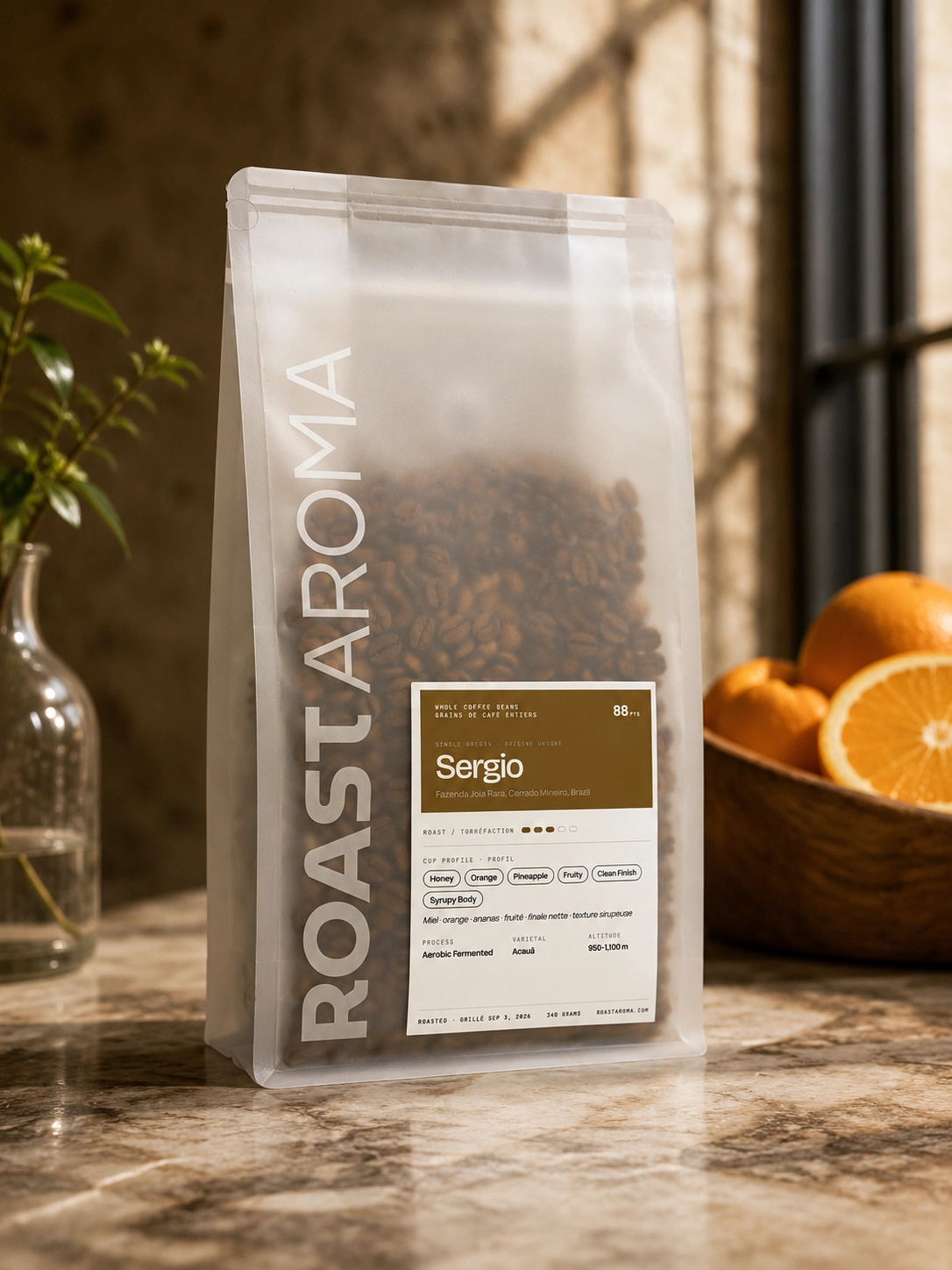 Sergio - Brazillian Fazenda Joia Rara Aerobic FermentedSCA 88Medium-light · Cerrado Mineiro · Aerobic FermentedHoney · OrangeEnough brightness to show what this gear can separate.CA$29.18 · roasted to order
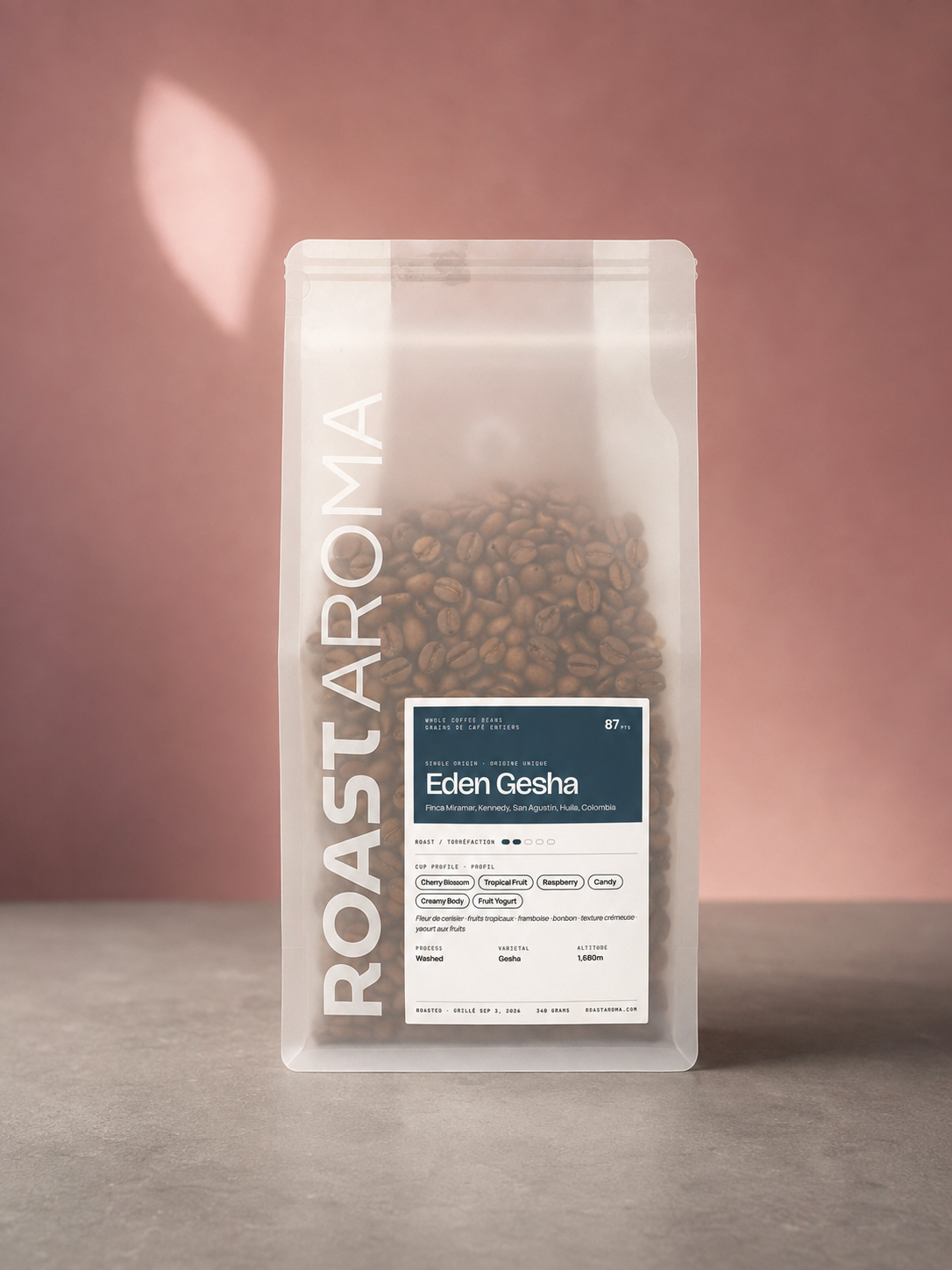 Eden Gesha - Colombian MiramarSCA 87Medium-light · Kennedy, San Agustin, Huila · WashedCherry blossom · Tropical fruitEnough brightness to show what this gear can separate.CA$26.24 · roasted to order
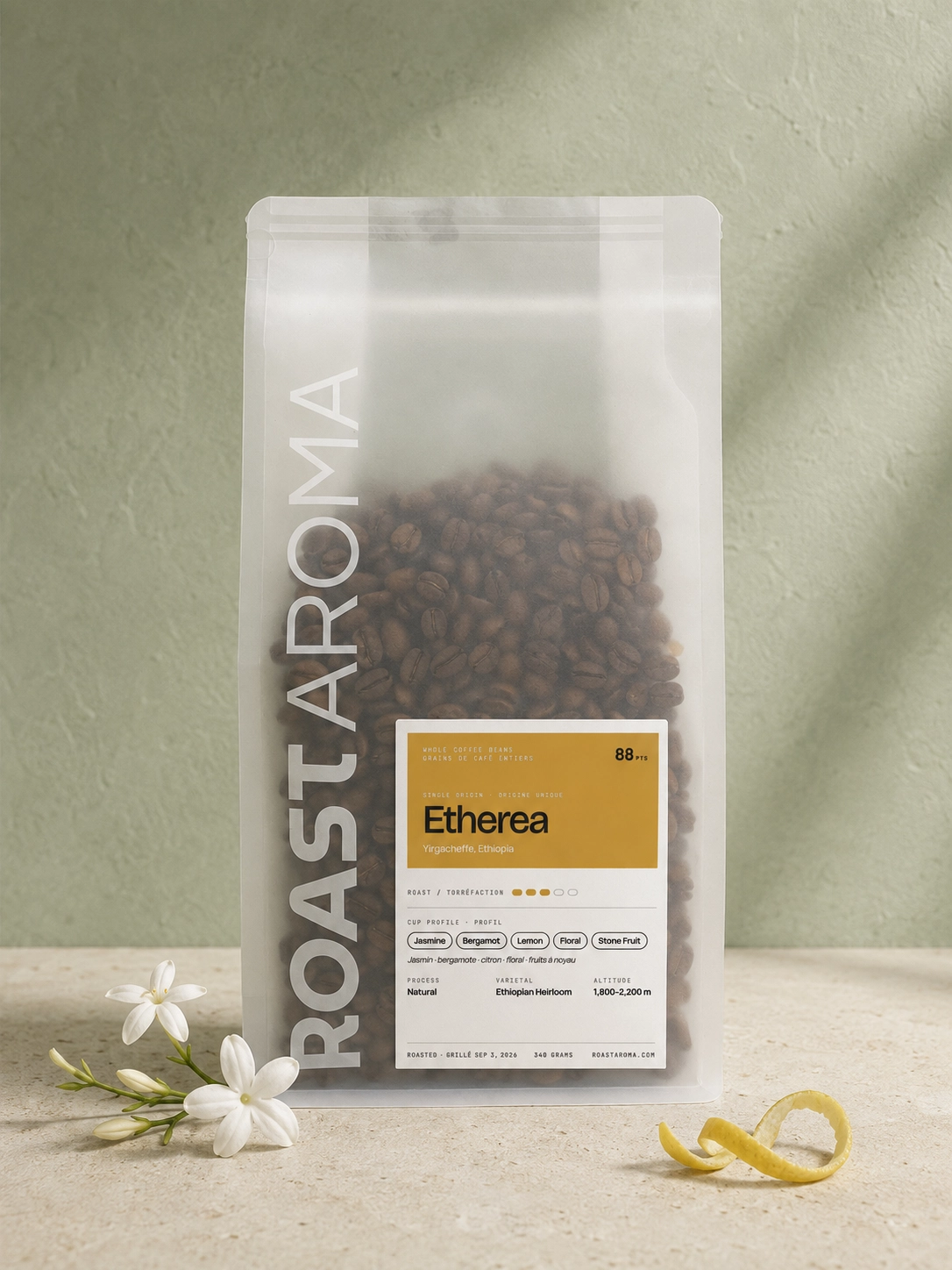 Etherea - Ethiopian YirgacheffeSCA 88Medium roast · NaturalJasmine · BergamotEnough brightness to show what this gear can separate.CA$24.16 · roasted to order
A capable grinder matters as much as the machine. Start with whole beans and a printed roast date.
Prefer regular deliveries? RoastPlan is RoastAroma’s coffee subscription. Choose your coffees and their available options, then set deliveries every 1–6 weeks.
One-time RoastAroma orders are roasted to order in Ajax, Ontario and ship Canada-wide. We’re the roastery behind this database — measuring the machines is how we make sure the coffee gets a fair shot.
On film
How it runs on camera, from around the community.
Common questions
Is the Epica a true lever machine?
No, not in the traditional sense. The lever on the Epica controls a 24V permanent-magnet volumetric pump electronically — pulling the lever further increases brewing pressure. There is no piston, spring, or direct mechanical link to the water in the group. Rocket markets it as a 'manual pressure profiling' machine. Experienced spring or direct-lever users should understand this distinction before purchasing.
Can the Epica be hard-plumbed?
Yes. The Epica supports both hard-plumb (rigid pipe) operation and pour-over reservoir use, giving flexibility for kitchen or more permanent installation.
Does the Epica save pressure profiles?
No. The machine does not store pressure profiles. Every extraction must be profiled manually in real time using the lever. The colour touchscreen does display a live pressure graph during the shot.
What grinder does the Epica need?
Given the machine's ceiling, a premium single-dose or high-end on-demand flat-burr grinder is the appropriate pairing. Entry or midrange grinders will be the limiting factor. Rocket also sells a companion Epica grinder with 64mm flat burrs for an integrated setup.
How long does the Epica take to heat up?
Exact manufacturer heat-up time is not published for this model. Given the large dual-boiler architecture (1.9L brew + 3.6L steam, 1600W total), realistic ready-to-brew time is typically in the range of 15–25 minutes for full thermal stability. This is an inference — verify with your dealer.
Worth comparing
Weighing it against something we didn’t list? Compare it with anything on file →
Still weighing it? The finder narrows all 429 down to three that fit your life.
Run the two-minute finder →