Rocket Espresso · Heat exchangerAppartamento TCA
A ground-up redesign of Rocket's best-selling Appartamento, the TCA adds NTC-based four-preset temperature control and an insulated copper boiler to the same compact E61 heat-exchanger chassis — without adding a single screen or button.
The short version
The Appartamento TCA is a vibratory-pump HX machine that trades rotary-quiet and precise degree-level PID control for a striking Italian design and a simple four-lane boiler-pressure system that meaningfully improves day-to-day repeatability over the original.
Buyers who need true 1°C granularity or dead-silent operation should look elsewhere, but anyone who wants compact Rocket ownership with better temperature accountability than a bare pressurestat will find this earns its price.
Why people buy it
- NTC-based four-preset temperature control (91/93/95/98 °C) meaningfully reduces temperature-surfing compared to a bare pressurestat, without adding any screen to the design
- Insulated 1.8 L copper boiler cuts energy consumption by roughly 15 % versus the original Appartamento and improves thermal stability between shots
Why they don’t
- Vibratory pump is audible and precludes the quiet-morning workflow that a rotary pump provides at this price tier
The full tally
- NTC-based four-preset temperature control (91/93/95/98 °C) meaningfully reduces temperature-surfing compared to a bare pressurestat, without adding any screen to the design
- Insulated 1.8 L copper boiler cuts energy consumption by roughly 15 % versus the original Appartamento and improves thermal stability between shots
- Strong HX steam: even at the second-lowest pressure setting the wand can froth 5 oz of fridge-cold milk to 140 °F in around 19 seconds
- Compact one-piece Magnelis chassis with robust build quality — handcrafted in Milan — and a 58 mm E61 group ecosystem that keeps service and aftermarket parts straightforward
- Vibratory pump is audible and precludes the quiet-morning workflow that a rotary pump provides at this price tier
- Temperature presets are documented by Rocket only as pressure values (0.9–1.2 bar), not degrees — the actual temperatures come from third-party testing, not the manual
- Still an HX machine: a proper cooling flush is required after idle periods, and back-to-back high-volume milk drink sessions will show some temperature dip
What the community knows
Years of owner threads, distilled — strongly recommended.
The community's favourite gateway into prosumer HX — beautiful, reliable, and everywhere in the forums.
Ecosystem
mods, guides, and community know-how around it
Reliability
shows up every morning, year after year
Parts & serviceability
parts and repairs — you are never stranded
All 9 community measures
price-to-performance the community respects
shows up every morning, year after year
parts and repairs — you are never stranded
mods, guides, and community know-how around it
kind to first-timers
years before you outgrow or replace it
how far the cup can go, per dollar
speed and simplicity, day to day
Worth knowing before you buy — Most owners wish they'd budgeted harder on the grinder first; the TCA's presets mask poor grind distribution—ceiling is real, but upstream grind work is where the learning curve actually lives.
Known weak points — No specific documented failure modes cited in community consensus; Rocket platform historically reliable with no major solenoid or boiler issues flagged in user reports.
“The steam wand, featuring Rocket's no-burn technology, provides strong and dry steam pressure for milk frothing.”
4 community voices, rotating · hover to hold
“The steam wand, featuring Rocket's no-burn technology, provides strong and dry steam pressure for milk frothing.” — Barista Magazine staff, Barista Magazine
“My only criticism is that I'd have expected more focus on temperature control adjustment, from a machine that is literally called temperature control adjustment!” — Kev (CoffeeBlog.co.uk), CoffeeBlog.co.uk
“TCA improves repeatability: four presets reduce the 'guess where the pressurestat landed' feel of older entry HX machines.” — Coffeedant reviewer, Coffeedant
“The Appartamento TCA improves in all the right ways on the original, though the price of admission is admittedly a little steep.” — Nick (Whole Latte Love staff), Whole Latte Love
The measurements
Scored 0–5 on the same rubric as everything on file — the words matter more than the numbers.
The measurements
0–5, one rubric- Shot ceiling
- serious4
- Steam power
- confident4
- Built to last
- durable4
- Easy daily
- demanding1
Position in the market
Every dot is a rival, measured the same way. The gold one is this.
- Upper half for shot ceiling
- a higher ceiling than 149 of the 237 machines we’ve measured
- You pay for this one
- 44% of machines this capable cost more
- Upper half for build
- sturdier than 56% of the field, by the community’s own record
Every dot is a machine measured on the same rubric. See the whole market
Living with it
The part spec sheets skip: counter space, upkeep, and what owners learn later.
The honest note — Most owners who outgrow the TCA cite the vibratory pump noise or the desire for true degree-level temperature control and flow profiling. The natural next step is a dual-boiler with a rotary pump — the Rocket R58 Cinquantotto, Profitec Pro 700, or ECM Synchronika. Owners who want flow control can add a commercially available E61 flow-control device to the TCA before committing to a full upgrade.
The full spec sheet
- Type
- Heat exchanger (HX)
- Heat-up time
- ~18 min
- Steam power
- 4/5
- Brew + steam at once
- Yes
- Guest recovery
- 3/5
- Shot quality ceiling
- 4/5
- PID temperature control
- Yes
- Milk system
- Manual steam wand
- Removable brew group
- No
- Hot-water tap
- Yes
- Workflow demand
- 4/5
- Maintenance
- 3/5
- Noise
- 3/5
- Build longevity
- 4/5
Before it arrives
What completes this machine — the faded pieces can wait.
Descaler & backflush kit — Electric boilers scale up and grouts gunk up — a descaler plus backflush routine is what keeps the machine alive for a decade.
- Descaler & backflush kit — Electric boilers scale up and grouts gunk up — a descaler plus backflush routine is what keeps the machine alive for a decade.
- Coffee scale with timer — Espresso is a ratio. A 0.1g scale with a built-in timer is the single biggest consistency upgrade for any manual machine.
- Knock box — Somewhere to bang the spent puck that is not your kitchen bin.
- Calibrated tamper — The bundled tamper is usually an afterthought; a fitted, calibrated one makes prep repeatable.
- WDT distribution tool — Breaks up clumps before tamping — a cheap fix for channeling on any portafilter machine.
- Espresso cups & glassware — Proper demitasse and latte glasses keep the drink hot and look the part.
Feed it right
Week one is dial-in — and stale beans will lose it.
Coffee more than a few weeks past roast won’t extract predictably, and a new machine gets blamed for it. A machine in this class will show you the difference between roast dates — it deserves beans that change week to week.
Pick your coffee — any of these dials in beautifully here:
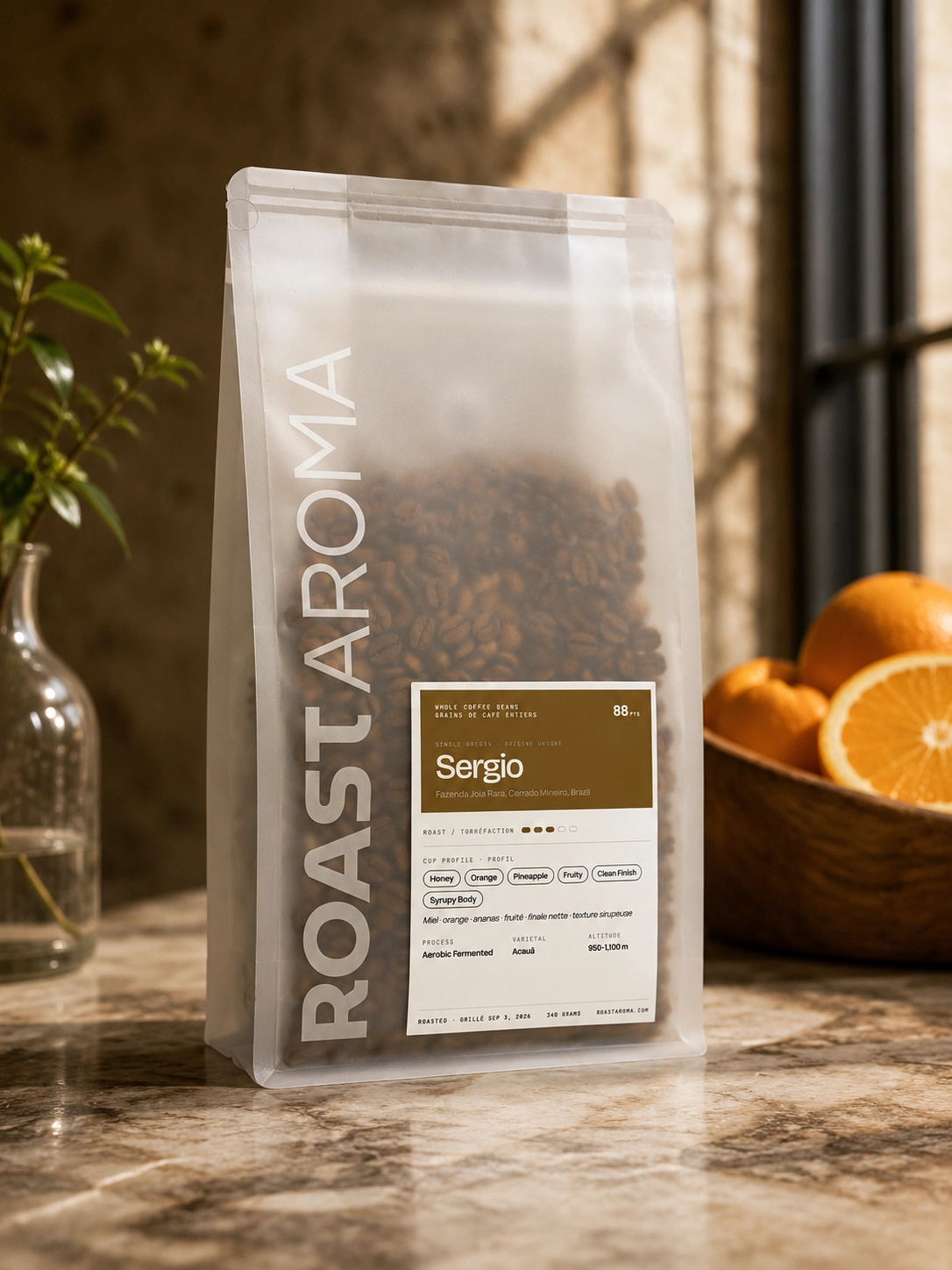 Sergio - Brazillian Fazenda Joia Rara Aerobic FermentedSCA 88Medium-light · Cerrado Mineiro · Aerobic FermentedHoney · OrangeEnough brightness to show what this gear can separate.CA$29.18 · roasted to order
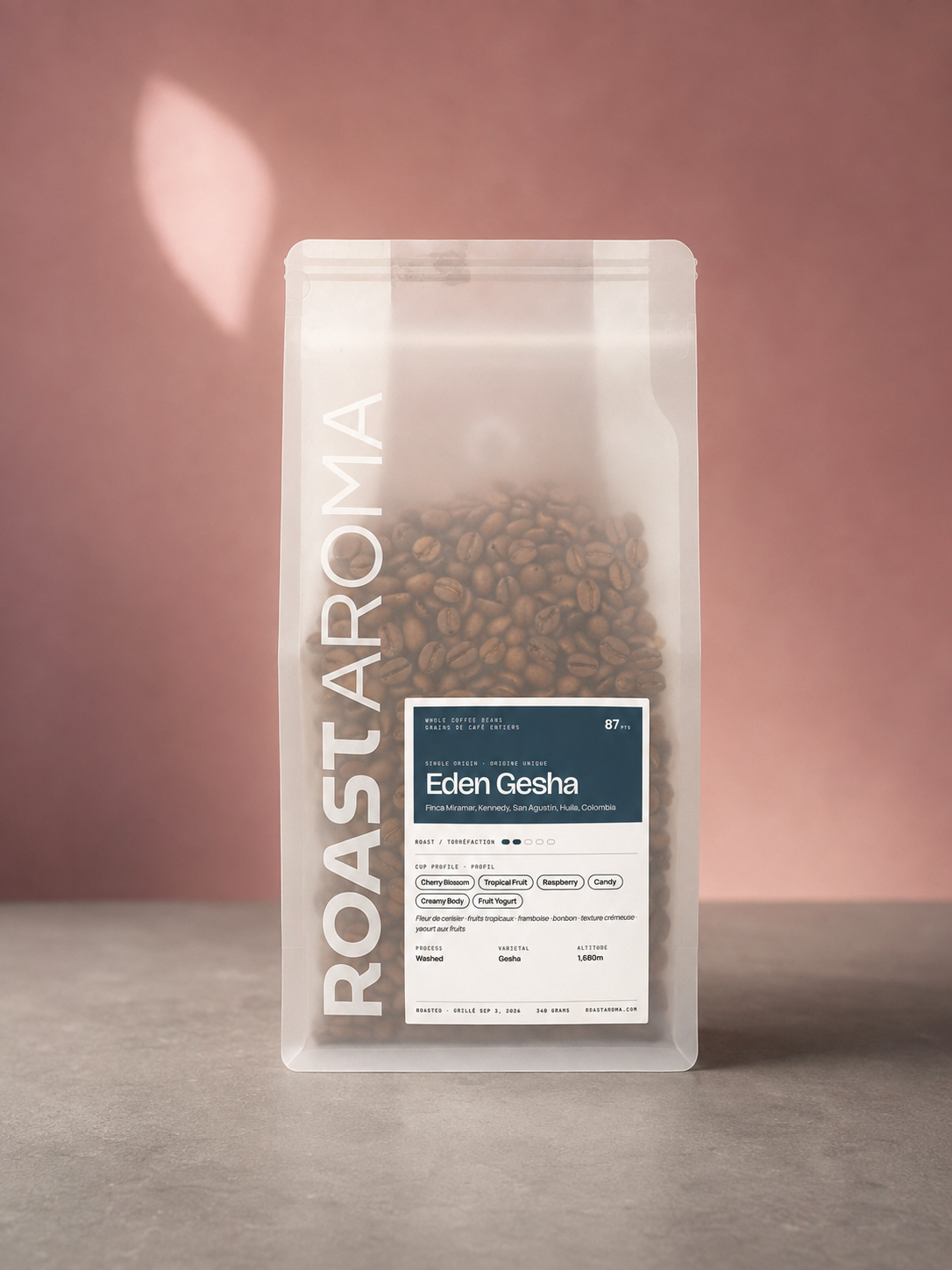 Eden Gesha - Colombian MiramarSCA 87Medium-light · Kennedy, San Agustin, Huila · WashedCherry blossom · Tropical fruitEnough brightness to show what this gear can separate.CA$26.24 · roasted to order
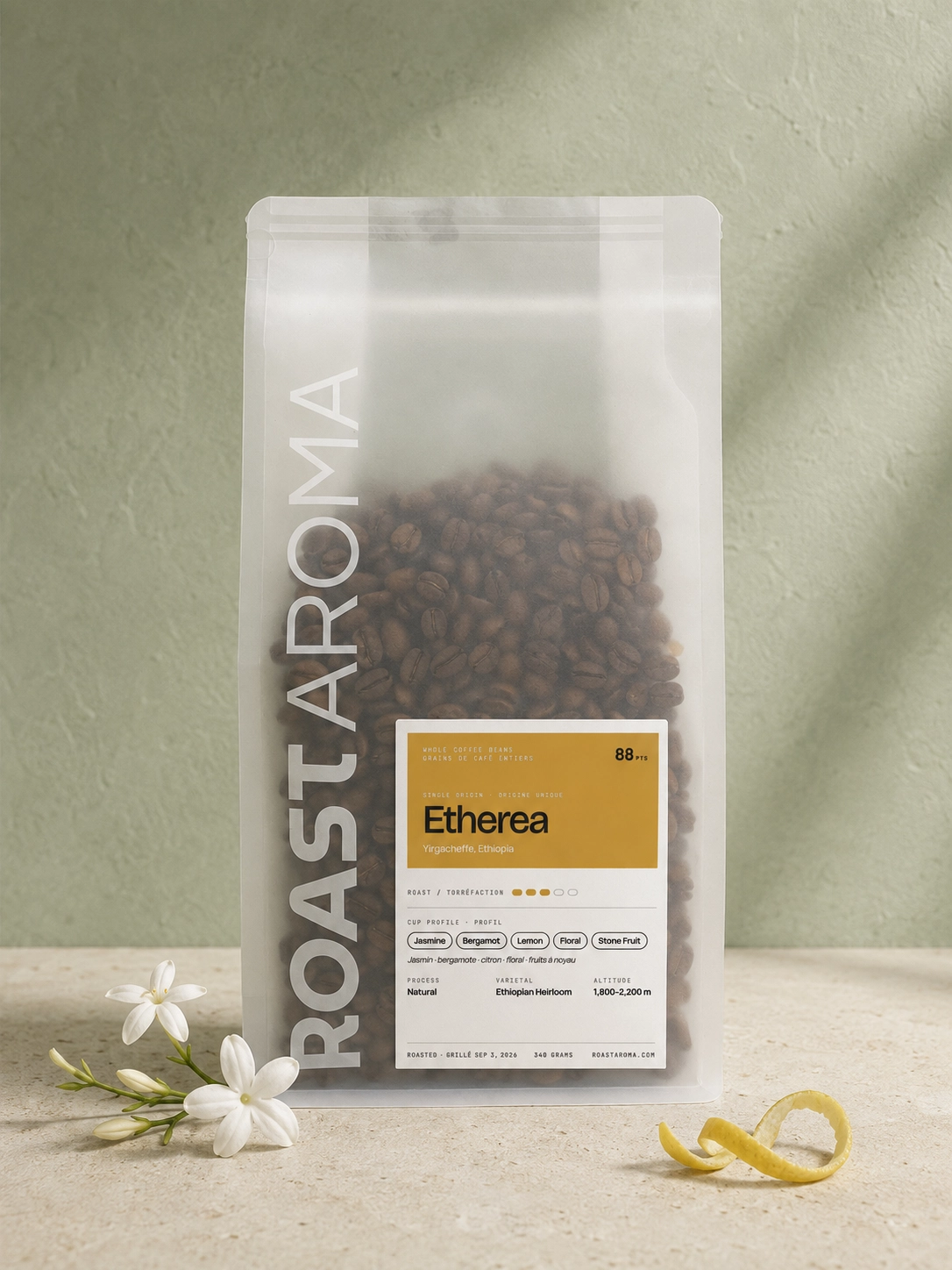 Etherea - Ethiopian YirgacheffeSCA 88Medium roast · NaturalJasmine · BergamotEnough brightness to show what this gear can separate.CA$24.16 · roasted to order
A capable grinder matters as much as the machine. Start with whole beans and a printed roast date.
Prefer regular deliveries? RoastPlan is RoastAroma’s coffee subscription. Choose your coffees and their available options, then set deliveries every 1–6 weeks.
One-time RoastAroma orders are roasted to order in Ajax, Ontario and ship Canada-wide. We’re the roastery behind this database — measuring the machines is how we make sure the coffee gets a fair shot.
On film
How it runs on camera, from around the community.
Common questions
What does TCA stand for, and how does the temperature control actually work?
TCA stands for Temperature Control Adjustment. Rocket uses an NTC (Negative Temperature Coefficient) probe to regulate the boiler. You enter programming mode by raising the E61 lever before powering the machine on, then use the lever to cycle through four boiler-pressure presets (0.9, 1.0, 1.1, and 1.2 bar). Third-party testing by Whole Latte Love identifies these as approximately 91 °C, 93 °C, 95 °C, and 98 °C at the boiler. The selection is confirmed through an RGB LED — there is no screen. Most users will work in the two middle settings for everyday espresso.
Does the Appartamento TCA still require a cooling flush?
Yes. It is still a heat-exchanger machine, so brew water travels through a coil inside the steam boiler. After extended idle periods the water in that coil can overheat, and a brief flush of a few seconds is recommended before pulling a shot. The TCA's improved temperature control reduces guesswork compared to the original Appartamento, but it does not eliminate the flush-based workflow entirely.
Can I add a flow control device to the Appartamento TCA?
Yes. The standard E61 group is compatible with aftermarket flow-control paddles (such as the Pullman or Decent flow-control devices) that replace or augment the existing lever. Whole Latte Love and Clive Coffee both note this as a viable upgrade path for users who want pressure profiling capability without replacing the machine.
Is the Appartamento TCA plumbable?
No. It uses a 2.5 L removable water reservoir with an internal low-water sensor that alerts you when the tank needs refilling. There is no direct-connect plumb-in option.
Worth comparing
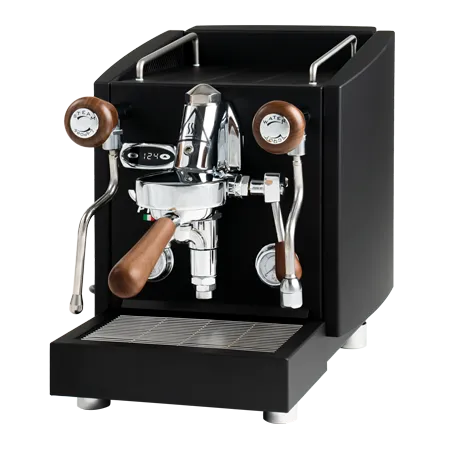
Izzo
Vivi PID
A compact, hand-assembled Italian HX machine built around an E61 group, 1.8L insulated copper boiler, and PID shot-timer display — more machine than its footprint suggests.
US$1,600–2,000
Rocket Espresso
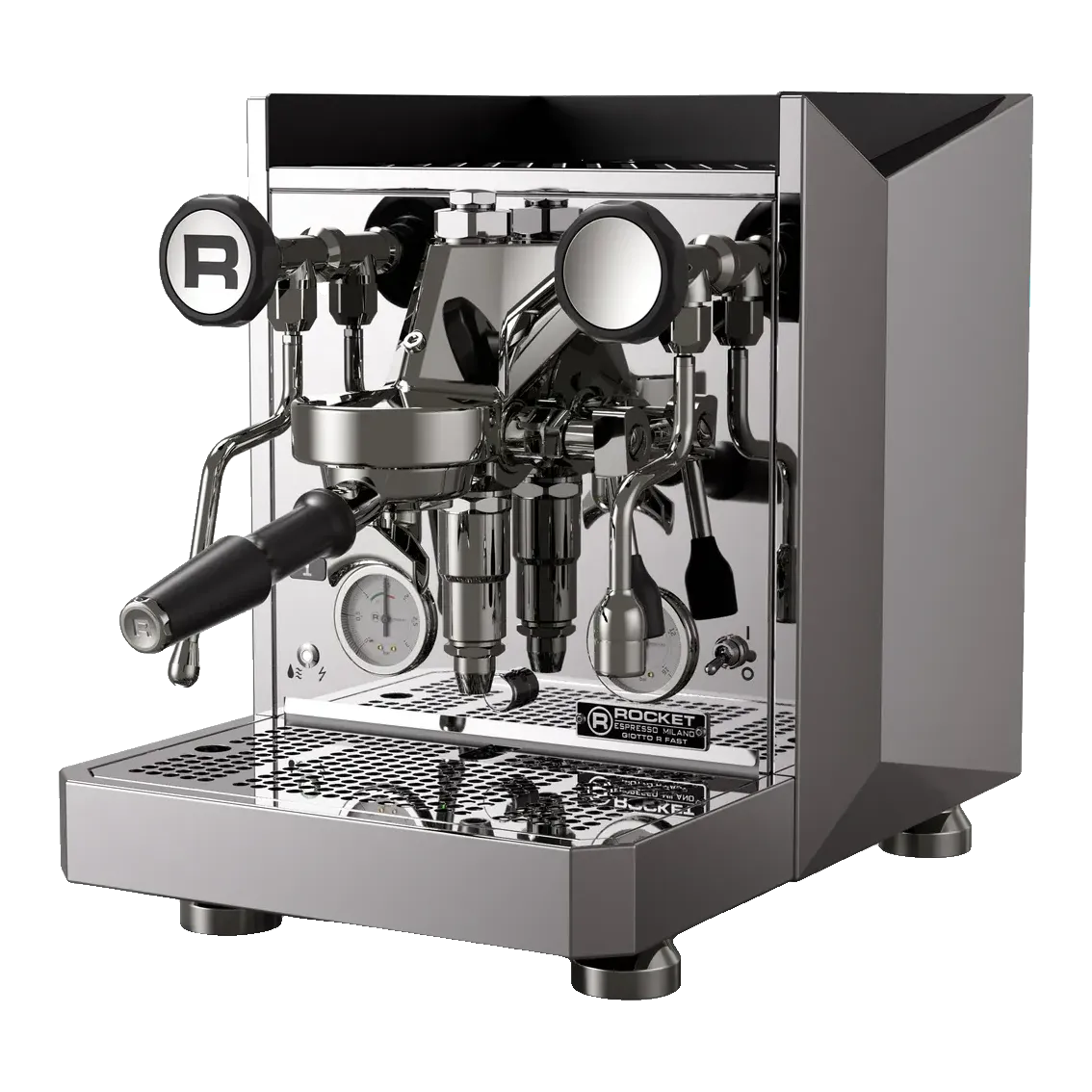
Giotto FAST (2025)
Rocket's 2025 redesign of its iconic Giotto, now with an actively heated E61 group that cuts warm-up to around 12 minutes — without abandoning the insulated 1.8L copper HX boiler and rotary or vibratory pump options that made the line.
US$2,400–3,100 · CA$4,595–4,995
Profitec
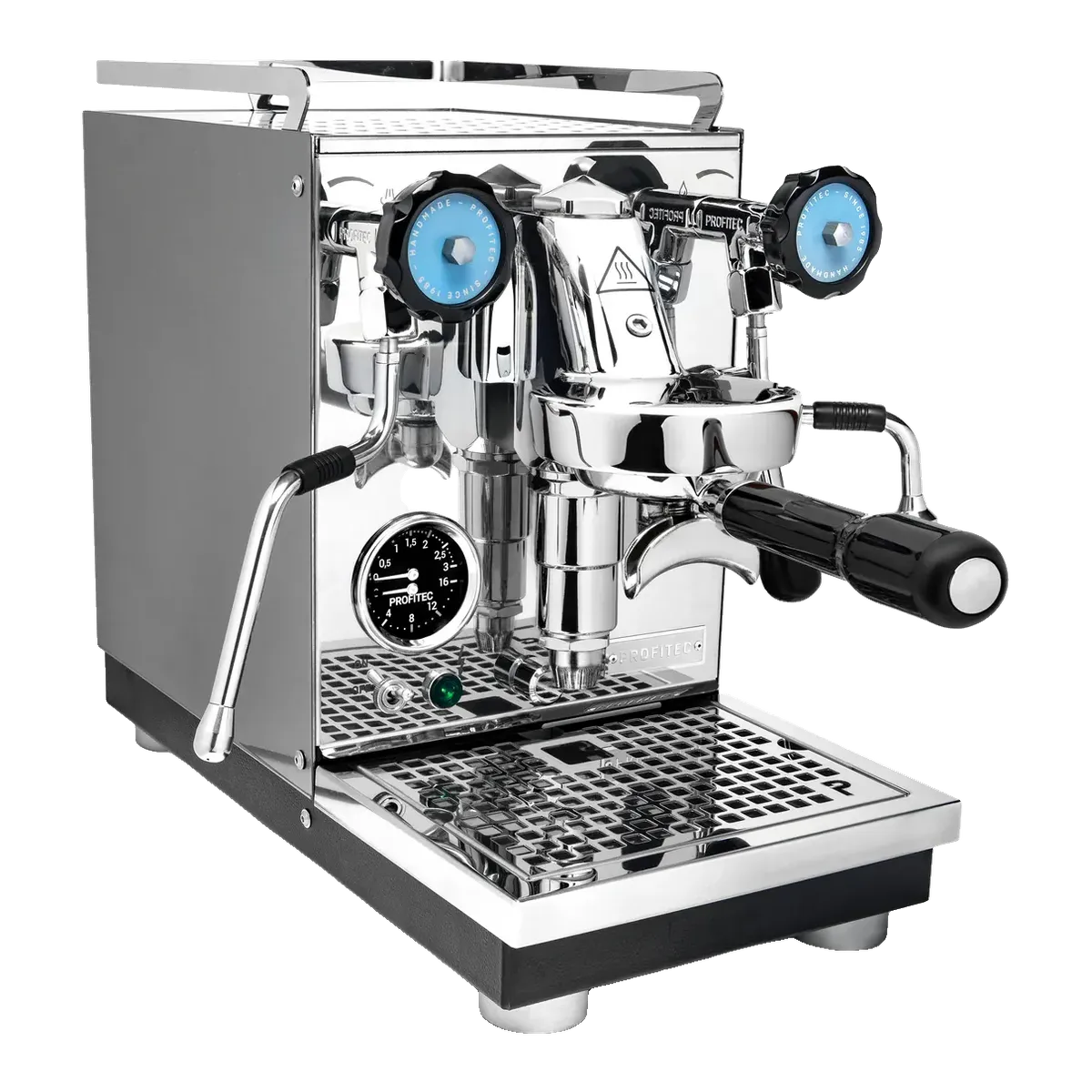
Pro 400
The most compact machine in Profitec's lineup packs a full E61 group, 1.6-liter stainless HX boiler, three preset boiler temperatures, and switchable pre-infusion into a 9-inch-wide chassis — genuine prosumer hardware at a price well below dual-boiler territory.
US$1,599–1,699 · CA$2,210–2,700
Weighing it against something we didn’t list? Compare it with anything on file →
Still weighing it? The finder narrows all 429 down to three that fit your life.
Run the two-minute finder →