Quick Mill · Single boilerPop Up
A compact Italian single-boiler with PID, a proprietary pressure-profiling valve, and a front pressure gauge — surprisingly capable for the price, but it shares the usual single-boiler concessions on multi-drink recovery.
The short version
The Pop Up punches above its bracket by pairing PID temperature control with a genuine pressure-profiling valve and a 58 mm group head in a machine that fits on most kitchen counters.
Accept the single-boiler reality: switching between steaming and brewing takes time, and back-to-back milk drinks require a workflow workaround.
Why people buy it
- Pressure-profiling valve lets you shape the extraction curve from pre-infusion to final pull — uncommon at this price point
- PID with separate brew and steam temperature adjustment and an auto cool-down return after steaming
Why they don’t
- Single-boiler: meaningful wait (several minutes of flushing or passive cool-down) between steaming and the next espresso; not a machine for back-to-back milk drinks
The full tally
- Pressure-profiling valve lets you shape the extraction curve from pre-infusion to final pull — uncommon at this price point
- PID with separate brew and steam temperature adjustment and an auto cool-down return after steaming
- Quiet for a vibratory pump machine — Quick Mill's proprietary pressure stabiliser reduces noise by ~30%
- 58 mm commercial-standard group head; front pressure gauge (0–16 bar) gives real-time extraction feedback
- Single-boiler: meaningful wait (several minutes of flushing or passive cool-down) between steaming and the next espresso; not a machine for back-to-back milk drinks
- Steam wand is short in the current revision — restricts pitcher size and angle, and technique is fussier than a longer wand
- Small 0.45 L boiler recovers slowly when pushed; the standby-to-brew transition can introduce a pre-infusion delay requiring a blank flush
What the community knows
Years of owner threads, distilled — a niche favourite.
Compact single-boiler with solid PID and pressure profiling that punches above its class for espresso-only work, but the notoriously short steam wand creates a real workflow ceiling — respected in space-constrained setups, but beginners expecting milk drinks will hit a hard wall…
Value
price-to-performance the community respects
Reliability
shows up every morning, year after year
Built to last
years before you outgrow or replace it
All 9 community measures
price-to-performance the community respects
shows up every morning, year after year
parts and repairs — you are never stranded
mods, guides, and community know-how around it
kind to first-timers
years before you outgrow or replace it
how far the cup can go, per dollar
speed and simplicity, day to day
Worth knowing before you buy — Most owners in the compact niche wish they had committed fully to espresso-only or stretched budget to dual-boiler if milk drinks were in the picture.
Known weak points — Short steam wand documented as significant workflow constraint requiring pitcher downsizing (max 120ml frothing capacity); single-boiler temperature stability during steam/brew transitions (inherent design, not failure).
“It's very quick to get to temperature. It seems to be consistent when pulling shots.”
“I've had this machine for over a year now... Frothing took me forever to master!! ...being that the wand is rather short, you need to use the smaller sized pitcher for frothing, a maximum of 120ml or so.”
The measurements
Scored 0–5 on the same rubric as everything on file — the words matter more than the numbers.
The measurements
0–5, one rubric- Shot ceiling
- serious3.5
- Steam power
- workable3
- Built to last
- fair3
- Easy daily
- demanding2
Position in the market
Every dot is a rival, measured the same way. The gold one is this.
- Mid-pack for shot ceiling
- a higher ceiling than 109 of the 237 machines we’ve measured
- A value pick at this level
- 73% of machines this capable cost more
- Lower half for build
- sturdier than 28% of the field, by the community’s own record
Every dot is a machine measured on the same rubric. See the whole market
Living with it
The part spec sheets skip: counter space, upkeep, and what owners learn later.
The honest note — Owners who grow past the Pop Up typically want simultaneous brew and steam, more steam power, or finer pressure-profile control. Natural next steps are a heat-exchanger machine (e.g. Quick Mill Aquila, Rocket Appartamento) or a dual-boiler (e.g. Lelit Bianca, ECM Synchronika). The 58 mm group means any quality portafilter accessories carry forward.
The full spec sheet
- Type
- Single boiler
- Heat-up time
- ~5 min
- Steam power
- 3/5
- Brew + steam at once
- No
- Guest recovery
- 2/5
- Shot quality ceiling
- 3.5/5
- PID temperature control
- Yes
- Milk system
- Manual steam wand
- Removable brew group
- No
- Flow control
- Yes
- Cup clearance
- 0 cm
- Workflow demand
- 3/5
- Maintenance
- 3/5
- Noise
- 2/5
- Build longevity
- 3/5
- Dimensions
- 25.5 × 33.3 × 38.2 cm
Before it arrives
What completes this machine — the faded pieces can wait.
Descaler & backflush kit — Electric boilers scale up and grouts gunk up — a descaler plus backflush routine is what keeps the machine alive for a decade.
- Descaler & backflush kit — Electric boilers scale up and grouts gunk up — a descaler plus backflush routine is what keeps the machine alive for a decade.
- Coffee scale with timer — Espresso is a ratio. A 0.1g scale with a built-in timer is the single biggest consistency upgrade for any manual machine.
- Espresso cups & glassware — Proper demitasse and latte glasses keep the drink hot and look the part.
Feed it right
Week one is dial-in — and stale beans will lose it.
Coffee more than a few weeks past roast won’t extract predictably, and a new machine gets blamed for it. While you learn it, a forgiving medium-light roast keeps dial-in kind — bright enough to taste progress, sweet enough to drink the misses.
Pick your coffee — any of these dials in beautifully here:
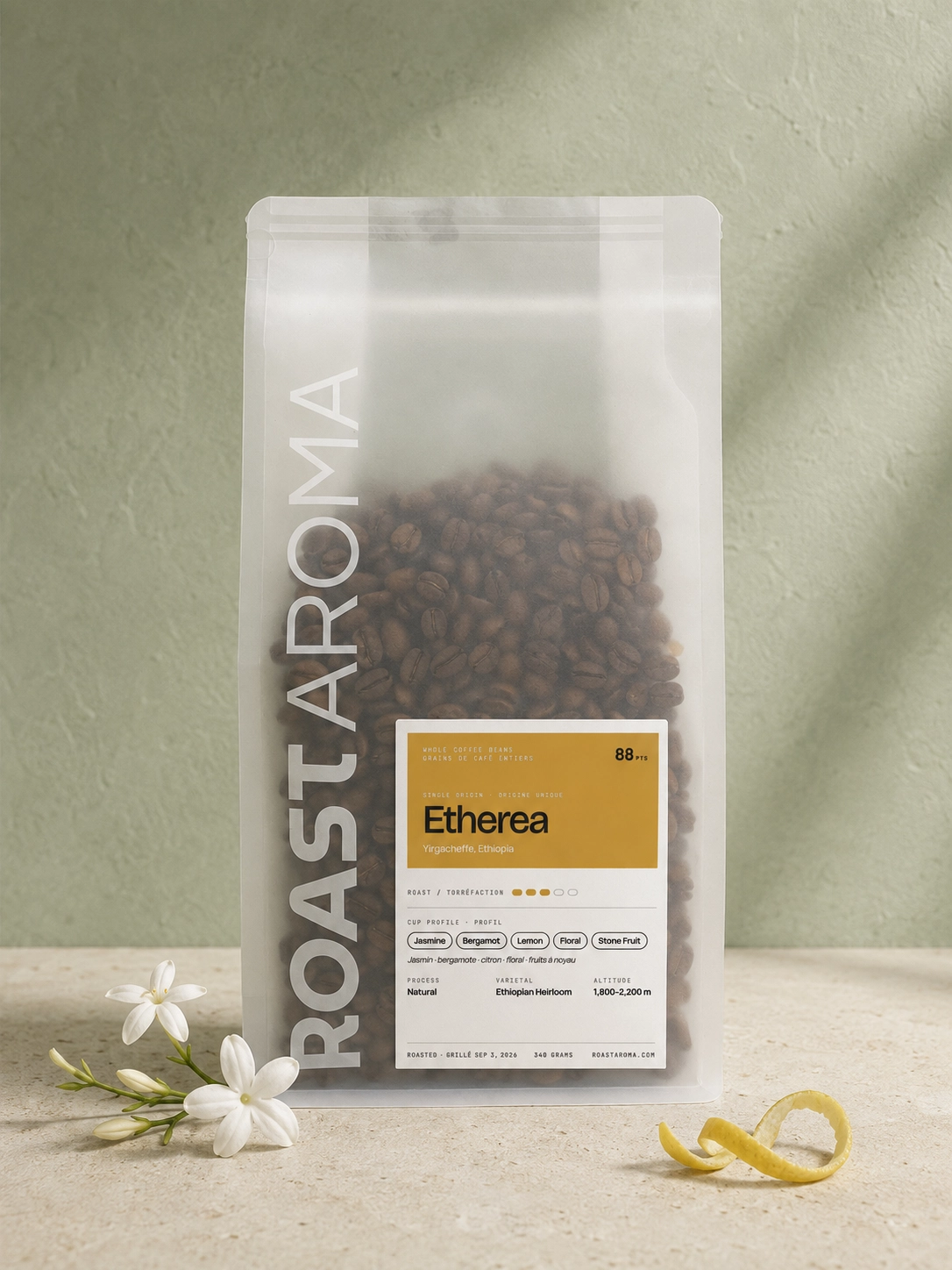 Etherea - Ethiopian YirgacheffeSCA 88Medium roast · NaturalJasmine · BergamotSteady and repeatable — right for this setup’s lane.CA$24.16 · roasted to order
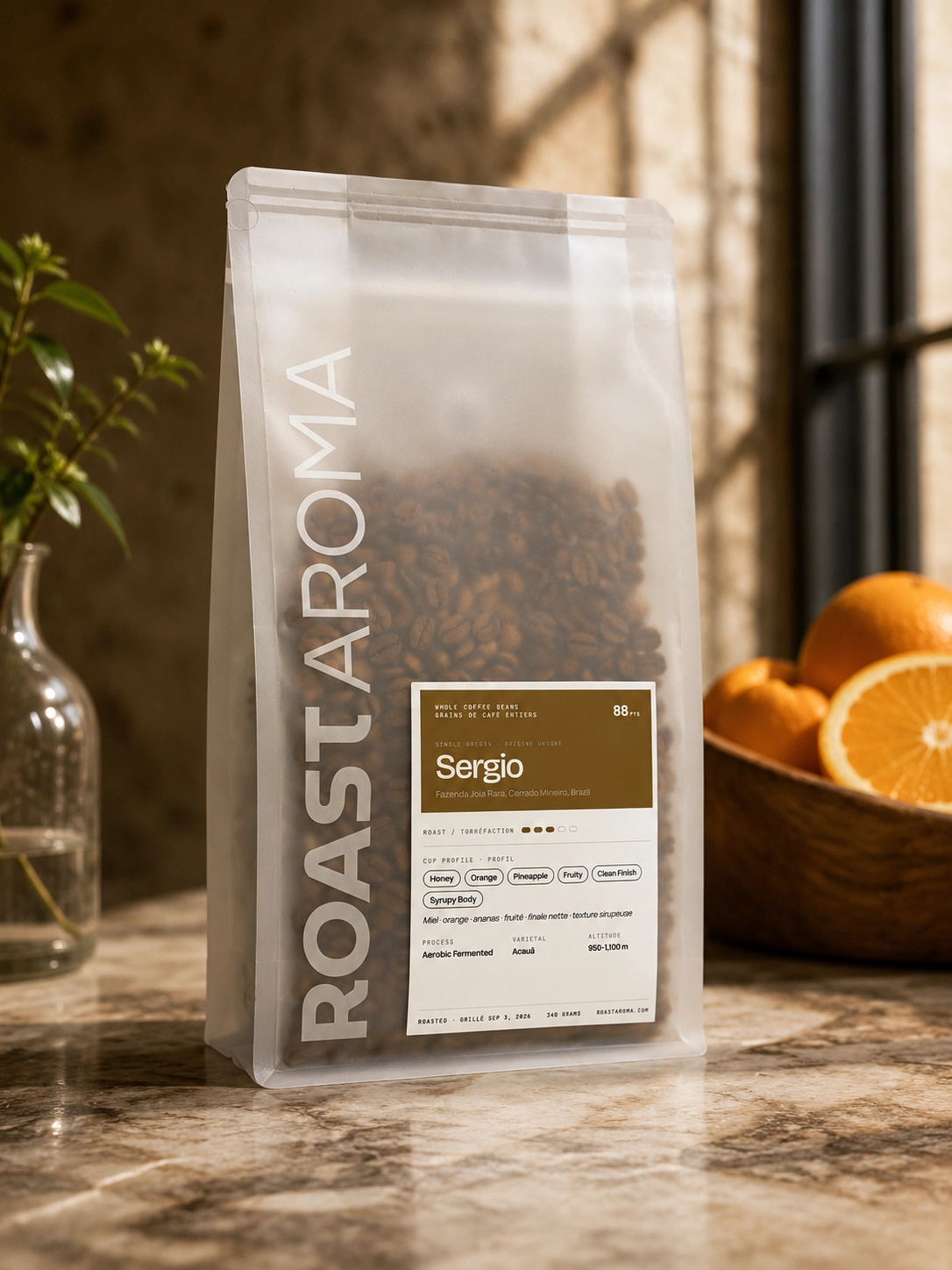 Sergio - Brazillian Fazenda Joia Rara Aerobic FermentedSCA 88Medium-light · Cerrado Mineiro · Aerobic FermentedHoney · OrangeSteady and repeatable — right for this setup’s lane.CA$29.18 · roasted to order
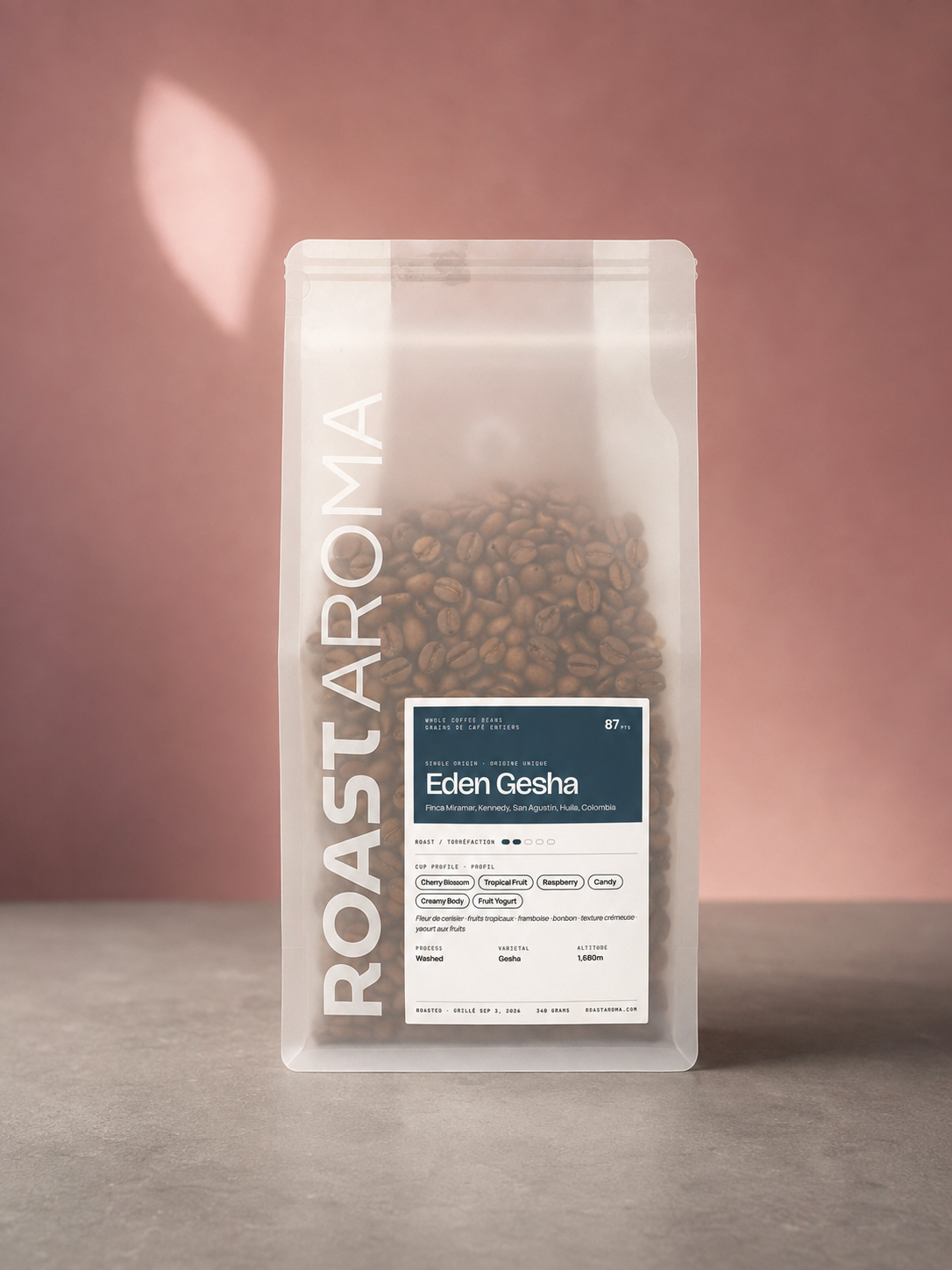 Eden Gesha - Colombian MiramarSCA 87Medium-light · Kennedy, San Agustin, Huila · WashedCherry blossom · Tropical fruitSteady and repeatable — right for this setup’s lane.CA$26.24 · roasted to order
A capable grinder matters as much as the machine. Start with whole beans and a printed roast date.
Prefer regular deliveries? RoastPlan is RoastAroma’s coffee subscription. Choose your coffees and their available options, then set deliveries every 1–6 weeks.
One-time RoastAroma orders are roasted to order in Ajax, Ontario and ship Canada-wide. We’re the roastery behind this database — measuring the machines is how we make sure the coffee gets a fair shot.
On film
How it runs on camera, from around the community.
Common questions
Does the Quick Mill Pop Up have pressure profiling?
Yes. It has an exclusive profiling valve that lets you manage pressure from pre-infusion through to the end of extraction. There is also a front-mounted pressure gauge (0–16 bar) so you can see what you are doing in real time.
Can you brew espresso and steam milk at the same time?
No. It is a single-boiler machine. You steam after pulling your shot, then wait several minutes for the boiler to cool back to brew temperature. For one or two drinks at a time this is manageable; for entertaining a group it is a workflow challenge.
What size portafilter does the Pop Up use?
The Pop Up uses a 58 mm group head, the commercial-standard size, giving you access to a wide range of aftermarket baskets and accessories.
How loud is the pump?
Quick Mill fits a proprietary pressure stabiliser to the vibratory pump that the brand claims reduces operational noise by up to 30% compared to a standard vibratory pump. Owner feedback generally describes it as quieter than expected for this class.
Is there an eco mode?
Yes. Pre-brew, eco-mode, and standby mode are all programmable from the control panel.
Worth comparing
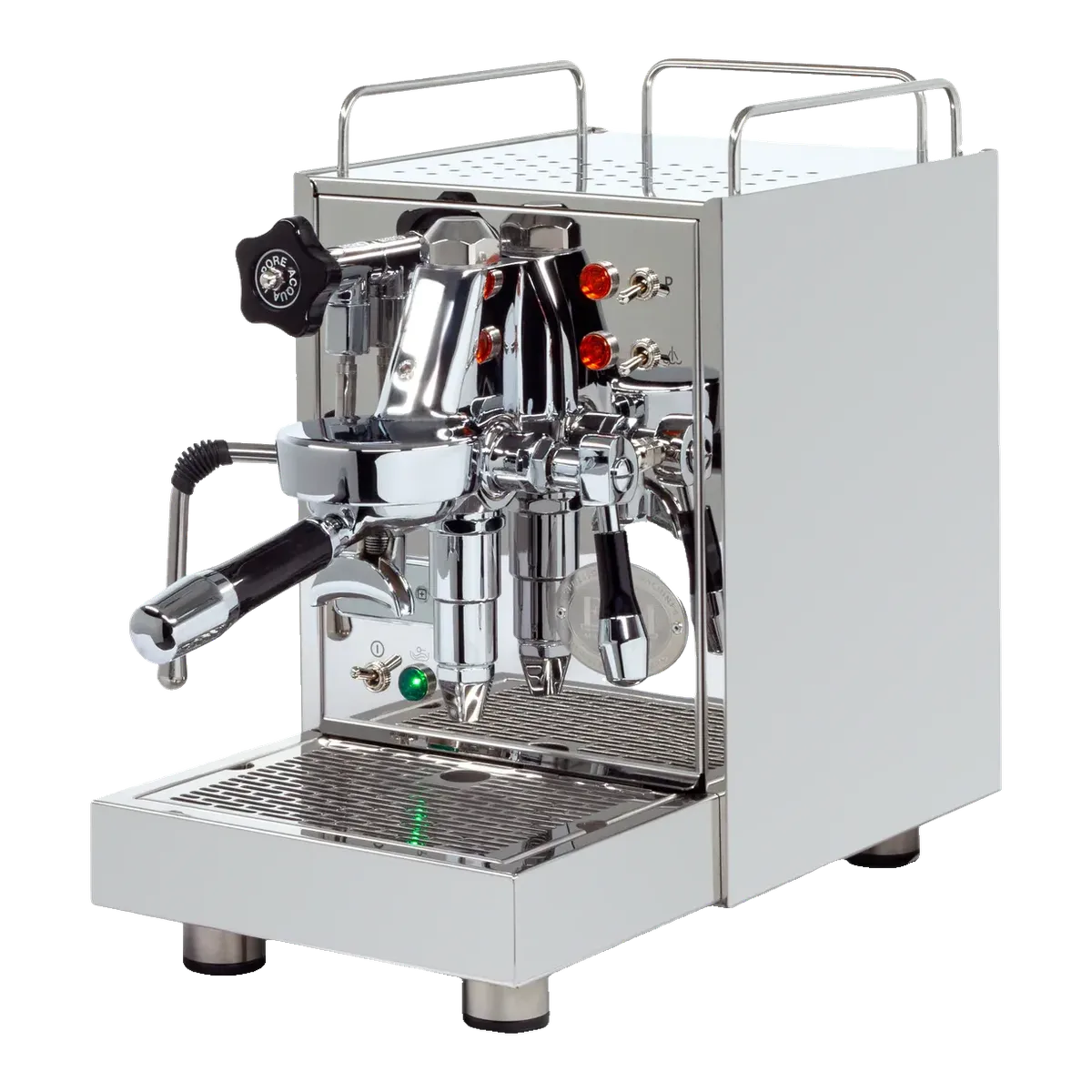
ECM
Classika PID
A compact German-engineered single-boiler with a full E61 group, Gicar PID temperature control, and a front pressure gauge — probably the most build quality you will find in a single-boiler under $1,800.
US$1,499–1,649 · CA$2,365–2,370
Weighing it against something we didn’t list? Compare it with anything on file →
Still weighing it? The finder narrows all 429 down to three that fit your life.
Run the two-minute finder →