Quick Mill · ThermoblockPOP
A compact Italian thermoblock machine with PID and a mechanical profiling valve — pressure control at an entry price point, with the trade-off of modest steam power.
The short version
The POP delivers a real profiling valve, PID, and shot timer in a stainless-steel package that heats fast and fits anywhere.
Accept that the single thermoblock forces sequential brew-then-steam with less steam authority than a dedicated boiler — milk drinks are workable, not effortless.
Why people buy it
- Mechanical profiling valve lets you shape pressure across the whole shot — uncommon at this price tier
- PID, programmable pre-infusion, eco-mode, and a built-in shot timer are all standard, not paid upgrades
Why they don’t
- Single thermoblock means you switch between brewing and steaming sequentially — no simultaneous operation
The full tally
- Mechanical profiling valve lets you shape pressure across the whole shot — uncommon at this price tier
- PID, programmable pre-infusion, eco-mode, and a built-in shot timer are all standard, not paid upgrades
- Noise-reduced vibration pump (Quick Mill claims up to 30% quieter than a conventional vibe pump) and a compact 25.5 cm footprint suit smaller kitchens
- Stainless Steel 304 body with a wooden steam knob gives it build quality and aesthetics above typical entry machines
- Single thermoblock means you switch between brewing and steaming sequentially — no simultaneous operation
- Thermoblock steam authority is noticeably weaker than a dedicated steam boiler; stretching more than 150 ml of milk at a time takes patience
- No cup warmer is present (unlike the POP-UP sibling), and the thermoblock's long-term temperature consistency under repeated shots is less proven than a traditional boiler
What the community knows
Years of owner threads, distilled — well regarded.
Specialist retail and Lance Hedrick backing; PID + flow control unlock real shot progression, but thermoblock reliability unknowns at this tier and sparse owner data hold it below default-rec tier.
Value
price-to-performance the community respects
Ceiling per dollar
how far the cup can go, per dollar
Reliability
shows up every morning, year after year
All 9 community measures
price-to-performance the community respects
shows up every morning, year after year
parts and repairs — you are never stranded
mods, guides, and community know-how around it
kind to first-timers
years before you outgrow or replace it
how far the cup can go, per dollar
speed and simplicity, day to day
Worth knowing before you buy — Most owners see this as a PID-plus-flow-control entry point—skill ceiling real, but thermoblock control algorithms at this price remain unproven long-term.
The measurements
Scored 0–5 on the same rubric as everything on file — the words matter more than the numbers.
The measurements
0–5, one rubric- Shot ceiling
- serious3.5
- Steam power
- token2
- Built to last
- fair3
- Easy daily
- demanding2
Position in the market
Every dot is a rival, measured the same way. The gold one is this.
- Mid-pack for shot ceiling
- a higher ceiling than 109 of the 237 machines we’ve measured
- A value pick at this level
- 80% of machines this capable cost more
- Lower half for build
- sturdier than 28% of the field, by the community’s own record
Every dot is a machine measured on the same rubric. See the whole market
Living with it
The part spec sheets skip: counter space, upkeep, and what owners learn later.
The honest note — Owners who develop a taste for steaming multiple milk drinks back-to-back, or who want simultaneous brew and steam, typically move to a heat-exchanger or entry dual-boiler (Quick Mill POP-UP, Lelit Mara X, Breville Dual Boiler). The profiling valve itself rarely becomes the limiting factor — the thermoblock's steam capacity does.
The full spec sheet
- Type
- Thermoblock / thermojet
- Heat-up time
- ~3 min
- Steam power
- 2/5
- Brew + steam at once
- No
- Guest recovery
- 2/5
- Shot quality ceiling
- 3.5/5
- PID temperature control
- Yes
- Milk system
- Manual steam wand
- Removable brew group
- No
- Flow control
- Yes
- Hot-water tap
- Yes
- Workflow demand
- 3/5
- Maintenance
- 2/5
- Noise
- 2/5
- Build longevity
- 3/5
- Dimensions
- 25.5 × 33.3 × 38.2 cm
Before it arrives
What completes this machine — the faded pieces can wait.
Descaler & backflush kit — Electric boilers scale up and grouts gunk up — a descaler plus backflush routine is what keeps the machine alive for a decade.
- Descaler & backflush kit — Electric boilers scale up and grouts gunk up — a descaler plus backflush routine is what keeps the machine alive for a decade.
- Coffee scale with timer — Espresso is a ratio. A 0.1g scale with a built-in timer is the single biggest consistency upgrade for any manual machine.
- Espresso cups & glassware — Proper demitasse and latte glasses keep the drink hot and look the part.
Feed it right
Week one is dial-in — and stale beans will lose it.
Coffee more than a few weeks past roast won’t extract predictably, and a new machine gets blamed for it. While you learn it, a forgiving medium-light roast keeps dial-in kind — bright enough to taste progress, sweet enough to drink the misses.
Pick your coffee — any of these dials in beautifully here:
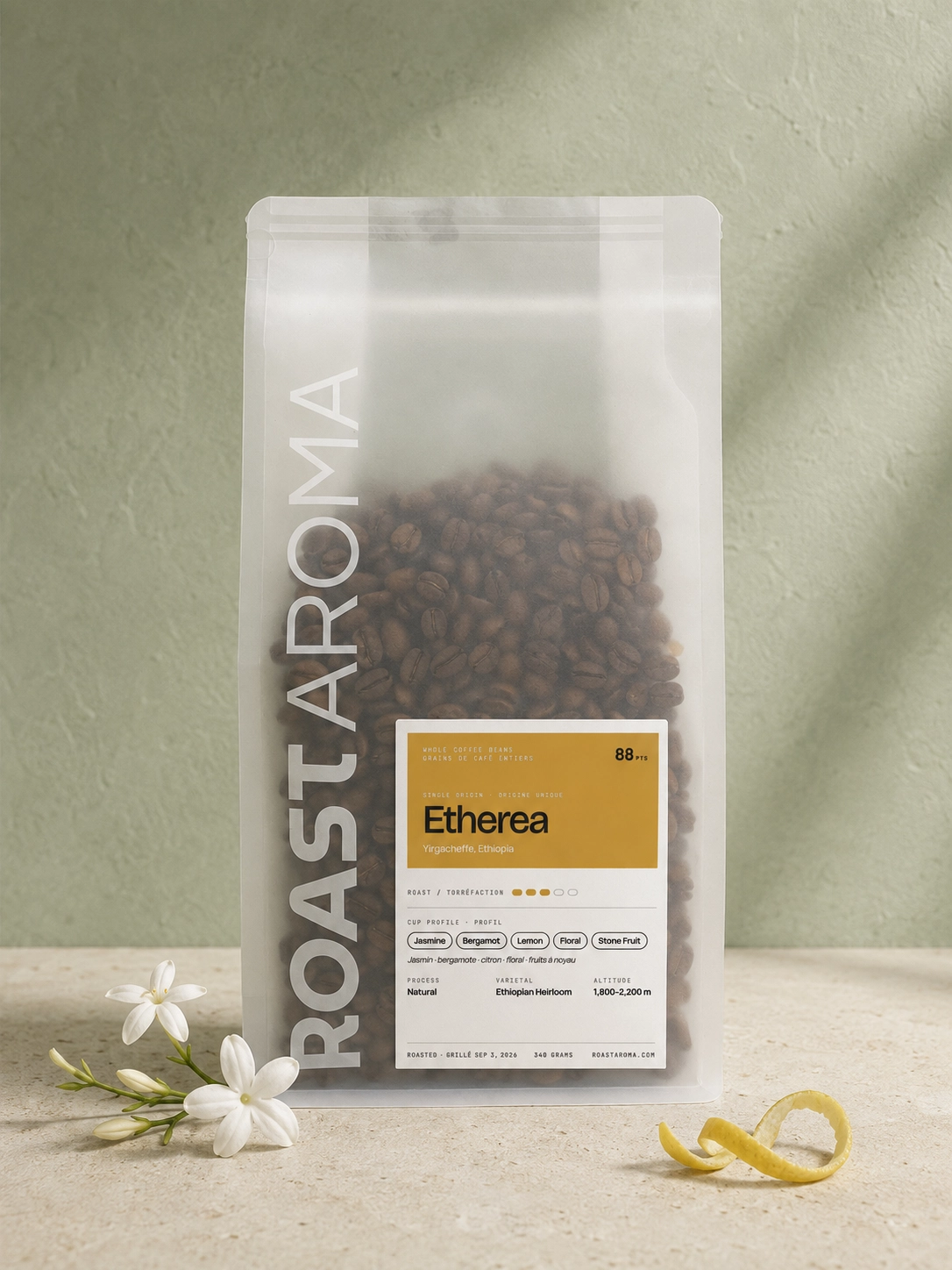 Etherea - Ethiopian YirgacheffeSCA 88Medium roast · NaturalJasmine · BergamotSteady and repeatable — right for this setup’s lane.CA$24.16 · roasted to order
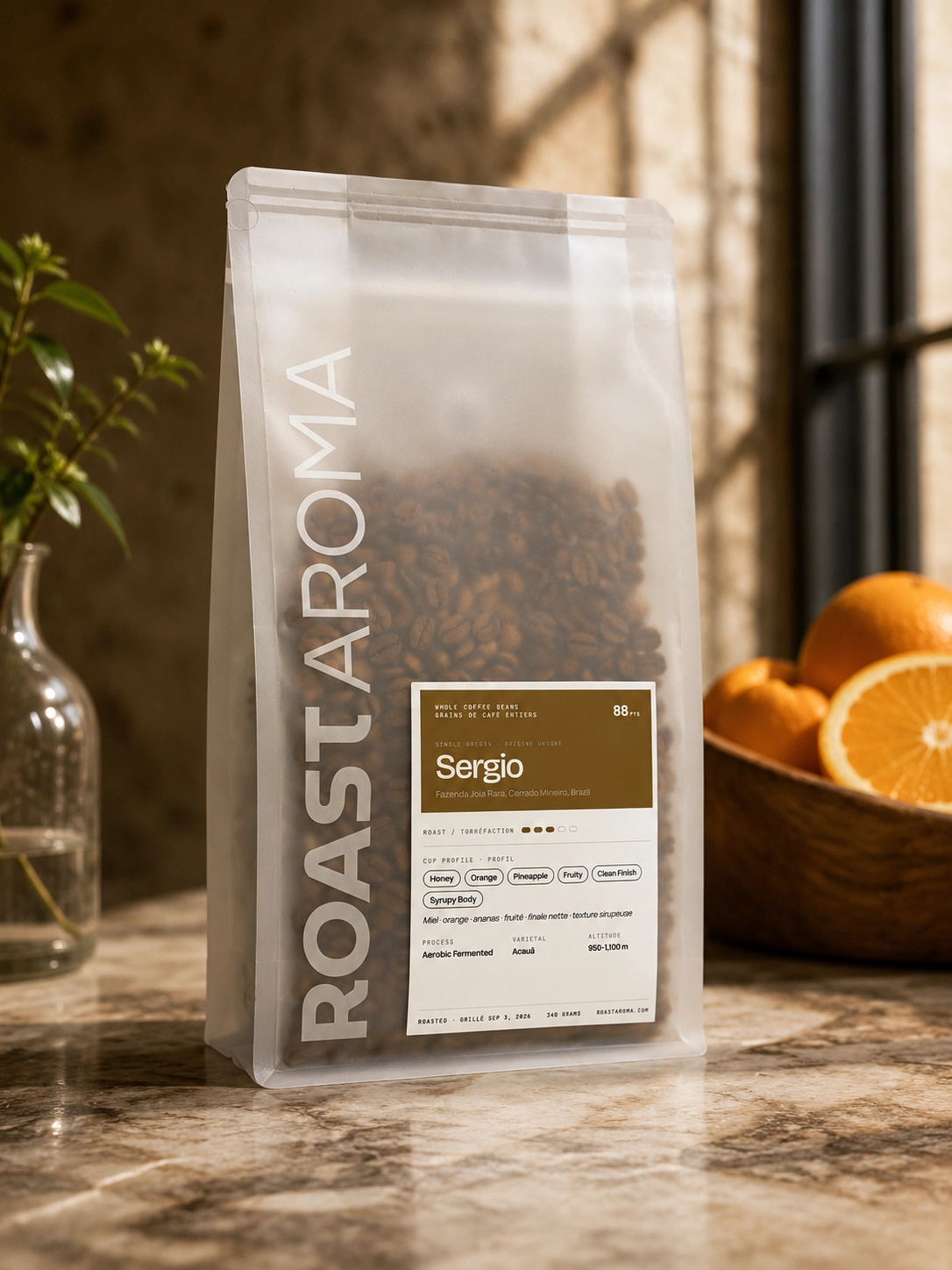 Sergio - Brazillian Fazenda Joia Rara Aerobic FermentedSCA 88Medium-light · Cerrado Mineiro · Aerobic FermentedHoney · OrangeSteady and repeatable — right for this setup’s lane.CA$29.18 · roasted to order
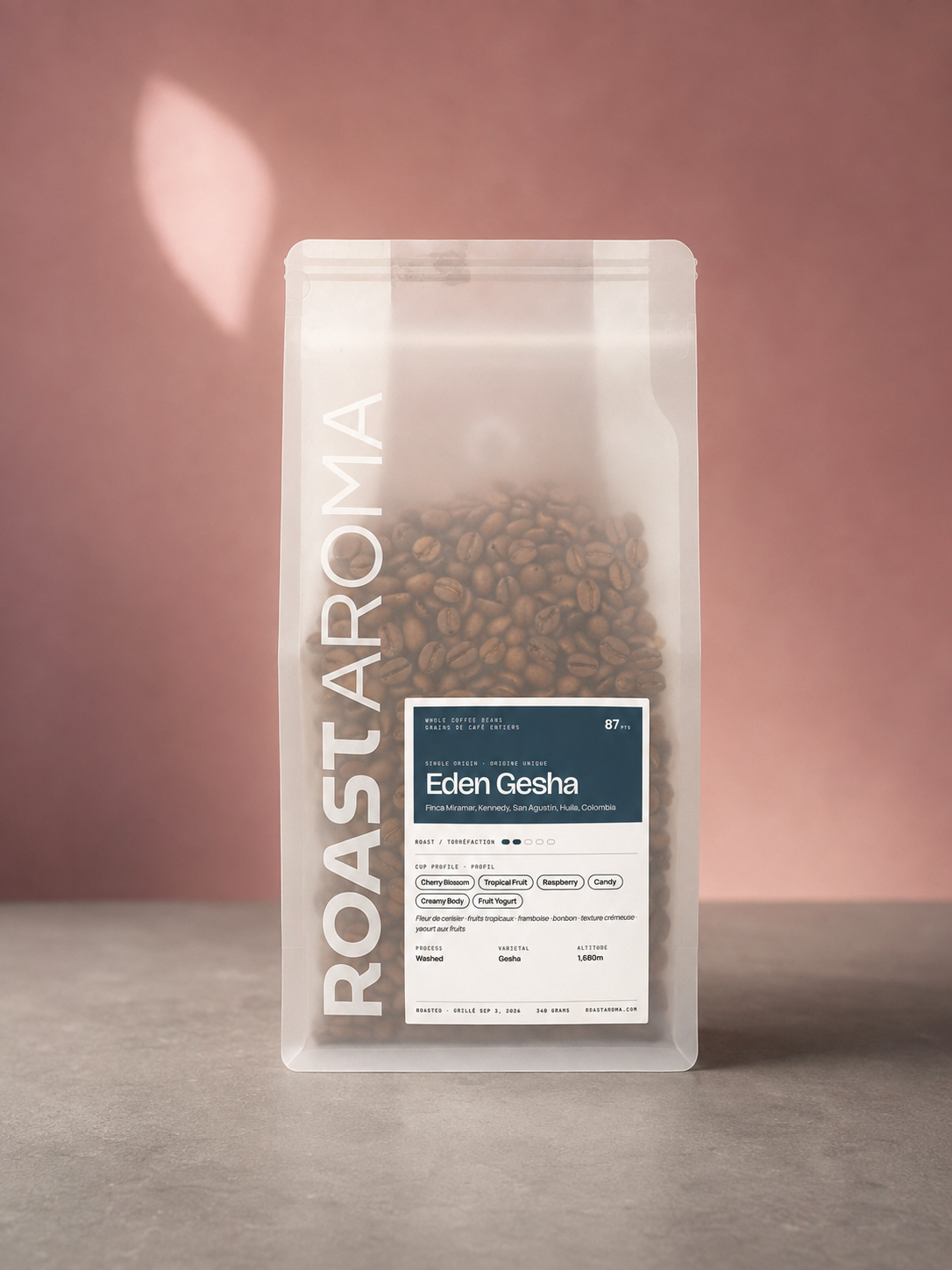 Eden Gesha - Colombian MiramarSCA 87Medium-light · Kennedy, San Agustin, Huila · WashedCherry blossom · Tropical fruitSteady and repeatable — right for this setup’s lane.CA$26.24 · roasted to order
A capable grinder matters as much as the machine. Start with whole beans and a printed roast date.
Prefer regular deliveries? RoastPlan is RoastAroma’s coffee subscription. Choose your coffees and their available options, then set deliveries every 1–6 weeks.
One-time RoastAroma orders are roasted to order in Ajax, Ontario and ship Canada-wide. We’re the roastery behind this database — measuring the machines is how we make sure the coffee gets a fair shot.
Common questions
What is the difference between the Quick Mill POP and the Quick Mill POP-UP?
The POP uses a die-cast aluminum thermoblock with a 0.5 m copper thermocoil for heat-on-demand, while the POP-UP uses a 0.45 L insulated brass boiler. The boiler in the POP-UP provides greater steam pressure and more consistent sequential shot temperatures, but the POP heats faster and weighs about 2.5 kg less.
Can the Quick Mill POP brew and steam at the same time?
No. It uses a single thermoblock, so brewing and steaming must be done sequentially. You pull the shot, then switch the machine to steam mode and wait briefly for temperature to rise before frothing milk.
Does the Quick Mill POP have a pressure gauge?
Yes. A front-mounted pump pressure gauge reads 0–16 bar, giving you live visual feedback during extraction and while using the profiling valve.
What grinder should I pair with the Quick Mill POP?
At minimum a midrange stepped or stepless espresso grinder. The machine's profiling valve rewards grind consistency — a budget pressurized-basket workaround will mask what the PID and profiling can do. Step up to a flat-burr single-dose grinder if you intend to explore pressure profiling seriously.
Weighing it against something we didn’t list? Compare it with anything on file →
Still weighing it? The finder narrows all 429 down to three that fit your life.
Run the two-minute finder →