Olympia Express · LeverCremina
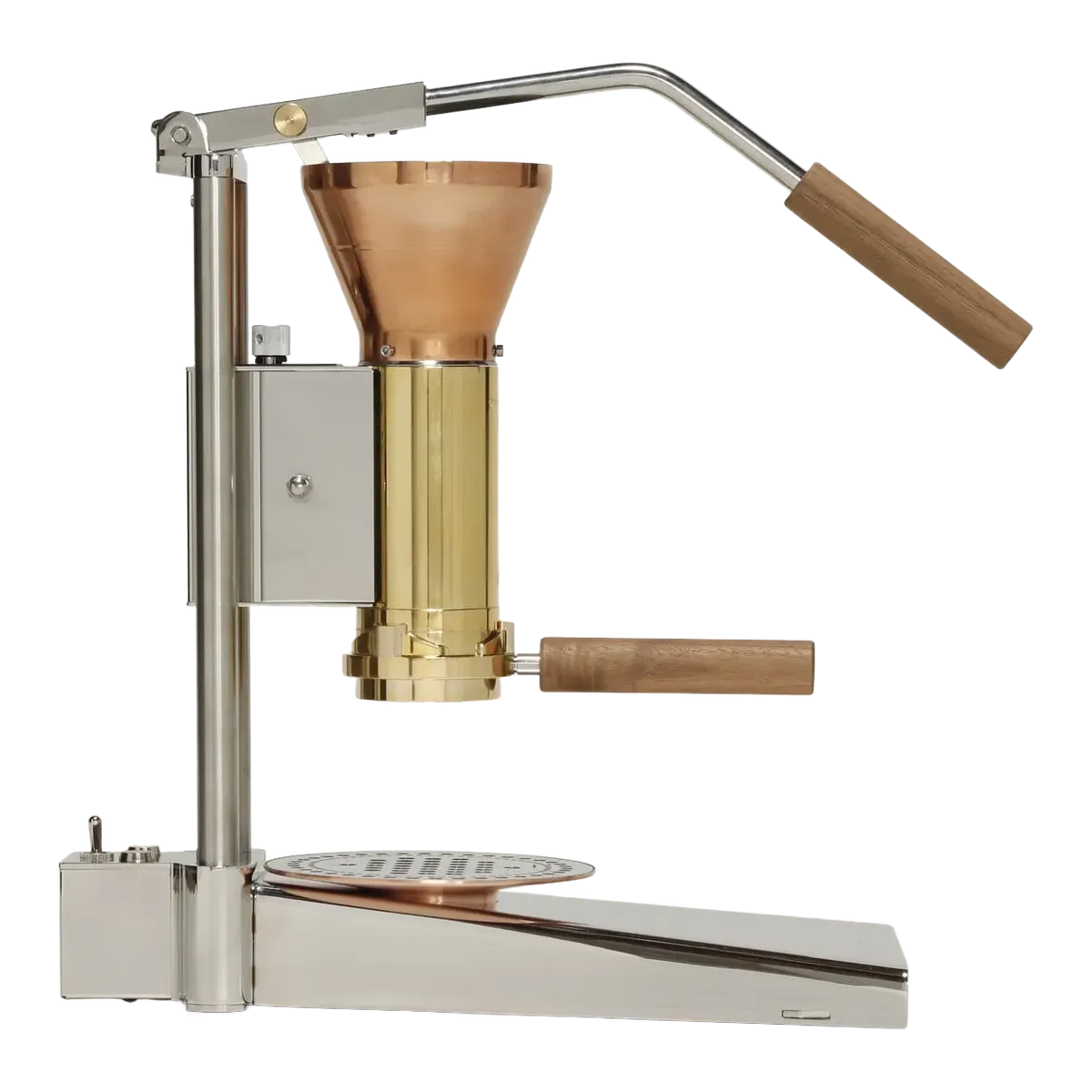
A hand-built Swiss direct-lever machine unchanged in fundamental design since 1967, made from chrome-plated brass, steel, and stainless steel, and routinely handed down across generations. The tradeoff for its shot quality ceiling and near-infinite longevity is an uncompromising workflow demand and minimal milk throughput.
The short version
The Cremina is a purely mechanical, direct-lever single-boiler machine made in tiny volumes in Switzerland; every component is rebuildable and spare parts exist for machines 50 years old.
A buyer must accept that pressure is set entirely by hand-feel on the lever — there is no pump, no PID, no flow-control electronics — and that steaming milk for more than one or two drinks per session is genuinely inconvenient.
Why people buy it
- Build quality and longevity are genuinely generational — original 1967 machines still in service, spare parts available for all vintages.
- Shot quality ceiling rivals machines at two to three times the price when the operator is dialled in; the descending-pressure profile from the direct lever is a distinct flavour advantage for many roast profiles.
Why they don’t
- Milk throughput is genuinely poor for a machine at this price: the single boiler must cool, refill, and reheat between espresso and steaming sessions, making drinks for a table of guests slow work.
The full tally
- Build quality and longevity are genuinely generational — original 1967 machines still in service, spare parts available for all vintages.
- Shot quality ceiling rivals machines at two to three times the price when the operator is dialled in; the descending-pressure profile from the direct lever is a distinct flavour advantage for many roast profiles.
- Extremely quiet in operation — the only noise is the boiler heating element; no pump vibration whatsoever.
- Compact footprint for what it is: 20 x 27 cm base fits a normal kitchen counter without drama.
- Milk throughput is genuinely poor for a machine at this price: the single boiler must cool, refill, and reheat between espresso and steaming sessions, making drinks for a table of guests slow work.
- The 49 mm portafilter is proprietary and non-standard, limiting aftermarket basket and accessory options versus the 58 mm universe.
- Brew pressure is controlled entirely by the operator's hand on the lever — there is no gauge, no pump, and no electronic safety net, so the learning curve is real and shots are not reproducible without developed technique.
What the community knows
Years of owner threads, distilled — the default recommendation in its bracket.
The lever community's reference standard for fifty-year durability and owner-serviceable mechanical simplicity; the premium reflects genuine heirloom build, not market scarcity — owners consistently report machines from the 1960s still pulling shots, and the design…
Reliability
shows up every morning, year after year
Parts & serviceability
parts and repairs — you are never stranded
Built to last
years before you outgrow or replace it
All 9 community measures
price-to-performance the community respects
shows up every morning, year after year
parts and repairs — you are never stranded
mods, guides, and community know-how around it
kind to first-timers
years before you outgrow or replace it
how far the cup can go, per dollar
speed and simplicity, day to day
Worth knowing before you buy — Most serious lever buyers frame this not as an upgrade but as a retirement purchase — the machine you buy once and keep for decades, not because it is the best shot-maker but because it will never strand you and only improves with…
“The design sophistication and build quality of the current version is unsurpassed, earning a reputation as the Rolex of home espresso machines.”
“A lever machine delivers a beautiful descending pressure profile and provides such wonderful tactile feedback to help guide your pull.”
The measurements
Scored 0–5 on the same rubric as everything on file — the words matter more than the numbers.
The measurements
0–5, one rubric- Shot ceiling
- endgame-adjacent4.5
- Steam power
- token1.5
- Built to last
- heirloom5
- Easy daily
- demanding0
Position in the market
Every dot is a rival, measured the same way. The gold one is this.
- Top quarter for shot ceiling
- a higher ceiling than 205 of the 237 machines we’ve measured
- Fairly priced for its level
- 57% of machines this capable cost more
- Top quarter for build
- sturdier than 88% of the field, by the community’s own record
Every dot is a machine measured on the same rubric. See the whole market
Living with it
The part spec sheets skip: counter space, upkeep, and what owners learn later.
The honest note — Few owners upgrade out of the Cremina — the machine is typically the final destination rather than a waypoint. Some owners add a Smart Espresso Profiler to measure pressure during the pull. The Cremina SL (spring-lever variant introduced 2020) is the natural lateral move for those who want a more reproducible pressure profile without leaving the Olympia ecosystem.
The full spec sheet
- Type
- Lever
- Heat-up time
- ~15 min
- Steam power
- 1.5/5
- Brew + steam at once
- No
- Guest recovery
- 1/5
- Shot quality ceiling
- 4.5/5
- PID temperature control
- No
- Milk system
- Manual steam wand
- Removable brew group
- No
- Flow control
- Yes
- Cup clearance
- 8 cm
- Workflow demand
- 5/5
- Maintenance
- 1.5/5
- Noise
- 0.5/5
- Build longevity
- 5/5
- Dimensions
- 20 × 27 × 33 cm
Before it arrives
What completes this machine — the faded pieces can wait.
Gooseneck kettle · not optional — Manual and lever machines bring no water of their own — a temperature-stable gooseneck is how you actually pull a shot.
- Gooseneck kettle — Manual and lever machines bring no water of their own — a temperature-stable gooseneck is how you actually pull a shot.
- Descaler & backflush kit — Electric boilers scale up and grouts gunk up — a descaler plus backflush routine is what keeps the machine alive for a decade.
- Coffee scale with timer — Espresso is a ratio. A 0.1g scale with a built-in timer is the single biggest consistency upgrade for any manual machine.
- Standalone milk steamer — No steam wand on board — a standalone steamer (Bellman, Subminimal NanoFoamer) is how you get a real flat white.
- Knock box — Somewhere to bang the spent puck that is not your kitchen bin.
- Calibrated tamper — The bundled tamper is usually an afterthought; a fitted, calibrated one makes prep repeatable.
- WDT distribution tool — Breaks up clumps before tamping — a cheap fix for channeling on any portafilter machine.
- Handheld milk frother — The cheapest path to foam for a no-steam machine — fine for casual milk drinks, not latte art.
- Espresso cups & glassware — Proper demitasse and latte glasses keep the drink hot and look the part.
Feed it right
Week one is dial-in — and stale beans will lose it.
Coffee more than a few weeks past roast won’t extract predictably, and a new machine gets blamed for it. A machine in this class will show you the difference between roast dates — it deserves beans that change week to week.
Pick your coffee — any of these dials in beautifully here:
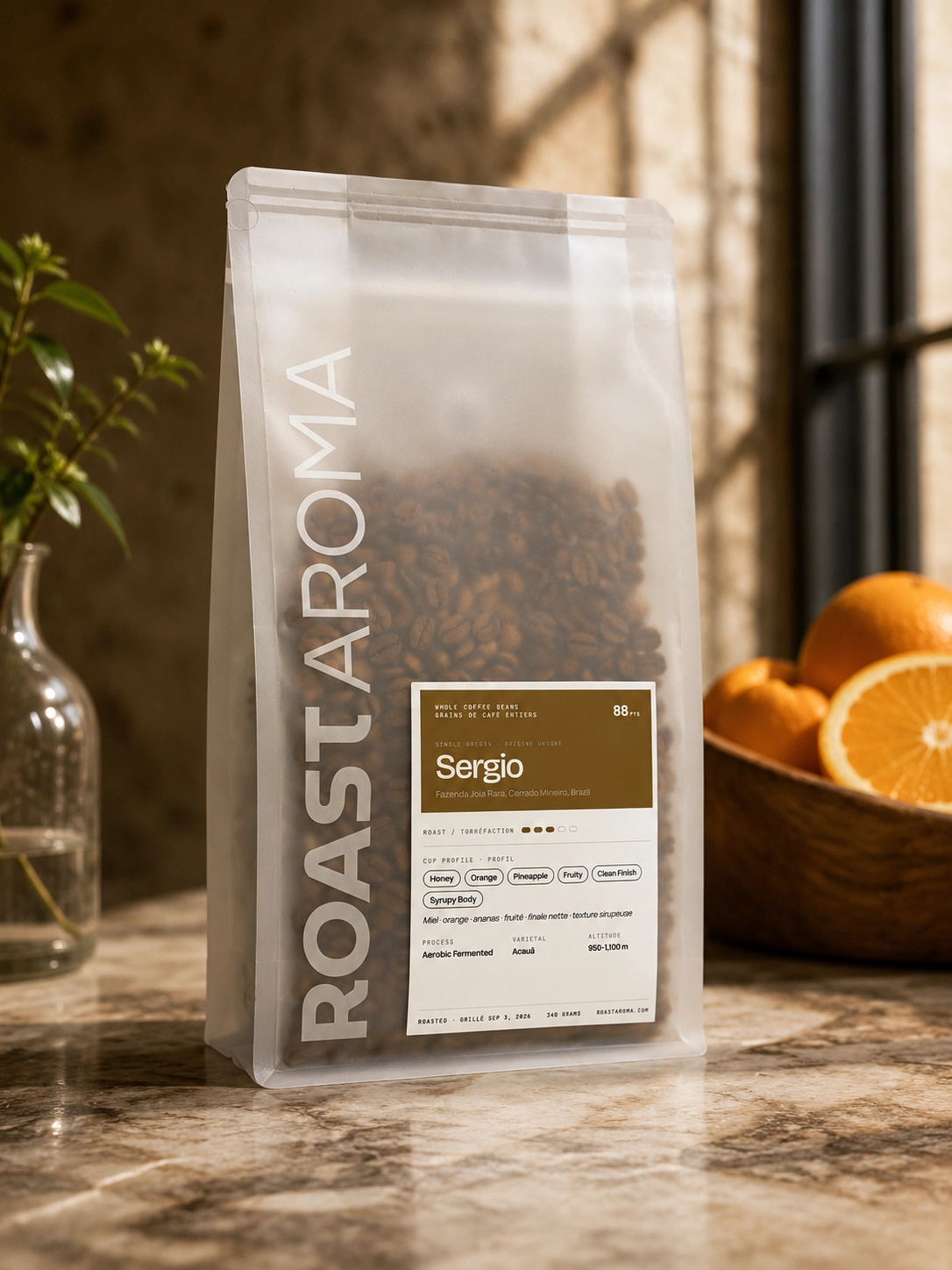 Sergio - Brazillian Fazenda Joia Rara Aerobic FermentedSCA 88Medium-light · Cerrado Mineiro · Aerobic FermentedHoney · OrangeEnough brightness to show what this gear can separate.CA$29.18 · roasted to order
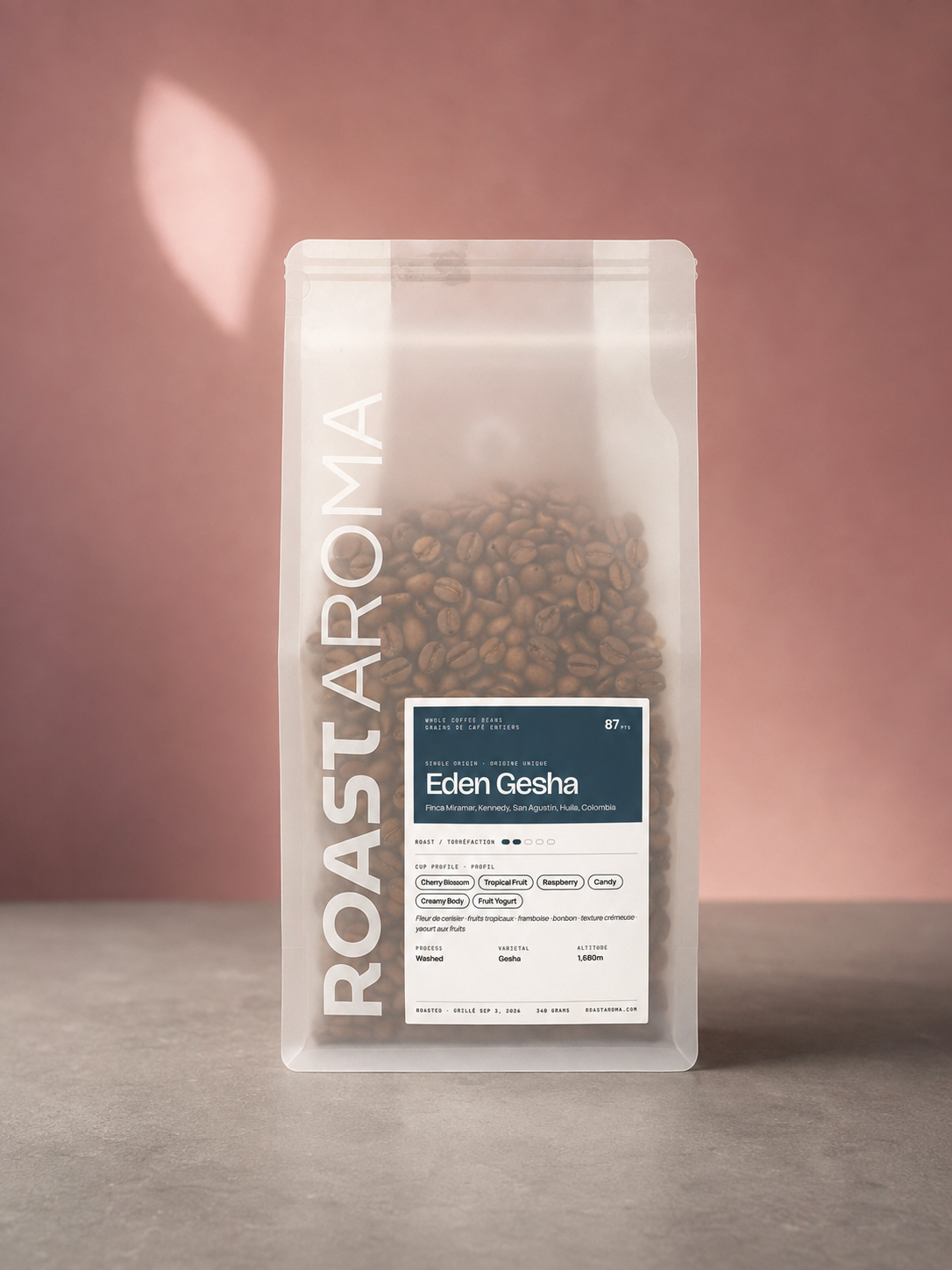 Eden Gesha - Colombian MiramarSCA 87Medium-light · Kennedy, San Agustin, Huila · WashedCherry blossom · Tropical fruitEnough brightness to show what this gear can separate.CA$26.24 · roasted to order
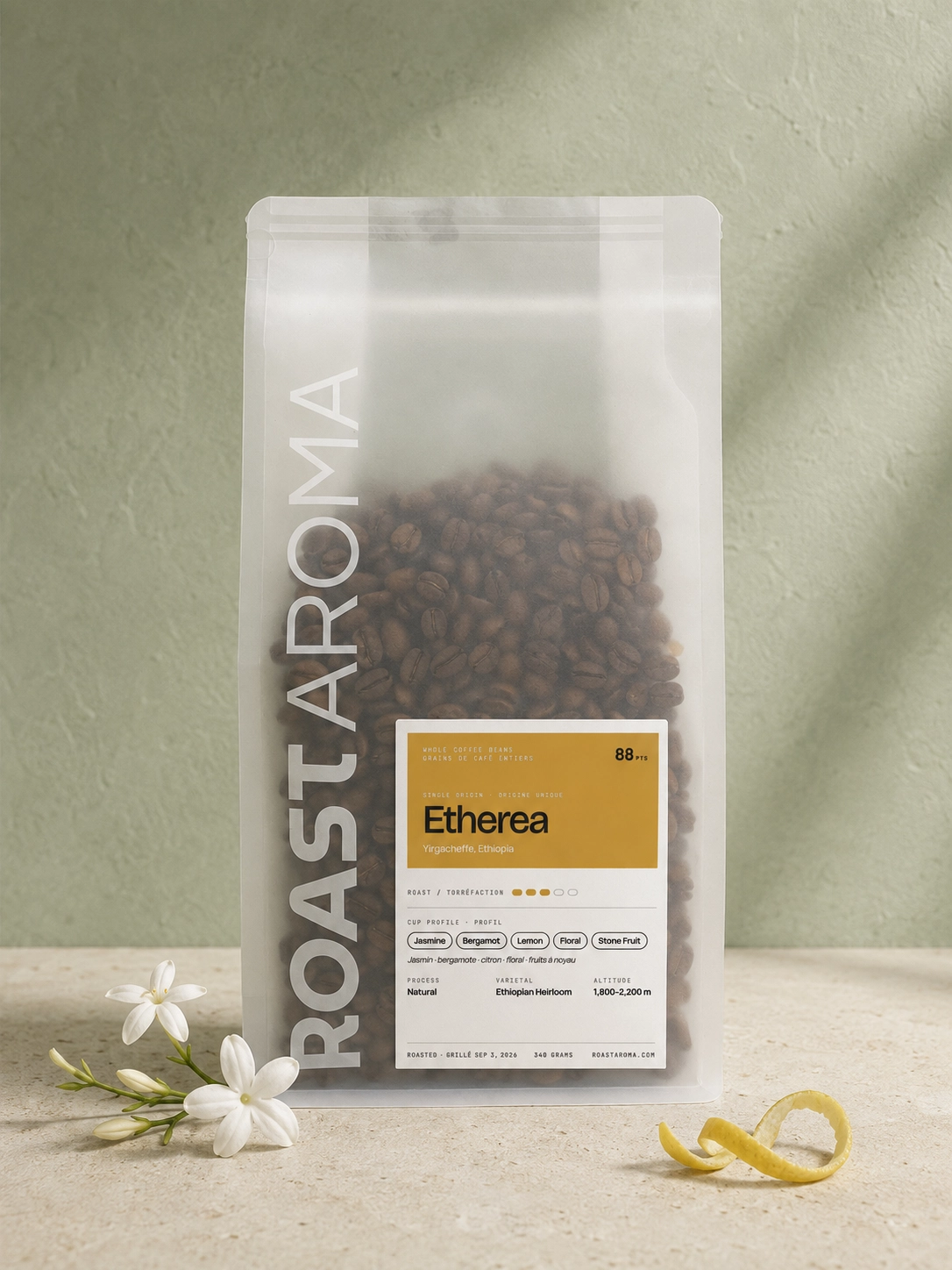 Etherea - Ethiopian YirgacheffeSCA 88Medium roast · NaturalJasmine · BergamotEnough brightness to show what this gear can separate.CA$24.16 · roasted to order
A capable grinder matters as much as the machine. Start with whole beans and a printed roast date.
Prefer regular deliveries? RoastPlan is RoastAroma’s coffee subscription. Choose your coffees and their available options, then set deliveries every 1–6 weeks.
One-time RoastAroma orders are roasted to order in Ajax, Ontario and ship Canada-wide. We’re the roastery behind this database — measuring the machines is how we make sure the coffee gets a fair shot.
On film
How it runs on camera, from around the community.
Common questions
What portafilter size does the Cremina use?
The Cremina uses a 49 mm portafilter — proprietary to the Olympia Express platform and shared across Cremina generations. It is not compatible with standard 58 mm accessories.
How long does the Cremina take to heat up?
The manufacturer specifies the boiler reaches operating pressure relatively quickly, but a realistic heat-soak for the group head and stable shot conditions is typically 15–20 minutes. The exact figure depends on ambient temperature and user practice.
Does the Cremina have a PID or pressure gauge?
No. The standard Cremina has no PID and no brew-pressure gauge on the machine. Boiler pressure is set by a mechanical pressurestat at 0.7–0.8 bar; brew pressure at the puck is controlled entirely by the operator's hand-feel on the lever. Third-party devices like the Smart Espresso Profiler can be added.
Is it suitable for milk-based drinks?
The Cremina has a manual steam wand and can steam milk, but as a single-boiler machine it requires time to transition between brew and steam temperatures. It is designed primarily for straight espresso; owners who drink mainly cappuccinos or lattes at volume should consider a heat-exchanger or dual-boiler machine instead.
What is the boiler capacity?
The Cremina has a 1.3 L boiler and an 1.8 L water reservoir, providing capacity for approximately 20 espresso shots before the boiler needs cooling and refilling.
Worth comparing
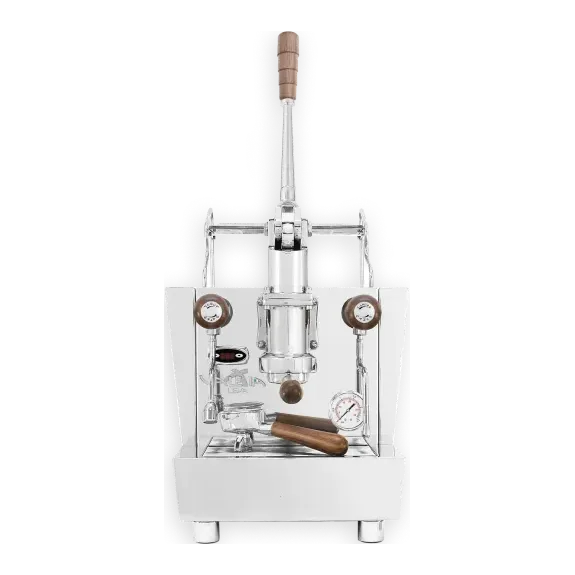
Weighing it against something we didn’t list? Compare it with anything on file →
Still weighing it? The finder narrows all 429 down to three that fit your life.
Run the two-minute finder →