Elektra · Heat exchangerT1 Sixties Deliziosa
A semi-commercial 1-group HX machine built around a 5.5-litre boiler squeezed into a surprisingly compact body — plumbed-in only, rotary-quiet, and styled in retro Italian stainless steel. Discontinued but still found on the used/new-old-stock market.
The short version
The T1 Sixties is a true semi-commercial HX in a footprint that edges toward prosumer size; the 5.5-litre boiler and integrated rotary pump mean it recovers fast and steams hard, but it demands a plumbed water line and drain, a 20-amp circuit, and the understanding that you're buying a discontinued product whose parts supply is finite.
Why people buy it
- 5.5-litre HX boiler in a compact 1-group frame means steam supply and shot-to-shot recovery are closer to a full commercial machine than any home dual-boiler.
- Integrated rotary pump runs quietly and handles the continuous draw of a plumbed line without fatigue.
Why they don’t
- Plumbed water line and drain are mandatory — no internal tank option — which rules out most domestic kitchens without renovation.
The full tally
- 5.5-litre HX boiler in a compact 1-group frame means steam supply and shot-to-shot recovery are closer to a full commercial machine than any home dual-boiler.
- Integrated rotary pump runs quietly and handles the continuous draw of a plumbed line without fatigue.
- Four programmable volumetric doses plus a manual mode give a small cafe or serious home bar genuine workflow flexibility.
- Temperature surfing on the Elektra HX design is notably forgiving; the flush-to-brew transition is audible and predictable, making consistent extraction easier than on many E61 HX machines.
- Plumbed water line and drain are mandatory — no internal tank option — which rules out most domestic kitchens without renovation.
- Discontinued product: no manufacturer warranty pipeline and parts availability will only narrow over time.
- 20-amp dedicated circuit requirement adds installation cost and complexity beyond what a typical home kitchen provides.
What the community knows
Years of owner threads, distilled — a niche favourite.
Handcrafted Italian HX with authentic temperature stability and heirloom durability, but steep learning curve, limited parts ecosystem, and small modern community keep it a specialist's choice for those who value craft and longevity over convenience.
Built to last
years before you outgrow or replace it
Design pull
Value
price-to-performance the community respects
All 9 community measures
price-to-performance the community respects
shows up every morning, year after year
parts and repairs — you are never stranded
mods, guides, and community know-how around it
kind to first-timers
years before you outgrow or replace it
how far the cup can go, per dollar
speed and simplicity, day to day
Worth knowing before you buy — Most owners wish they'd invested in a better-quality tamper and descaling tools upfront rather than discovering poor inclusions and manual gaps after delivery.
Known weak points — Electrical solenoid/brain unit failures reported in older units (replacement requires troubleshooting); pressurestat adjustments needed but not documented in manual; plastic tamper inclusion is defective/inadequate; heating element exposure risk if machine run dry.
“Consistently obtaining the desired temperature is the easiest of any heat exchanger machine I've tried or reviewed.”
The measurements
Scored 0–5 on the same rubric as everything on file — the words matter more than the numbers.
The measurements
0–5, one rubric- Shot ceiling
- capable3
- Steam power
- confident4
- Built to last
- durable4
- Easy daily
- demanding2
Position in the market
Every dot is a rival, measured the same way. The gold one is this.
- Lower half for shot ceiling
- a higher ceiling than 81 of the 238 machines we’ve measured
- Upper half for build
- sturdier than 56% of the field, by the community’s own record
Every dot is a machine measured on the same rubric. See the whole market
Living with it
The part spec sheets skip: counter space, upkeep, and what owners learn later.
The honest note — Owners who want PID-precision temperature control or pressure profiling typically move to a dual-boiler prosumer machine (e.g. La Marzocco Linea Micra, Rocket Appartamento R, or a used Synesso). Those happy with HX operation but wanting current manufacturer support should look at the Elektra A3 Revival or similar contemporary 1-group semi-commercials.
The full spec sheet
- Type
- Heat exchanger (HX)
- Heat-up time
- ~15 min
- Steam power
- 4/5
- Brew + steam at once
- Yes
- Guest recovery
- 4/5
- Shot quality ceiling
- 3/5
- PID temperature control
- No
- Milk system
- Manual steam wand
- One-touch drinks
- 4
- Removable brew group
- No
- Hot-water tap
- Yes
- Workflow demand
- 3/5
- Maintenance
- 3/5
- Noise
- 2/5
- Build longevity
- 4/5
- Dimensions
- 35.6 × 50.8 × 47 cm
Before it arrives
What completes this machine — the faded pieces can wait.
Water filter / softener — Plumbed-in machines need inline filtration to keep scale out of the boiler — it is cheaper than a repair.
- Water filter / softener — Plumbed-in machines need inline filtration to keep scale out of the boiler — it is cheaper than a repair.
- Descaler & backflush kit — Electric boilers scale up and grouts gunk up — a descaler plus backflush routine is what keeps the machine alive for a decade.
- Knock box — Somewhere to bang the spent puck that is not your kitchen bin.
- WDT distribution tool — Breaks up clumps before tamping — a cheap fix for channeling on any portafilter machine.
- Espresso cups & glassware — Proper demitasse and latte glasses keep the drink hot and look the part.
Feed it right
Week one is dial-in — and stale beans will lose it.
Coffee more than a few weeks past roast won’t extract predictably, and a new machine gets blamed for it. A machine in this class will show you the difference between roast dates — it deserves beans that change week to week.
Pick your coffee — any of these dials in beautifully here:
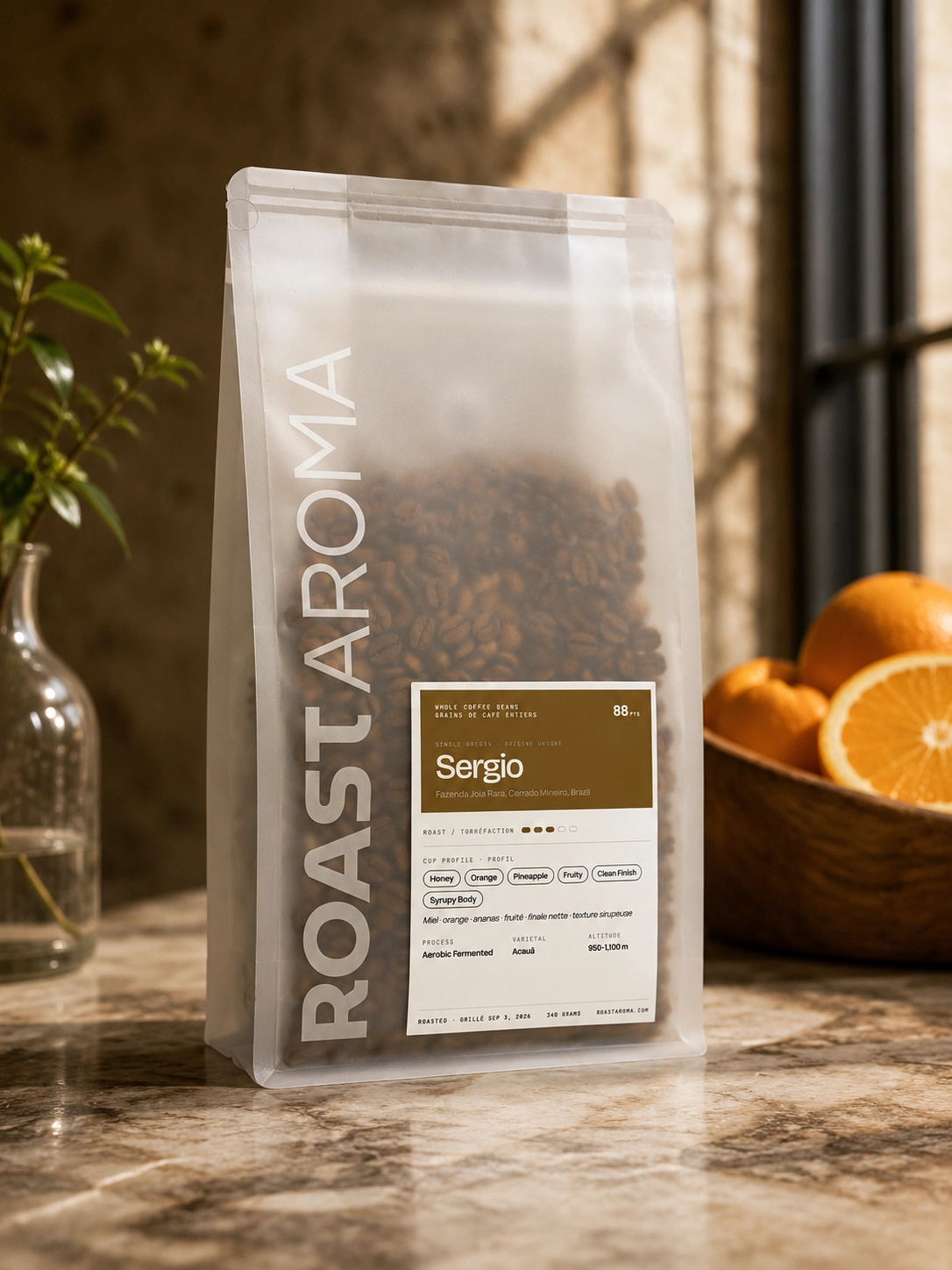 Sergio - Brazillian Fazenda Joia Rara Aerobic FermentedSCA 88Medium-light · Cerrado Mineiro · Aerobic FermentedHoney · OrangeEnough brightness to show what this gear can separate.CA$29.18 · roasted to order
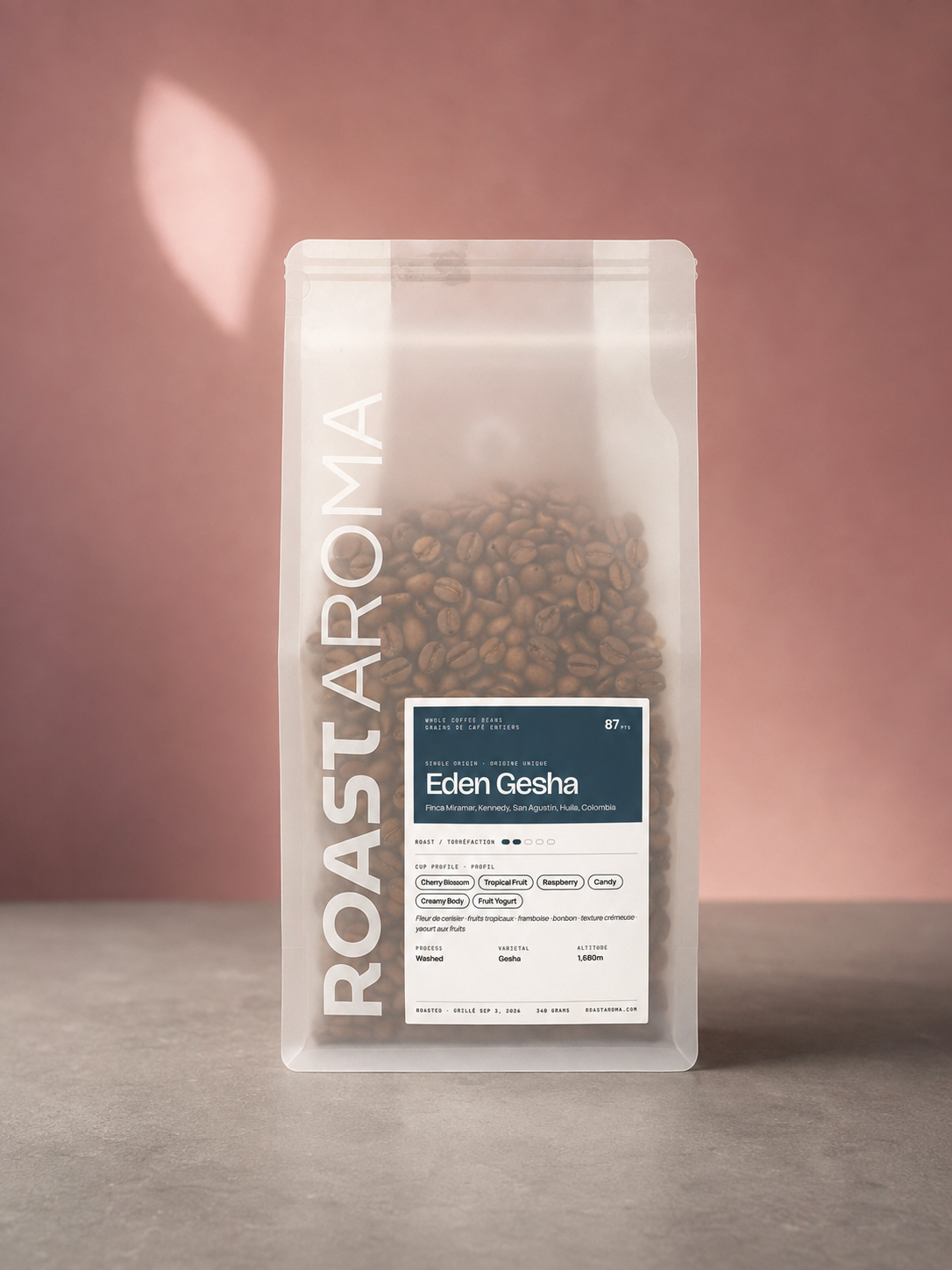 Eden Gesha - Colombian MiramarSCA 87Medium-light · Kennedy, San Agustin, Huila · WashedCherry blossom · Tropical fruitEnough brightness to show what this gear can separate.CA$26.24 · roasted to order
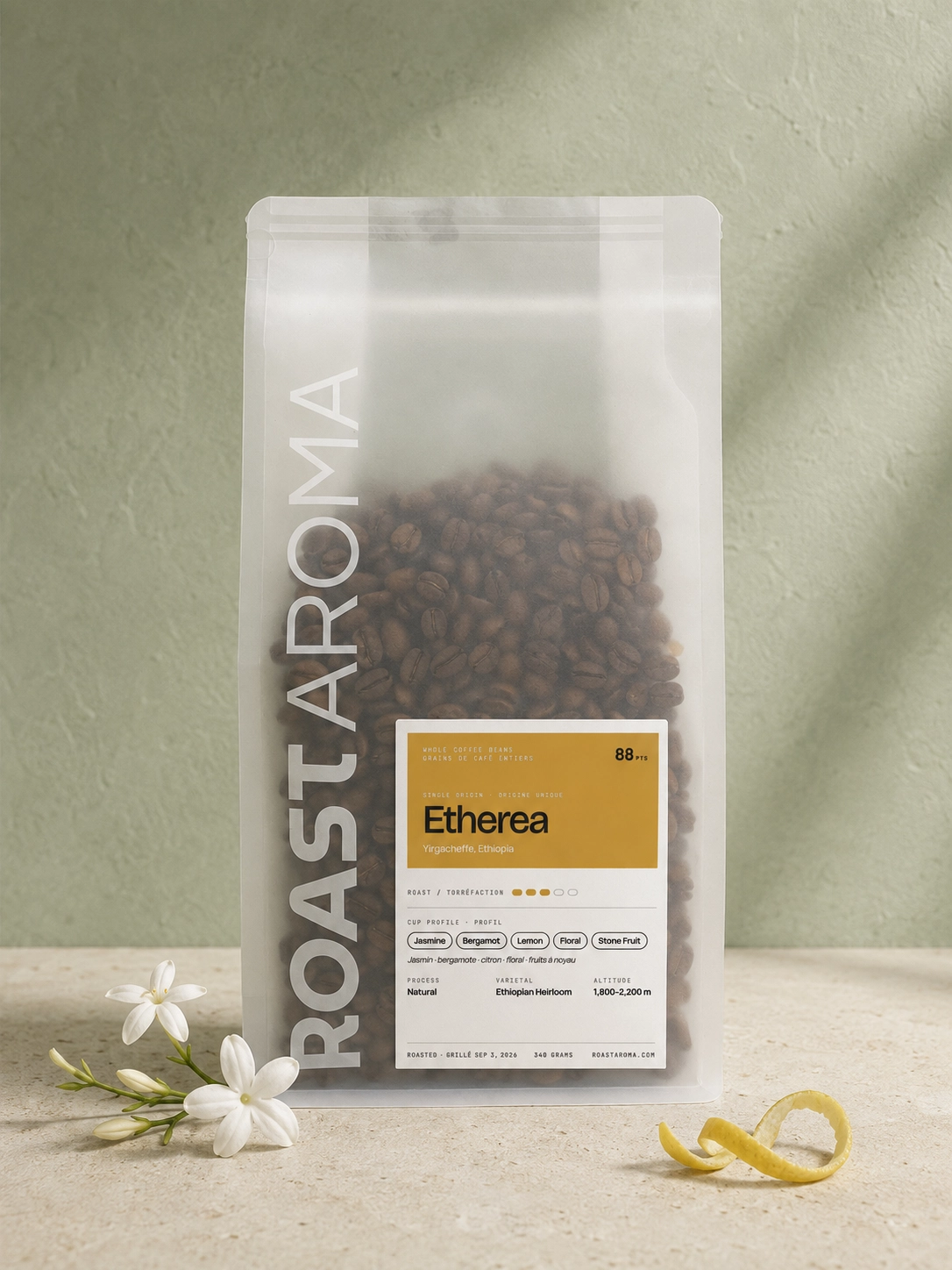 Etherea - Ethiopian YirgacheffeSCA 88Medium roast · NaturalJasmine · BergamotEnough brightness to show what this gear can separate.CA$24.16 · roasted to order
A capable grinder matters as much as the machine. Start with whole beans and a printed roast date.
Prefer regular deliveries? RoastPlan is RoastAroma’s coffee subscription. Choose your coffees and their available options, then set deliveries every 1–6 weeks.
One-time RoastAroma orders are roasted to order in Ajax, Ontario and ship Canada-wide. We’re the roastery behind this database — measuring the machines is how we make sure the coffee gets a fair shot.
Common questions
Does the Elektra T1 Sixties have an internal water tank?
No. The T1 Sixties requires a direct plumbed water connection and a drain line. There is no internal reservoir option.
Is this machine still in production?
No. Multiple retailers list it as discontinued. New-old-stock units appear occasionally, but the product is no longer in active production, so buyer-beware on parts and support.
What electrical circuit does the T1 Sixties need?
It requires a dedicated 20-amp circuit, which is above the standard 15-amp household outlet and typically needs an electrician to install.
Can I steam milk and pull a shot at the same time?
Yes. The heat exchanger design allows simultaneous brewing and steaming with no downtime between operations.
What is the boiler capacity?
The steam boiler holds 5.5 litres — a commercial-sized volume for a 1-group machine.
Weighing it against something we didn’t list? Compare it with anything on file →
Still weighing it? The finder narrows all 429 down to three that fit your life.
Run the two-minute finder →