Elektra · LeverMicro Casa a Leva (S1)
A handcrafted Italian spring-lever machine with a 1.5L copper boiler and an Art Deco dome silhouette that has been essentially unchanged since the 1960s. You provide the pressure; the spring provides the profile.
The short version
The Micro Casa a Leva is a genuinely beautiful piece of Italian metalwork that produces soft, layered espresso via a spring piston curve no pump machine replicates exactly.
The price you pay for the ritual is a small boiler that overheats fast during back-to-back rounds and a 49mm group that narrows grinder compatibility.
Why people buy it
- Spring-lever pressure curve produces distinctive, mellow, layered shots with a texture pump machines struggle to match
- Entirely silent during extraction — no vibrating pump, just the spring
Why they don’t
- Small 1.5L boiler overheats quickly — sustained steaming or back-to-back shots require patience and temperature management
The full tally
- Spring-lever pressure curve produces distinctive, mellow, layered shots with a texture pump machines struggle to match
- Entirely silent during extraction — no vibrating pump, just the spring
- Handcrafted copper/brass construction with simple gasket-and-piston internals that an owner can service with a screwdriver
- Passive cup warmer built into the dome; water-level sight glass and boiler pressure gauge standard
- Small 1.5L boiler overheats quickly — sustained steaming or back-to-back shots require patience and temperature management
- Non-standard 49mm portafilter limits grinder choice and upgrades compared to 58mm machines
- Copper/brass finishes patinate and tarnish; the machine cannot be left unattended while on
What the community knows
Years of owner threads, distilled — strongly recommended.
A genuine heirloom lever machine: mechanical mastery and mellow, layered shots keep experienced owners for decades; strong Home-Barista ecosystem, excellent serviceability, and stunning Italian design drive deliberate purchases — but proprietary 55mm portafilter, steep learning…
Reliability
shows up every morning, year after year
Parts & serviceability
parts and repairs — you are never stranded
Built to last
years before you outgrow or replace it
All 9 community measures
price-to-performance the community respects
shows up every morning, year after year
parts and repairs — you are never stranded
mods, guides, and community know-how around it
kind to first-timers
years before you outgrow or replace it
how far the cup can go, per dollar
speed and simplicity, day to day
Worth knowing before you buy — Most owners view this as their final machine, not an upgrade path — the reframe is "skip the stepping stones if you can afford to wait and buy this once."
Known weak points — Burn hazards on steam wand and group head well documented in owner discussions; no major mechanical failure modes cited — lever simplicity is the point. Proprietary 55mm portafilter limits basket/accessory transfer on future upgrade.
“The Elektra Microcasa a Leva is especially known for mellow espresso that reveals many layers of flavor. It's finely tuned for this by design, and the main feature allowing this is its spring of moderate tension.”
“If I did not have a Conti Prestina I would still have the Elektra Microcasa a Leva for its consistent and flavor layered shots. When properly tuned the MCAL is a walk up and pull machine.”
“The Elektra Microcasa a Leva comes highly recommended for its excellent shot quality and steaming, its stunning good looks and ease of servicing.”
The measurements
Scored 0–5 on the same rubric as everything on file — the words matter more than the numbers.
The measurements
0–5, one rubric- Shot ceiling
- serious4
- Steam power
- workable2.5
- Built to last
- heirloom4.5
- Easy daily
- demanding0.5
Position in the market
Every dot is a rival, measured the same way. The gold one is this.
- Upper half for shot ceiling
- a higher ceiling than 149 of the 237 machines we’ve measured
- A value pick at this level
- 66% of machines this capable cost more
- Top quarter for build
- sturdier than 78% of the field, by the community’s own record
Every dot is a machine measured on the same rubric. See the whole market
Living with it
The part spec sheets skip: counter space, upkeep, and what owners learn later.
The honest note — Owners who want more steaming headroom or repeatability for guests often move to a HX pump machine (Bezzera BZ10, ECM Synchronika) or a dedicated spring-lever with a 58mm group (Londinium R). The MCAL itself rarely gets replaced for shot quality reasons — it is usually outgrown for workflow reasons.
The full spec sheet
- Type
- Lever
- Heat-up time
- ~15 min
- Steam power
- 2.5/5
- Brew + steam at once
- No
- Guest recovery
- 1.5/5
- Shot quality ceiling
- 4/5
- PID temperature control
- No
- Milk system
- Manual steam wand
- Removable brew group
- No
- Flow control
- Yes
- Hot-water tap
- Yes
- Workflow demand
- 4.5/5
- Maintenance
- 2.5/5
- Noise
- 1/5
- Build longevity
- 4.5/5
- Dimensions
- 25 × 32 × 53 cm
Before it arrives
What completes this machine — the faded pieces can wait.
Gooseneck kettle · not optional — Manual and lever machines bring no water of their own — a temperature-stable gooseneck is how you actually pull a shot.
- Gooseneck kettle — Manual and lever machines bring no water of their own — a temperature-stable gooseneck is how you actually pull a shot.
- Coffee scale with timer — Espresso is a ratio. A 0.1g scale with a built-in timer is the single biggest consistency upgrade for any manual machine.
- Standalone milk steamer — No steam wand on board — a standalone steamer (Bellman, Subminimal NanoFoamer) is how you get a real flat white.
- Handheld milk frother — The cheapest path to foam for a no-steam machine — fine for casual milk drinks, not latte art.
- Espresso cups & glassware — Proper demitasse and latte glasses keep the drink hot and look the part.
Feed it right
Week one is dial-in — and stale beans will lose it.
Coffee more than a few weeks past roast won’t extract predictably, and a new machine gets blamed for it. A machine in this class will show you the difference between roast dates — it deserves beans that change week to week.
Pick your coffee — any of these dials in beautifully here:
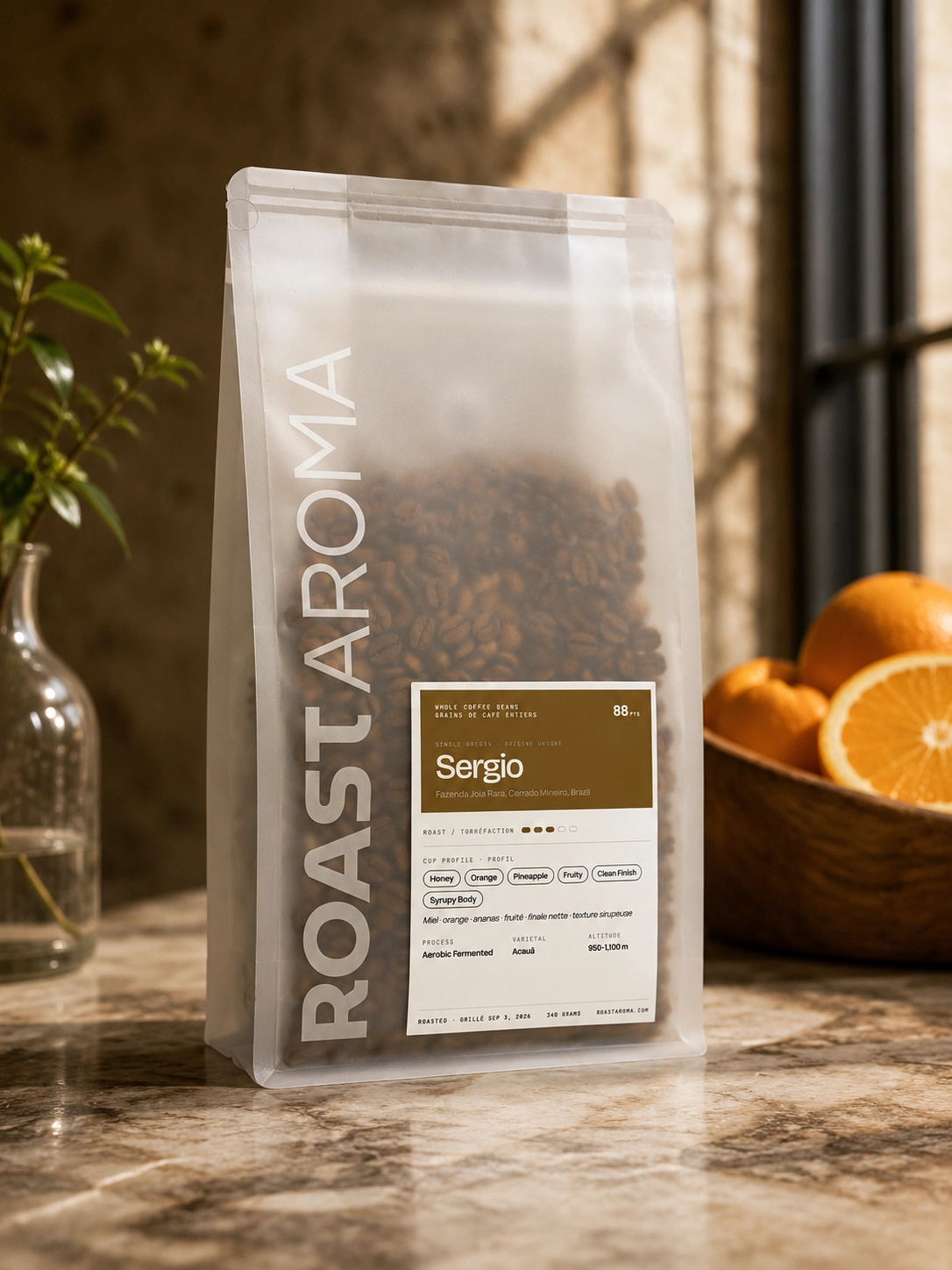 Sergio - Brazillian Fazenda Joia Rara Aerobic FermentedSCA 88Medium-light · Cerrado Mineiro · Aerobic FermentedHoney · OrangeEnough brightness to show what this gear can separate.CA$29.18 · roasted to order
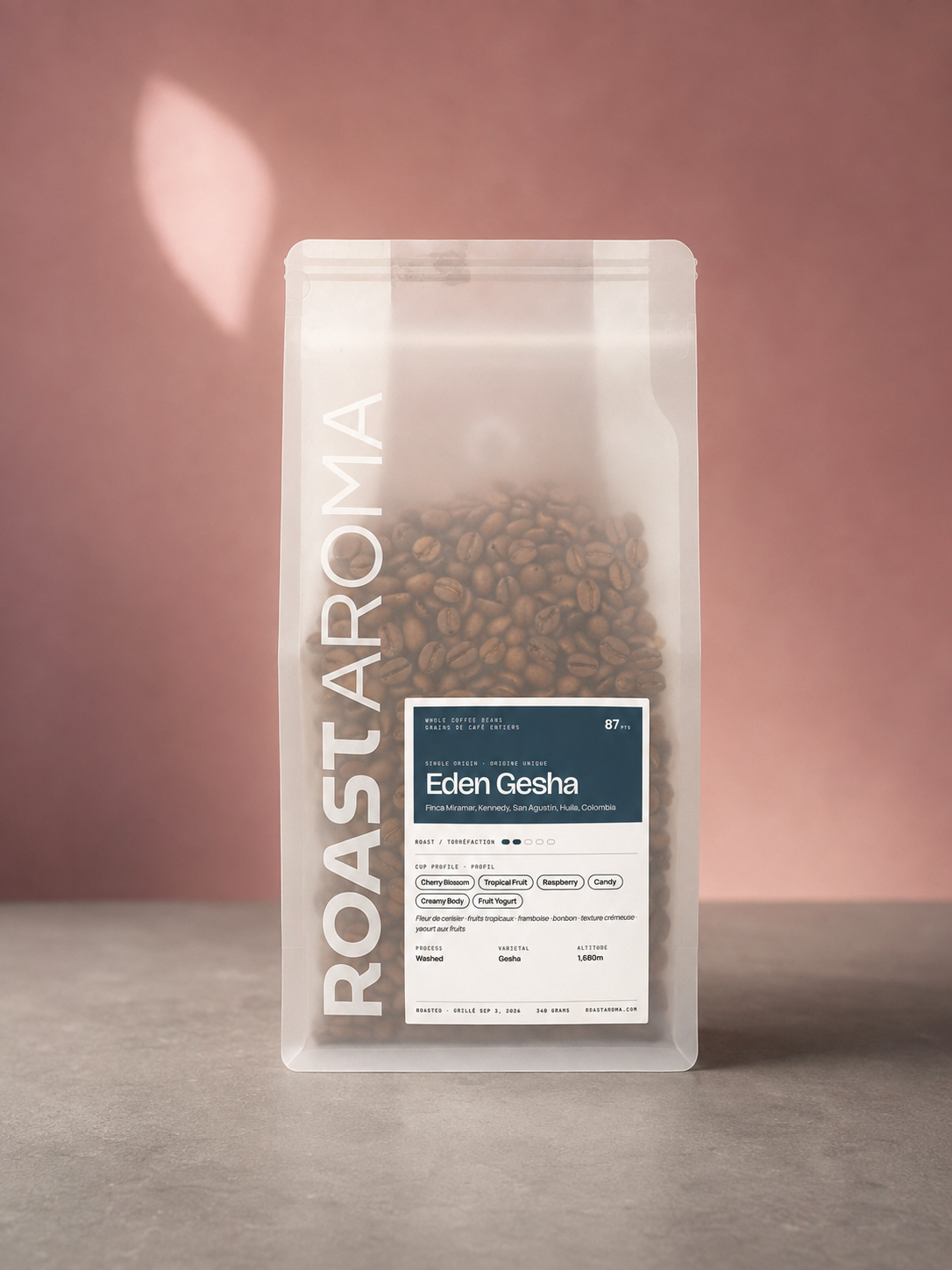 Eden Gesha - Colombian MiramarSCA 87Medium-light · Kennedy, San Agustin, Huila · WashedCherry blossom · Tropical fruitEnough brightness to show what this gear can separate.CA$26.24 · roasted to order
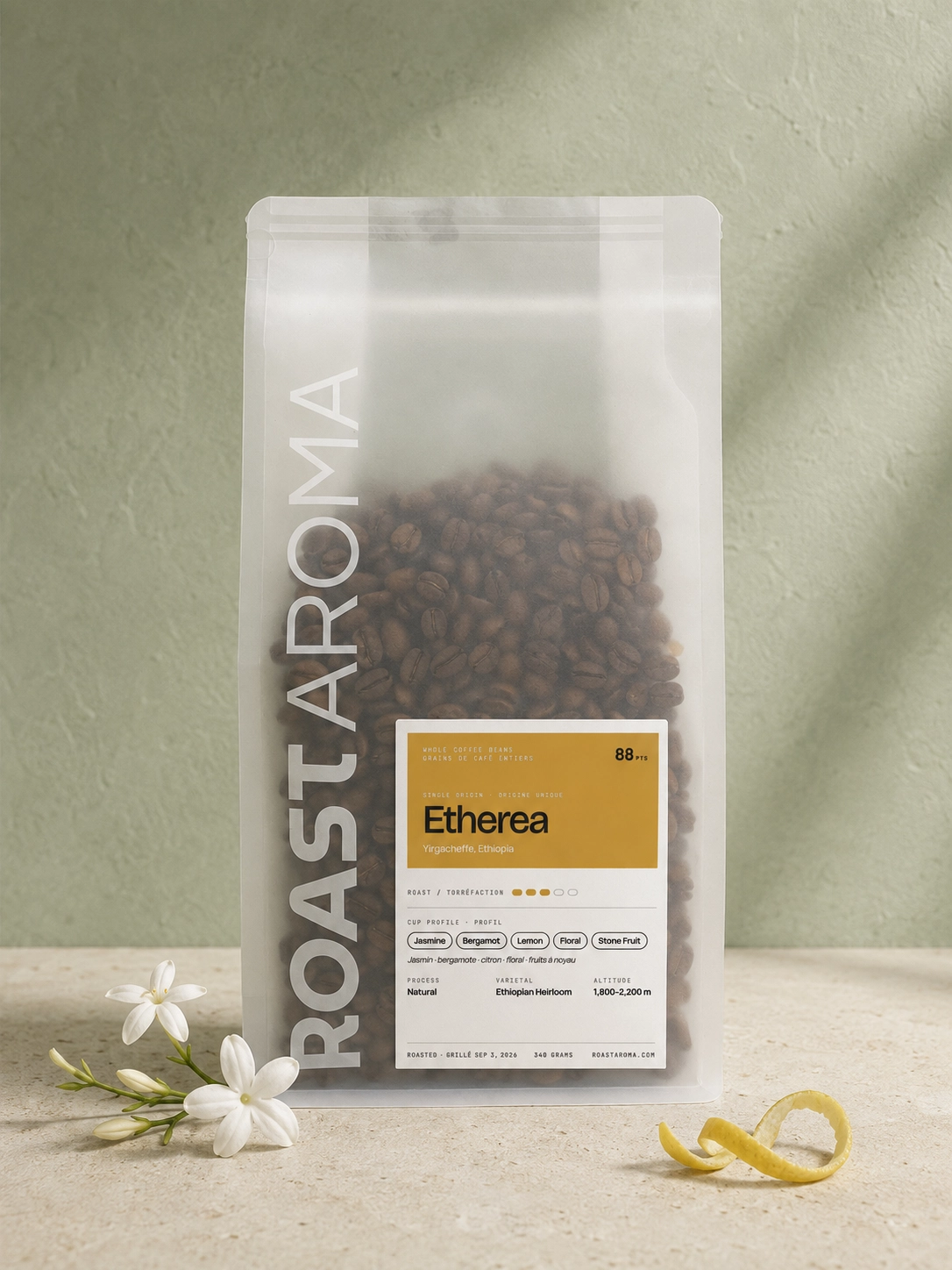 Etherea - Ethiopian YirgacheffeSCA 88Medium roast · NaturalJasmine · BergamotEnough brightness to show what this gear can separate.CA$24.16 · roasted to order
A capable grinder matters as much as the machine. Start with whole beans and a printed roast date.
Prefer regular deliveries? RoastPlan is RoastAroma’s coffee subscription. Choose your coffees and their available options, then set deliveries every 1–6 weeks.
One-time RoastAroma orders are roasted to order in Ajax, Ontario and ship Canada-wide. We’re the roastery behind this database — measuring the machines is how we make sure the coffee gets a fair shot.
On film
How it runs on camera, from around the community.
Common questions
Is the Elektra Micro Casa a Leva an HX or single-boiler machine?
It is effectively a single-boiler machine with a 1.5L copper boiler held at steam pressure. There is no separate heat exchanger circuit as found on pump HX machines — brew water contacts the boiler directly through the group. Some sources loosely describe it as HX, but it is more accurately a traditional single-boiler spring-lever design.
What portafilter size does it use?
The Micro Casa a Leva uses a 49mm portafilter, which is smaller than the 58mm industry standard. This limits grinder choice: you will need either a grinder with a 49mm dosing ring/funnel adapter or one that doses straight into the basket.
How long does it take to heat up?
Typical owner reports put the machine at brew-ready in around 10-15 minutes from cold. The boiler pressure gauge shows when the needle reaches the green zone, which is the practical indicator rather than a timer.
Can the machine be left on all day?
No — Elektra and experienced owners advise against leaving it unattended while powered on. The boiler is filled manually through a cap, has no auto-refill, and early thermostats have been reported to fail. Switch it on before use and off when done.
How hard is routine maintenance?
Daily cleanup is straightforward: wipe surfaces, rinse the portafilter, empty the drip tray. Piston gaskets require periodic replacement but are accessible by removing two screws from the group top — a DIY-friendly job. The boiler needs periodic descaling, and the inside top of the group should be lubricated and checked for mineral buildup.
Worth comparing
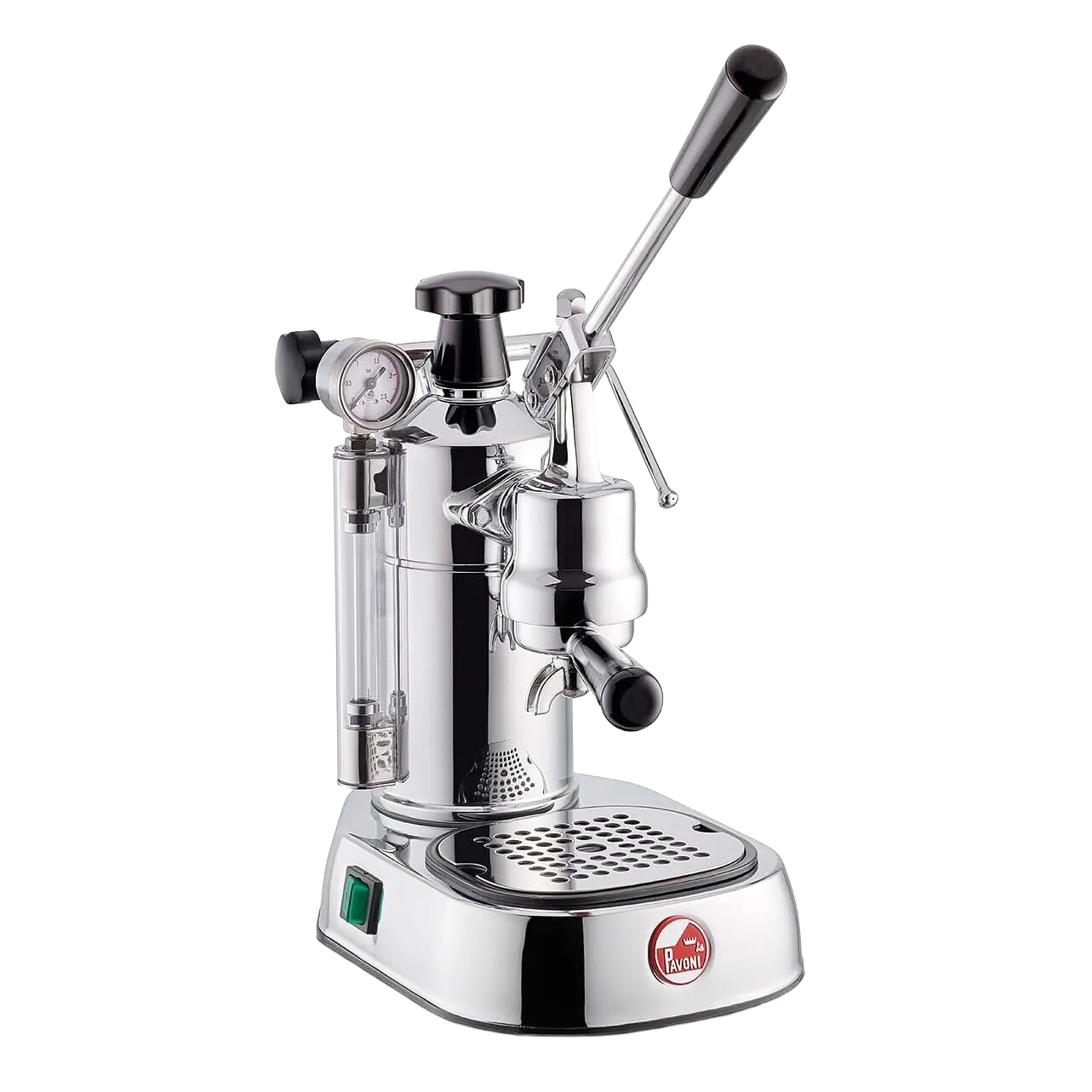
La Pavoni
Professional (PC-16)
A direct-lever, electrically heated Italian icon that has been pulling shots since the 1960s — no pump, no PID, no hand-holding, just a 1.6-litre brass boiler and your technique.
US$1,200–1,550 · CA$1,895–2,100
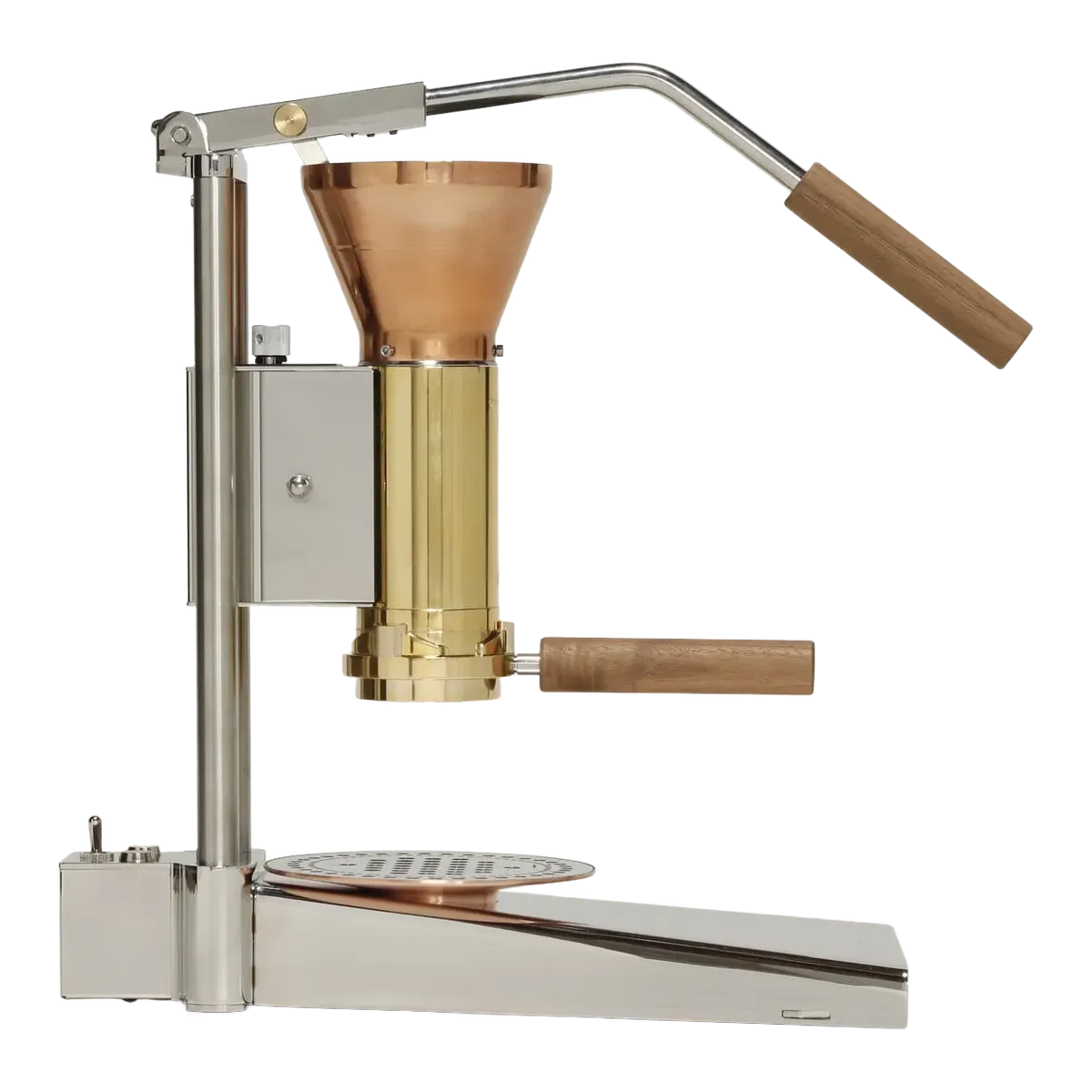
Strietman
CT2
A pumpless, purely mechanical direct-lever machine handmade in the Netherlands from brass, copper, and stainless steel — espresso-only, no steam, no automation, and a shot-quality ceiling that rewards serious skill.
US$2,600–3,200
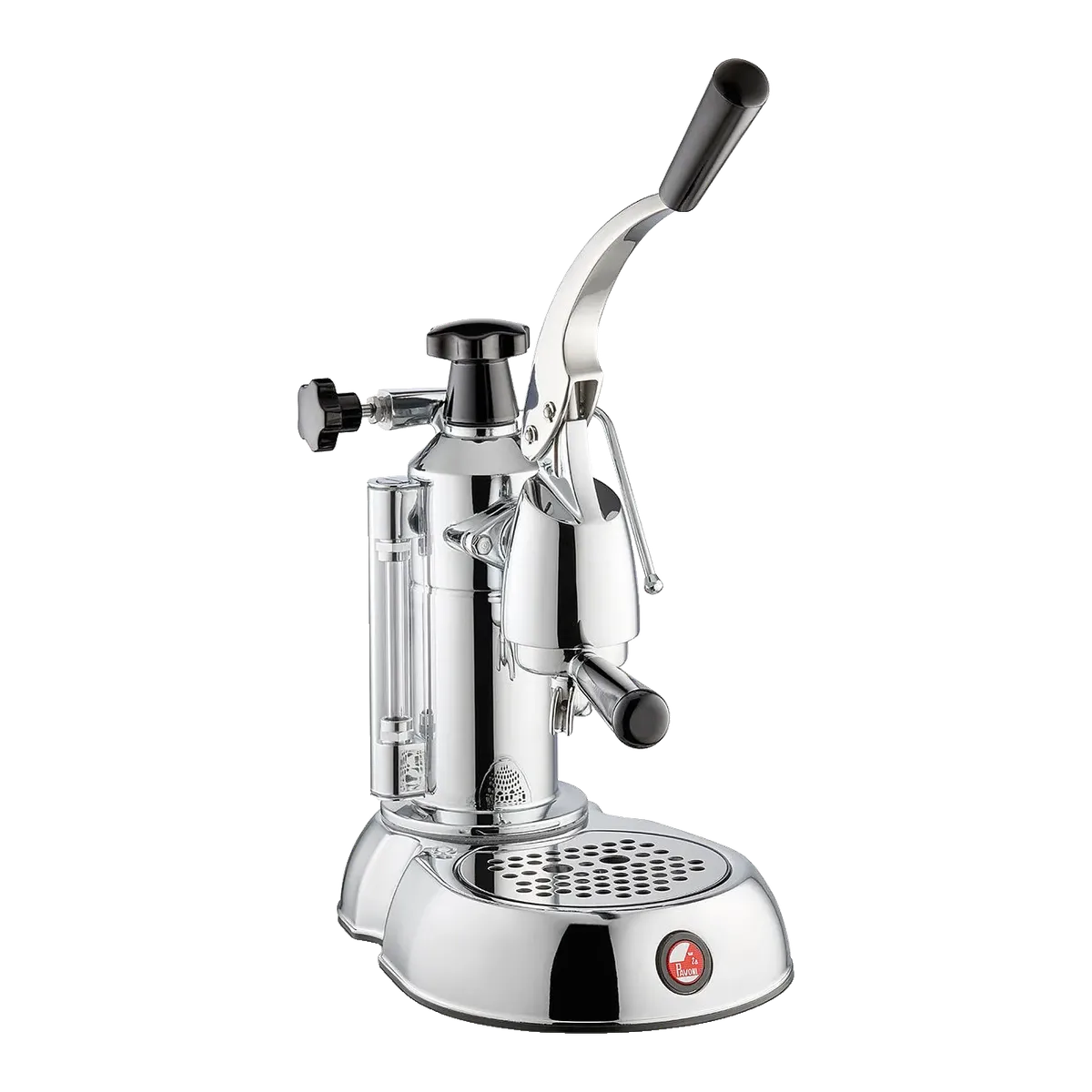
La Pavoni
Stradivari Professional Lusso
A manually-operated piston lever machine born from La Pavoni's 100th-anniversary collaboration with designer Carlo Gallizi, shaped after a Stradivarius violin and built around a 1.6-litre nickel-plated brass boiler. Gorgeous to look at; demands genuine technique to produce good shots.
US$1,069–1,600
Weighing it against something we didn’t list? Compare it with anything on file →
Still weighing it? The finder narrows all 429 down to three that fit your life.
Run the two-minute finder →