Profitec Pro 400 vs Stone Espresso Mine
The crowd’s default against the challenger.
The Pro 400 runs ~35% more (listed in different currencies) — the split below is what the gap buys.
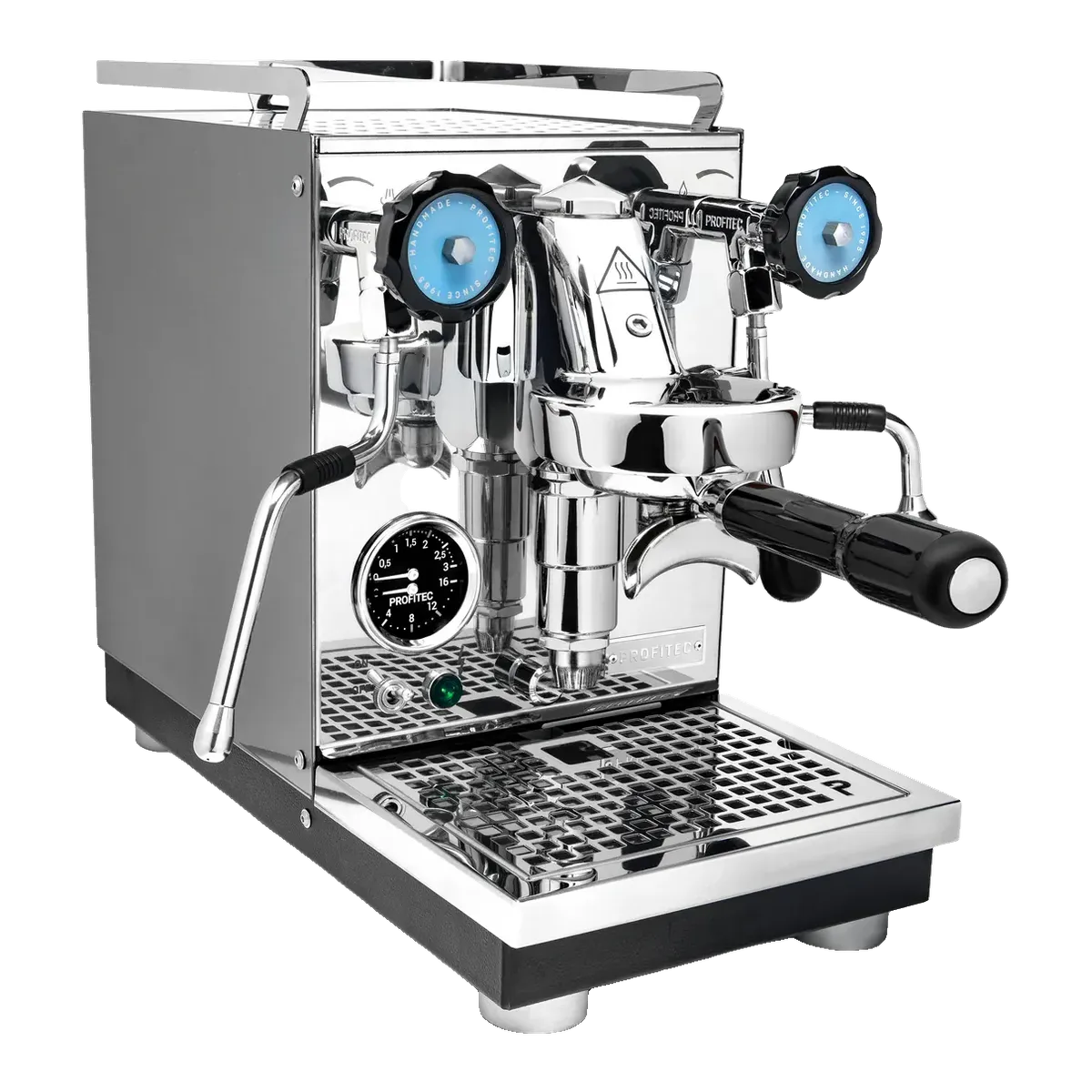
Profitec
Community defaultUS$1,599–1,699 · CA$2,210–2,700
A well-executed compact HX that undercuts the Rocket Appartamento on features and price while matching it on build quality; the three-position temperature switch narrows the HX temperature-m…
Full record & live prices →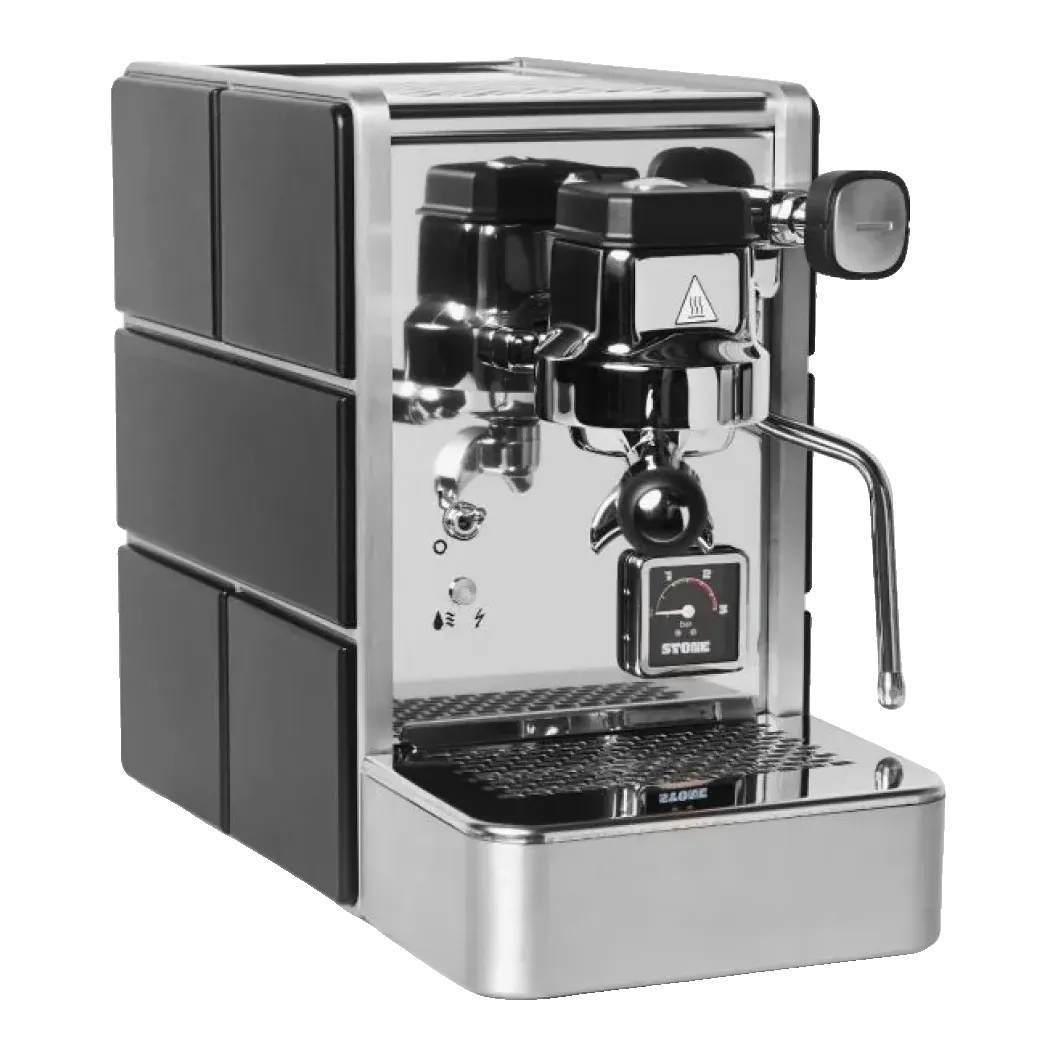
Stone Espresso
US$999–1,699
The Mine is a genuine HX machine that shrinks the format without gutting the hardware: copper-and-brass boiler, cartridge-heated group, 58 mm portafilter, and simultaneous brew-and-steam in…
Full record & live prices →The split
Where they actually differ
On 6 of 11 measures these two tie. The 5 rows below are the entire argument.
Pro 400
Mine
Parts & repair
Pro 400 leads, decisively
Value per dollar
Pro 400 leads, clearly
The price
Mine costs less, clearly
CA$2,210–2,700· US$999–1,699
Back-to-back drinks
Pro 400 leads, clearly
Reliability record
Pro 400 leads, clearly
Push-button convenience
Mine leads, clearly
weakerstronger
The counter’s vote
Looks barely figure in either machine’s record — the counter can sit this one out.
Pro 400: Clean, understated German industrial design; described as "stylish" and "kitchen-approval friendly" in purchase talk, but not a polarizing showpiece — competent aesthetic that does not detract from…
Mine: Swappable magnetic side panels (Slabs) marketed as customization; expert feedback calls the group head aesthetically awkward (blocky upper, round lower mismatch). Polarized on modularity appeal vs.…
Only the Mine: PID temperature control.
Only the Pro 400: a hot-water tap.
Only the Pro 400: the standard 58mm ecosystem.
Where they tie: milk & steam · shot ceiling · ready when you are · forgiving to learn on · built to last — don’t let a spec sheet invent a difference.
On the counter
The size difference, to scale
So — which one?
Take the Pro 400 if —
- You plan to fix, not replace
- Every dollar has to earn its place
- You host, and drinks come in rounds
- It has to just work, every day
Take the Mine if —
- The difference stays in your pocket — or goes into beans
- You want a button, not a ritual
- You want the temperature argument settled
Both columns reading true? Take the Mine and put the difference into fresh, roast-dated beans — they move the cup more than this choice will.
Known weak points
Pro 400
No specific documented failures reported in community record; HX machines generally exhibit temperature-swing behaviors but not mechanical failure modes specific to Pro 400.
Mine
Pressure gauge failure reported; non-adjustable pressurestat design limits troubleshooting.
For the row-by-row readers
The whole sheet, side by side
Matching rows fade back — the ink is where they differ.
Pro 400
Mine
Type
Heat exchanger (HX)
Heat exchanger (HX)
Heat-up time
~10 min
~10 min
Steam power
3.5/5
3/5
Brew + steam at once
Yes
Yes
Guest recovery
3/5
2/5
Shot quality ceiling
3.5/5
3.5/5
PID temperature control
No
Yes
Milk system
Manual steam wand
Manual steam wand
Removable brew group
No
No
Hot-water tap
Yes
—
Cup clearance
9 cm
10.5 cm
Workflow demand
3/5
3/5
Maintenance
3/5
2/5
Noise
3/5
3/5
Build longevity
4/5
4/5
Dimensions
22.8 × 44.8 × 37.2 cm
22.5 × 44 × 35.5 cm
One owner each
“It is a pragmatic HX for people who want café milk and stable espresso in a tight space without stepping up to a dual boiler price.”
“The Stone Mine is an excellent choice for those who want something better than an appliance-grade espresso machine.”
Wrong match-up? Change one side → — any two on file compare.
Still torn?
This page weighs them against each other. The finder weighs them against your mornings.
Two minutes of questions — milk, noise, budget, space — scored across everything on file. It’s honest when the answer is neither of these.
Take the two-minute finder →