Lelit Elizabeth V3 vs Meraki Espresso Machine (Gen 2)
Two answers to the same question — the split below is the whole argument.
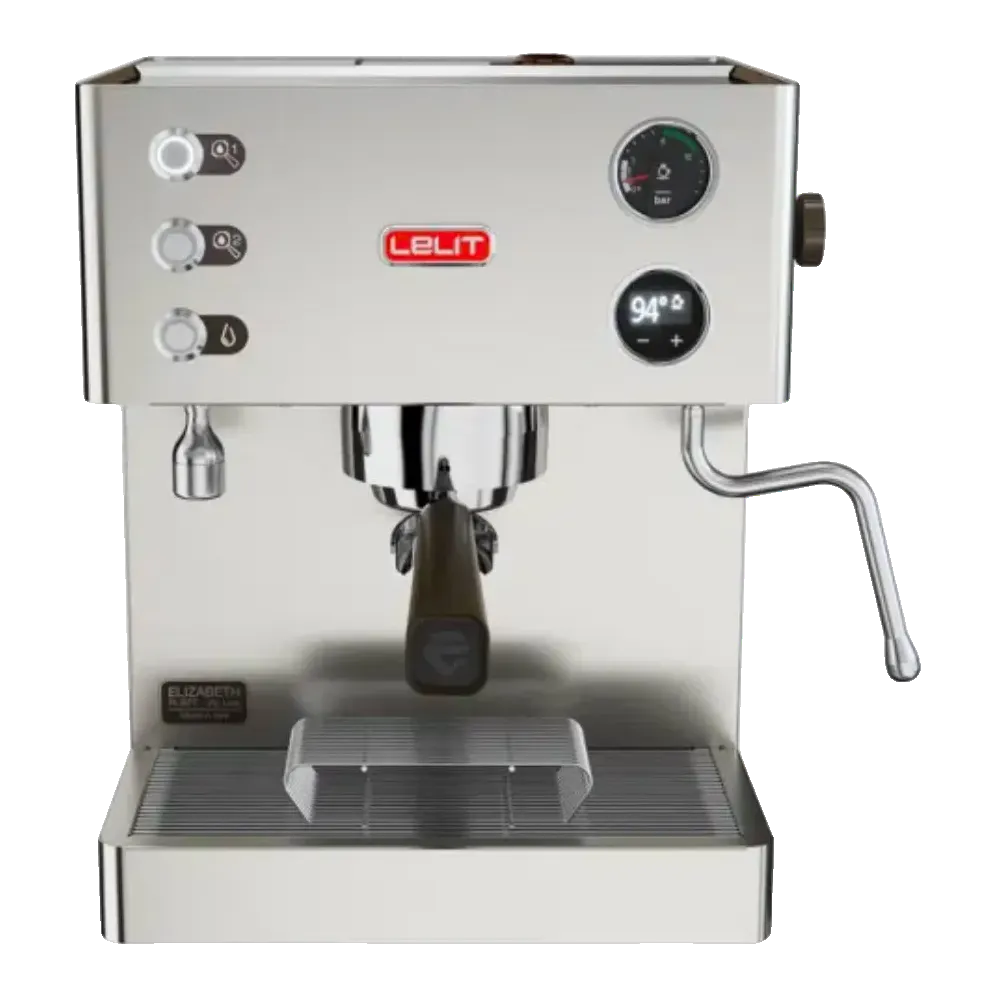
Lelit
Strong consensusUS$1,799
The Elizabeth is the machine to reach for when a small kitchen needs honest dual-boiler cadence without the E61 ritual or the price of a Bianca. The catch is that real thermal stability arri…
Full record & live prices →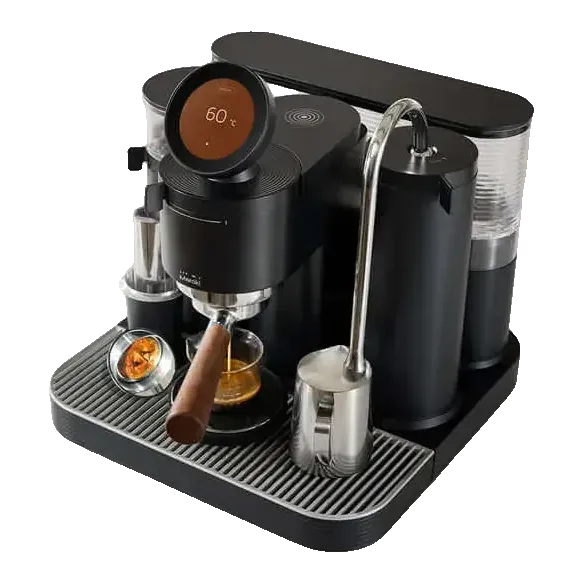
MerakiTech
US$1,699–1,999
The Meraki Gen 2 stacks dual stainless boilers, a commercial rotary pump, grind-by-weight, stop-by-weight, and an electrically heated E61 group into one footprint that replaces a grinder, sc…
Full record & live prices →The split
Where they actually differ
On 8 of 11 measures these two tie. The 3 rows below are the entire argument.
Elizabeth V3
Meraki Espresso Machine (Gen 2)
Ready when you are
Meraki Espresso Machine (Gen 2) leads, decisively
~20 min· ~4 min
Back-to-back drinks
Meraki Espresso Machine (Gen 2) leads, clearly
Push-button convenience
Meraki Espresso Machine (Gen 2) leads, clearly
weakerstronger
The counter’s vote
Looks barely figure in either machine’s record — the counter can sit this one out.
Elizabeth V3: Appliance-neutral industrial look; no kitchen-approval talk or aesthetic complaints in the record.
Meraki Espresso Machine (Gen 2): Commercial-grade aesthetic cited in multiple purchase accounts; sleek industrial finish drives kitchen-approval talk in early reviews.
Where they tie: milk & steam · shot ceiling · reliability record · forgiving to learn on · parts & repair — don’t let a spec sheet invent a difference.
On the counter
The size difference, to scale
So — which one?
Take the Elizabeth V3 if —
Hard case to make: the Meraki Espresso Machine (Gen 2) leads everywhere the data separates them. This one is a deal-day purchase, not a first choice.
Take the Meraki Espresso Machine (Gen 2) if —
- Patience is not your virtue at 6 a.m.
- You host, and drinks come in rounds
- You want a button, not a ritual
The Meraki Espresso Machine (Gen 2) leads everywhere the data separates them, at the same money — the Elizabeth V3's case is taste, looks, or a deal you couldn't refuse.
Known weak points
Elizabeth V3
thin stainless steel body; reported durability concerns vs competitor dual boilers
For the row-by-row readers
The whole sheet, side by side
Matching rows fade back — the ink is where they differ.
Elizabeth V3
Meraki Espresso Machine (Gen 2)
Type
Dual boiler
Dual boiler
Heat-up time
~20 min
~4 min
Steam power
3.5/5
4/5
Brew + steam at once
Yes
Yes
Guest recovery
3/5
4/5
Shot quality ceiling
4/5
3.5/5
PID temperature control
Yes
Yes
Milk system
Manual steam wand
Manual steam wand
One-touch drinks
2
—
Removable brew group
No
No
Hot-water tap
Yes
Yes
Cup clearance
11 cm
9.5 cm
Workflow demand
3/5
3/5
Maintenance
3/5
3/5
Noise
2/5
2/5
Build longevity
3/5
3/5
Dimensions
32 × 27 × 38 cm
37.5 × 37.5 × 42 cm
One owner each
“The machine's build quality could be better. The stainless steel body feels thin compared to other dual boilers.”
“After six months and more than 500 shots, the Meraki espresso machine has made me a better home barista.”
Wrong match-up? Change one side → — any two on file compare.
Still torn?
This page weighs them against each other. The finder weighs them against your mornings.
Two minutes of questions — milk, noise, budget, space — scored across everything on file. It’s honest when the answer is neither of these.
Take the two-minute finder →