De'Longhi EC155 vs Mr. Coffee Café Barista
A single boiler against a thermoblock — two philosophies of the same morning.
About US$18 apart — the split below is what the gap buys.
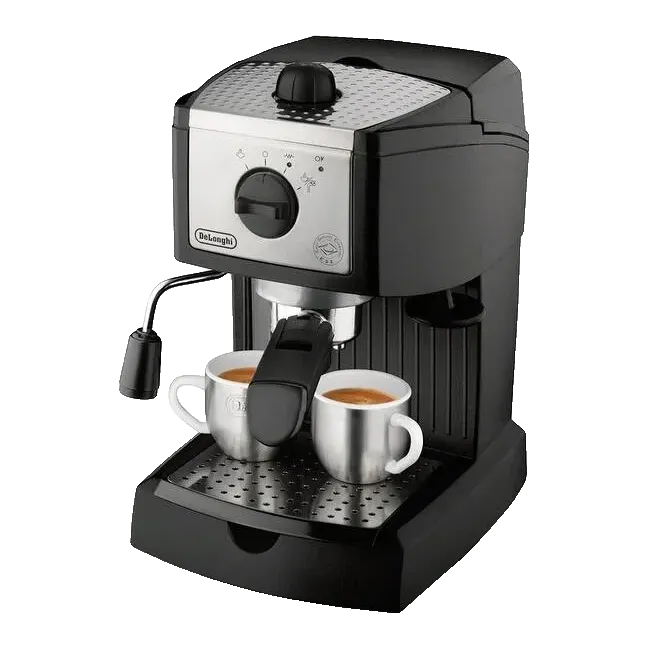
De'Longhi
US$85–110
A legitimate first espresso machine for someone who wants a portafilter workflow without spending more than the beans cost. Accept the pressurized basket ceiling, the sluggish recovery betwe…
Full record & live prices →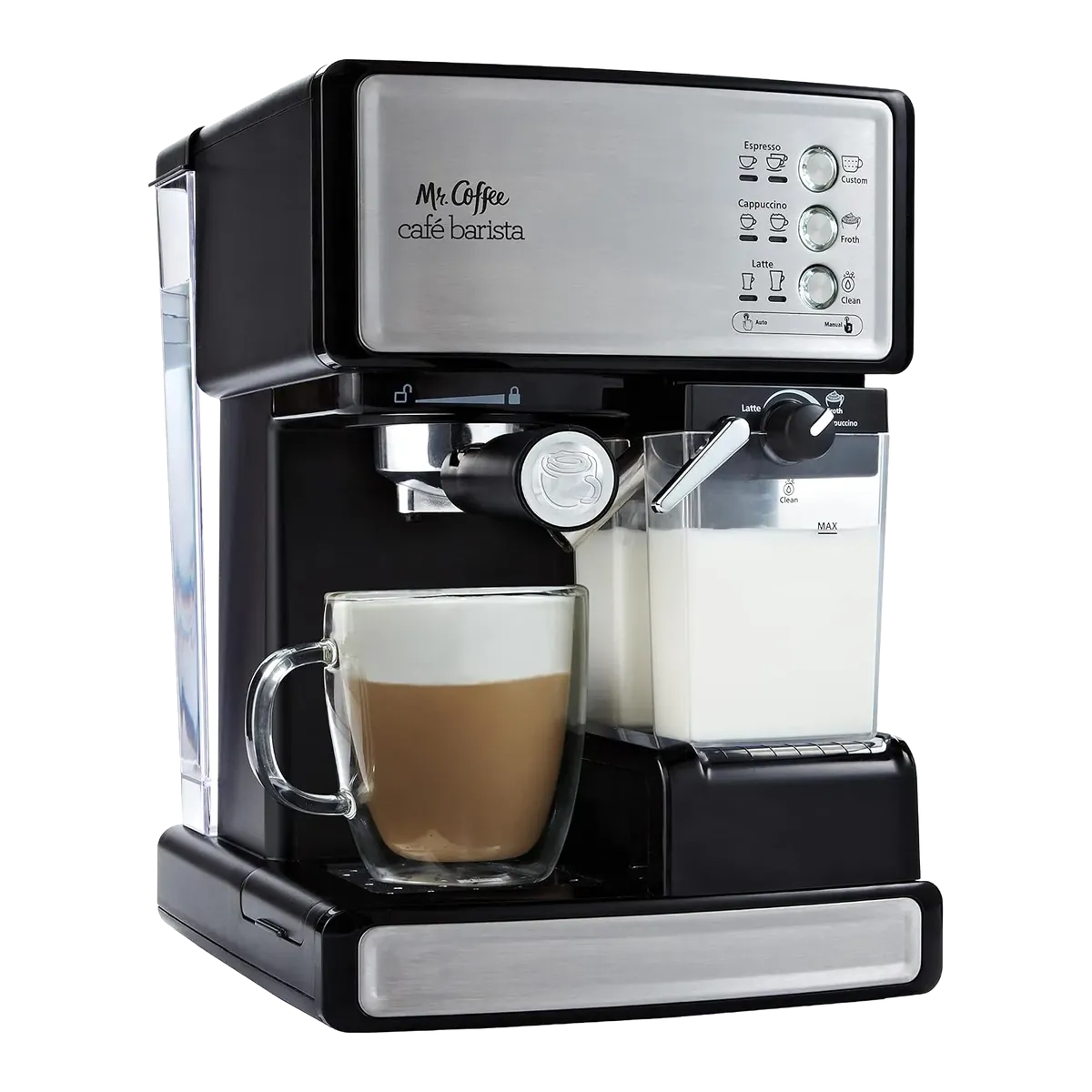
Mr. Coffee
US$60–100
The Café Barista is a fully automatic, one-touch appliance dressed in semi-automatic language — presets are fixed, temperature and ratio are not adjustable, and shot quality tops out early.…
Full record & live prices →The split
Where they actually differ
On 7 of 11 measures these two tie. The 4 rows below are the entire argument.
EC155
Café Barista
Ready when you are
Café Barista leads, decisively
~10 min· 45 sec
Parts & repair
EC155 leads, decisively
Reliability record
EC155 leads, clearly
Push-button convenience
Café Barista leads, clearly
The price
Café Barista costs less, clearly
US$85–110· US$60–100
weakerstronger
The counter’s vote
Looks barely figure in either machine’s record — the counter can sit this one out.
EC155: Utilitarian black plastic box with minimal counter presence; no design appeal or penalty—appliance-neutral in every review.
Café Barista: Unremarkable countertop appliance form; no design-award or kitchen-approval mentions in community channels; occasionally praised for compact footprint in tight spaces, but never purchased FOR its…
Only the Café Barista: automatic milk texturing.
Only the EC155: no accessory lock-in.
Where they tie: milk & steam · shot ceiling · back-to-back drinks · forgiving to learn on · built to last — don’t let a spec sheet invent a difference.
On the counter
The size difference, to scale
So — which one?
Take the EC155 if —
- You plan to fix, not replace
- It has to just work, every day
- Upgrades should never strand your kit
Take the Café Barista if —
- Patience is not your virtue at 6 a.m.
- You want a button, not a ritual
- The difference stays in your pocket — or goes into beans
- Milk should happen without you
Both columns reading true? Take the Café Barista and put the difference into fresh, roast-dated beans — they move the cup more than this choice will.
Known weak points
EC155
Boiler/heating element degradation after 3-5 years of daily use; solenoid valve wear reported by multi-unit owners; thermal stability issues typical of single-boiler design limiting milk steaming capability.
Café Barista
Pressurized basket forces mediocre espresso shot profile; lack of documented parts replacement (gaskets, valves); thermal cycling instability reported in thin-wall thermoblock design; frother reliability variable; no independent service ecosystem.
For the row-by-row readers
The whole sheet, side by side
Matching rows fade back — the ink is where they differ.
EC155
Café Barista
Type
Single boiler
Thermoblock / thermojet
Heat-up time
~10 min
45 seconds
Steam power
2/5
1.5/5
Brew + steam at once
No
No
Guest recovery
1.5/5
2/5
Shot quality ceiling
2/5
2/5
PID temperature control
No
No
Milk system
Manual steam wand
Auto frother
Removable brew group
No
No
Cup clearance
7.5 cm
—
Workflow demand
3/5
1/5
Maintenance
2/5
2/5
Noise
3/5
3/5
Build longevity
2/5
1.5/5
Dimensions
18 × 24 × 28 cm
22.5 × 28.5 × 32 cm
One-touch drinks
—
6
One owner each
“The espresso it creates is pretty on par to what my palate can distinguish from a retail coffee shop at a portion of the price.”
Wrong match-up? Change one side → — any two on file compare.
Still torn?
This page weighs them against each other. The finder weighs them against your mornings.
Two minutes of questions — milk, noise, budget, space — scored across everything on file. It’s honest when the answer is neither of these.
Take the two-minute finder →