Breville Dual Boiler (BES920) vs Gaggia Classic GT
The crowd’s default against the challenger.
The Dual Boiler (BES920) is discontinued — a while-stocks-last or used-market buy — read its side accordingly.
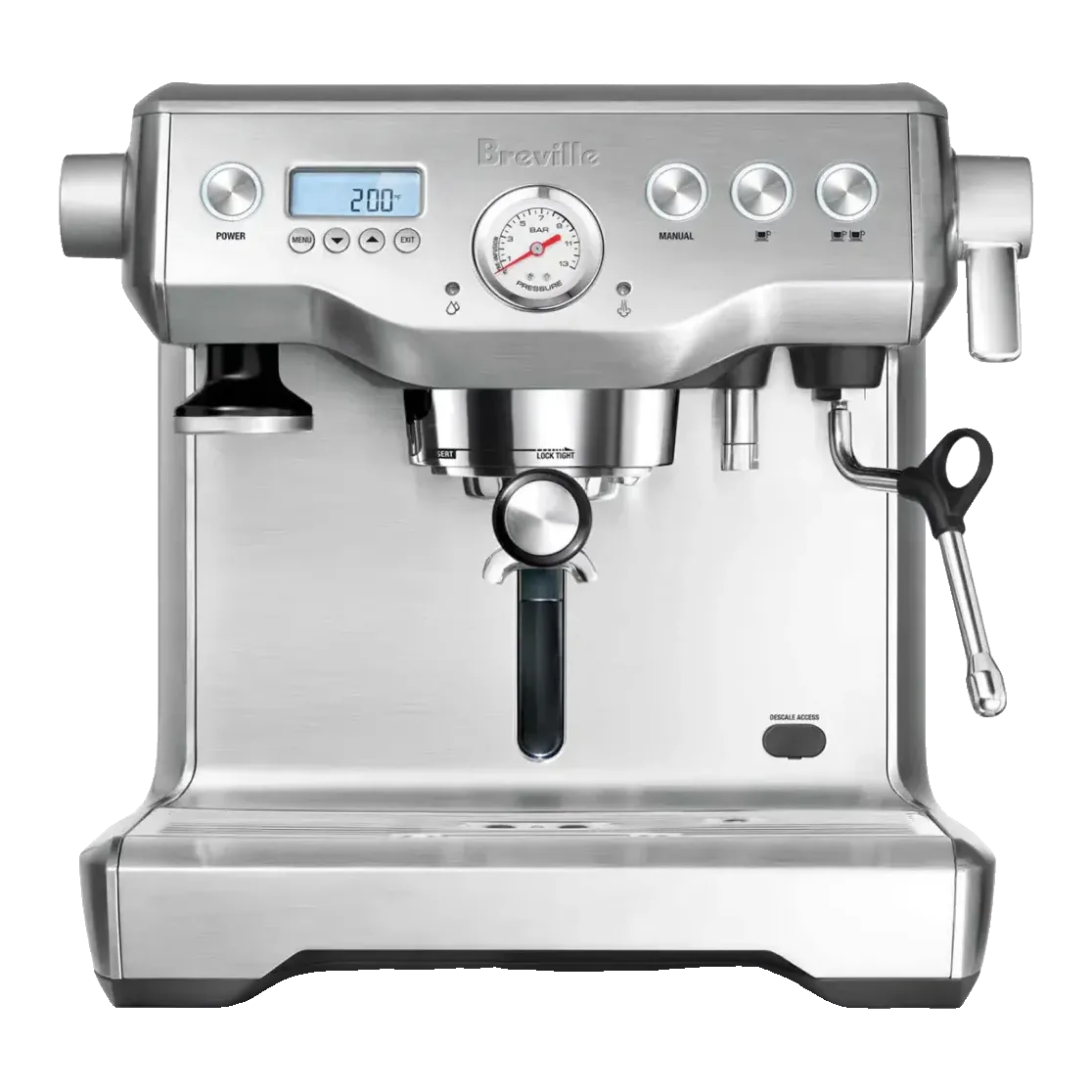
Breville
Strong consensusUS$1,599–1,699 · CA$1,895–2,400
The BES920 is an honestly-spec'd dual-boiler that lets you brew and steam simultaneously with locked-down temperature stability — things you normally pay twice the price to get. What you acc…
Full record & live prices →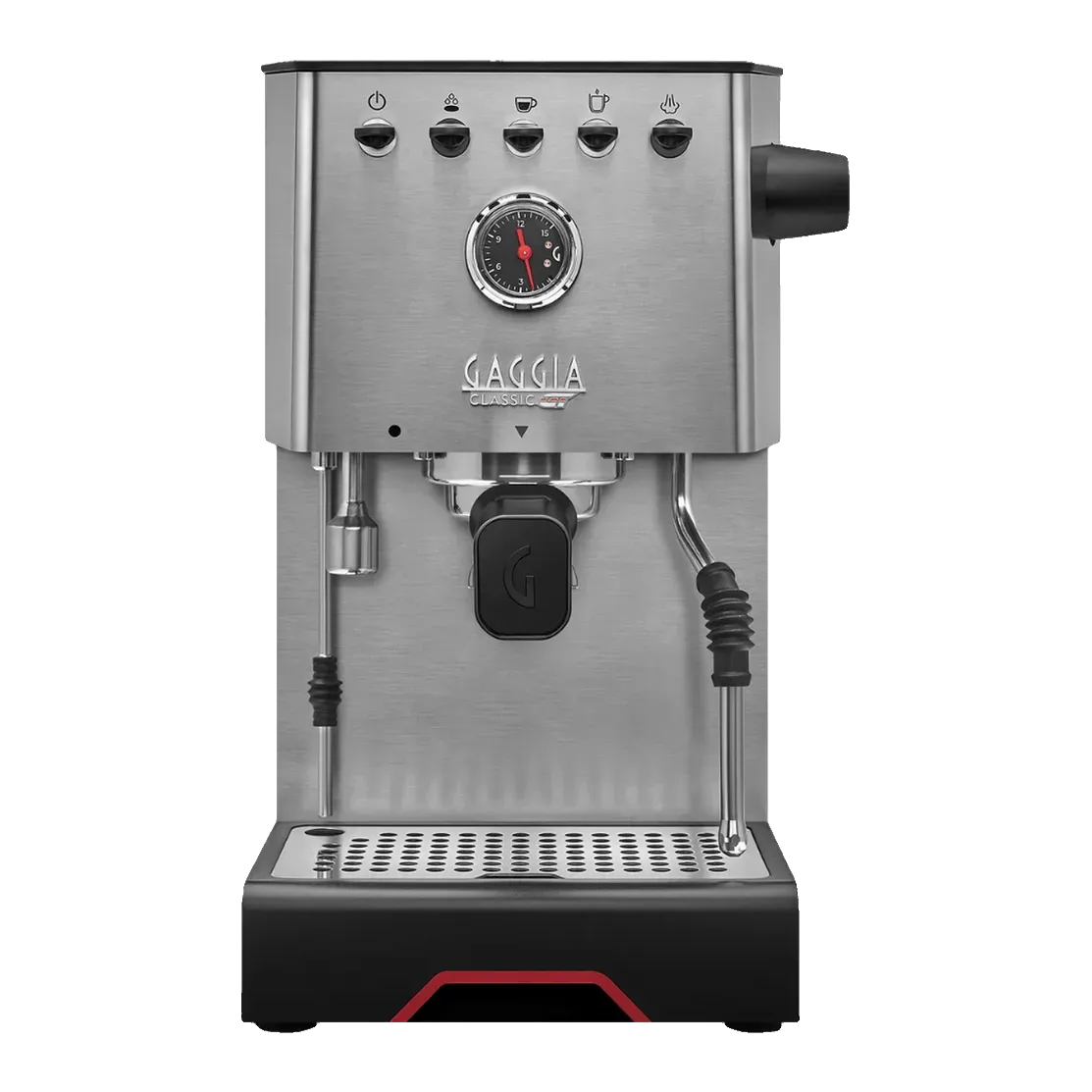
Gaggia
Community defaultUS$1,699
The Classic GT is a competent first prosumer from Gaggia: the dual PID boilers, external OPV, volumetric programming, and low-flow pre-infusion arrive factory-built rather than modded in, wh…
Full record & live prices →The split
Where they actually differ
On 7 of 11 measures these two tie. The 4 rows below are the entire argument.
Dual Boiler (BES920)
Classic GT
Ready when you are
Classic GT leads, decisively
~10 min· ~5 min
Push-button convenience
Dual Boiler (BES920) leads, decisively
Forgiving to learn on
Dual Boiler (BES920) leads, clearly
Value per dollar
Dual Boiler (BES920) leads, clearly
weakerstronger
The counter’s vote
Looks barely figure in either machine’s record — the counter can sit this one out.
Dual Boiler (BES920): Appliance-neutral industrial black design — zero kitchen-approval talk, never a purchase driver, occasionally cited as "workbench aesthetic" without complaint.
Classic GT: Premium stainless chassis and compact dual-boiler footprint appeal as a "real machine" counter presence; reveals preference for pro-style build over appliance aesthetics.
Only the Classic GT: no accessory lock-in.
Where they tie: milk & steam · shot ceiling · back-to-back drinks · reliability record · parts & repair — don’t let a spec sheet invent a difference.
On the counter
The size difference, to scale
So — which one?
Take the Dual Boiler (BES920) if —
- You want a button, not a ritual
- You want the more forgiving of the two
- Every dollar has to earn its place
Take the Classic GT if —
- Patience is not your virtue at 6 a.m.
- Upgrades should never strand your kit
Both columns reading true? Take the one your gut already picked — then stop reading reviews. Fresh beans will move the cup more than this choice will.
Known weak points
Dual Boiler (BES920)
Minor steam solenoid wear over extended use; rare pump cavitation under low-water conditions; occasional relay contact degradation (not catastrophic, parts available).
For the row-by-row readers
The whole sheet, side by side
Matching rows fade back — the ink is where they differ.
Dual Boiler (BES920)
Classic GT
Type
Dual boiler
Dual boiler
Heat-up time
~10 min
~5 min
Steam power
3/5
3.5/5
Brew + steam at once
Yes
Yes
Guest recovery
3/5
3.5/5
Shot quality ceiling
4/5
4/5
PID temperature control
Yes
Yes
Milk system
Manual steam wand
Manual steam wand
One-touch drinks
2
—
Removable brew group
No
No
Hot-water tap
Yes
Yes
Workflow demand
3/5
3/5
Maintenance
3/5
3/5
Noise
3/5
3/5
Build longevity
3/5
3.5/5
Dimensions
36.8 × 32.3 × 40.6 cm
26 × 41.6 × 42.3 cm
One owner each
“The Gaggia Classic GT feels extremely stable and high-quality”
Wrong match-up? Change one side → — any two on file compare.
Still torn?
This page weighs them against each other. The finder weighs them against your mornings.
Two minutes of questions — milk, noise, budget, space — scored across everything on file. It’s honest when the answer is neither of these.
Take the two-minute finder →